
Ministry of Energy and Mineral Resources ready to implement President's energy efficiency directive
Jakarta - The Ministry of Energy and Mineral Resources (ESDM) has stated it is prepared to implement President Prabowo Subianto’s directive regarding energy conservation amid threats of energy crisis stemming from geopolitical tensions in the Middle East.
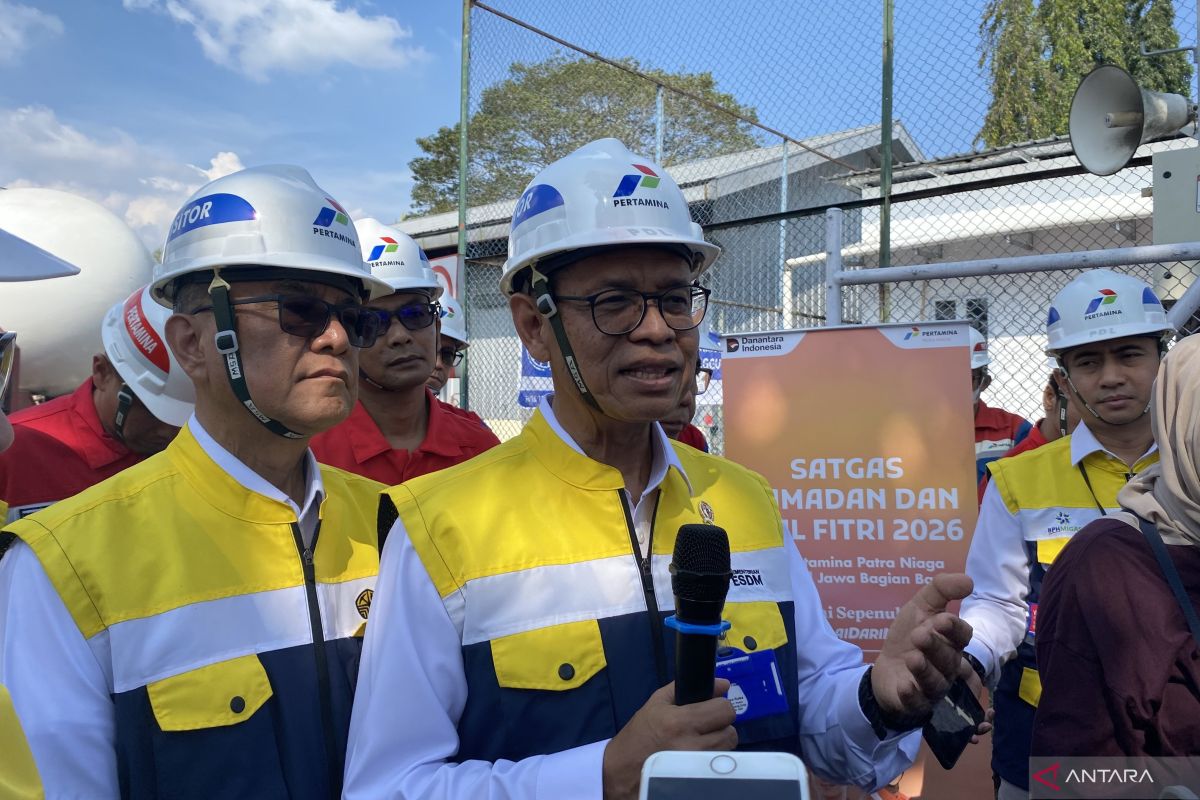
Deputy Minister of Energy and Mineral Resources Yuliot Tanjung stated that efficiency measures will be implemented comprehensively, ranging from fuel oil use for power generation, natural gas utilisation, to operational evaluation across each energy sector activity.
“From an operational perspective, detailed evaluation will be conducted for each activity related to energy use,” said Yuliot after inspecting the Padalarang Fuel Terminal in West Bandung, West Java, on Monday.
He added that technical guidelines (juknis) for energy efficiency implementation are currently undergoing discussion.
“Technical guidelines exist and are in the discussion process,” he said.
Meanwhile, Energy and Mineral Resources Minister Bahlil Lahadalia previously stated that the government is preparing several concrete steps to accelerate renewable energy utilisation. One such measure is replacing diesel power plants that have previously relied on solar fuel.
“These are located throughout Indonesia, particularly power plants that have been using solar fuel. Given the geopolitical conflict situation, we cannot ensure that our energy situation will remain stable in the long term. Therefore, we are optimising all domestic potential and energy sources that we can convert from fossil fuels,” explained Bahlil.
The programme will be implemented gradually across various regions in Indonesia, particularly for power plants that remain dependent on solar fuel.
During a cabinet meeting at the State Palace in Jakarta on Friday (13 March), President Prabowo encouraged measures to reduce fuel consumption and consideration of work-from-home (WFH) policies as a precautionary step against global crisis impacts.
“I would like this discussed later, perhaps by the coordinating ministers, and we will consider it. During COVID, we succeeded. We were able to, with many people working from home, achieving efficiency, meaning we saved fuel in very large quantities,” said Prabowo.
Several other countries have announced energy conservation policies in response to global uncertainty. Thailand, for instance, has requested civil servants to work from home to reduce electricity and fuel consumption, limit lift and escalator use, and set air conditioning temperatures between 26–27 degrees Celsius. The Philippines is implementing a four-day working week in the public sector, whilst Pakistan is preparing an energy conservation plan through distance learning and work-from-home arrangements.