
Ministry of Energy and Mineral Resources Opens Discussion Forum on VRS Technology Implementation at Petrol Stations
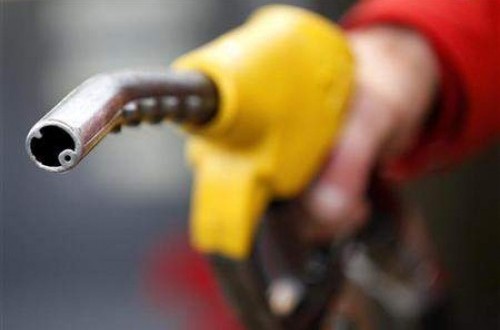
The Ministry of Energy and Mineral Resources (ESDM) has opened a discussion forum on implementing Vapour Recovery System (VRS) technology for controlling fuel vapour emissions at petrol stations. This initiative is considered important for strengthening petrol station management standards whilst enhancing public health protection and environmental safeguards.
The matter was raised by Angga Wira, head of the Special Task Unit at the SKK Migas Supervisory Unit and special staff at the ESDM Ministry, during a forum held by the Video Journalists Alliance (AJV) Environmental Division in Jakarta on Saturday, 14 March 2026.
Angga stated that the government is opening further discussion on fuel vapour control technology at petrol stations through a forum bringing together various stakeholders. “The ESDM Ministry will facilitate further discussions with the Director of Environmental Engineering to examine whether this could eventually become part of standards or requirements in petrol station licensing,” Angga said.
He added that discussions should also consider the business conditions of petrol station operators facing margin pressures, whilst investment for a single VRS unit reaches approximately 600 million rupiah, representing roughly 10 per cent of total petrol station investment.
In the same forum, VRS equipment installation expert Baidi explained that VRS technology captures volatile organic compounds (VOCs) that are released during fuel dispensing and storage at petrol stations.
According to Baidi, the VRS system uses fuel vapour pressure entering the system to be processed through distillation and cooling until it becomes fuel again. “The process takes approximately 30 minutes to one hour to become fuel again. From its initial operation, this equipment can capture approximately 75-80 per cent of VOC vapours,” Baidi said.
He added that fuel loss from evaporation typically ranges from 0.12-0.2 per cent, or approximately 12 litres. With this technology, previously released vapours can be partially recaptured.
Currently, the equipment has been installed at approximately 20 petrol stations in the Jabodetabek region. The device, measuring approximately two metres with a length of around 180 centimetres, has a service life of between five to ten years depending on maintenance.
However, Baidi explained that the technology is still imported from South Korea at a price of approximately 600 million rupiah per unit. “For effective operation, the underground tank condition at the petrol station must be good, particularly at the main hole section. If there is a leak in that area, the equipment cannot work optimally in capturing vapours,” Baidi said.
This public discussion was held by the Video Journalists Alliance (AJV) Environmental Division to enrich perspectives on fuel vapour emission management at petrol stations.
AJV chairman Chandra said the event was the third discussion held by AJV concerning fuel vapour emissions at petrol stations. He expressed hope that the forum could lead to solutions that provide peace of mind for the public when visiting petrol stations.
The discussion also highlighted that fuel vapour capture technology has potential for additional economic value. Petrol vapour that has previously escaped into the air can be condensed back into fuel.