
Ministry of Energy and Mineral Resources: Controlling Mining Production for Industrial Stability
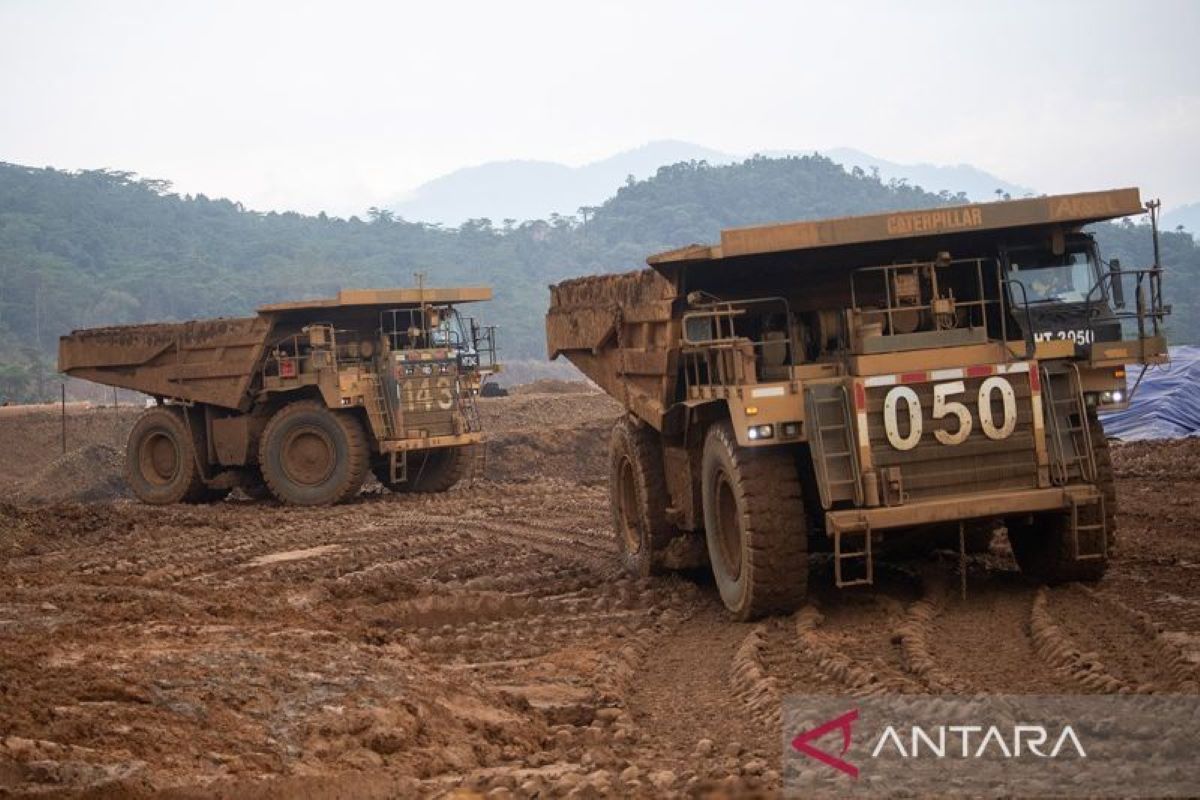
The government is making production adjustments, not restrictions, but more towards control. Jakarta (ANTARA) - The government’s policy to control the production of minerals and coal (minerba) in 2026 is intended to maintain industrial stability amid highly challenging current global dynamics. Secretary of the Directorate General of Minerals and Coal at the Ministry of Energy and Mineral Resources (KESDM), Siti Sumilah Rita Susilawati, stated that the current global conditions are moving unstably and difficult to predict. “We know that we are now in a world whose rhythm we no longer know and is unclear. What is clear is that it is unstable,” Rita said in a statement in Jakarta on Friday. Rita revealed that the minerba sector is now caught in very challenging global dynamics, including limitations on supporting raw materials and energy needs. Global supply chain disruptions show that owning resources alone is not enough without support from other components. Nevertheless, Indonesia is still considered to be in a strategic position due to its wealth of natural resources. This aligns with the government’s policy that emphasises energy resilience and downstream processing. “If we do not have energy resources, our energy resilience would be very fragile. We would be highly dependent on other countries,” she said. In facing these conditions, Rita continued, the government is taking steps to control minerba production through the Work Plan and Budget (RKAB) policy. According to her, the current approach is value over volume. Evaluations show that increases in production volume do not always correlate directly with state revenues. “When we produce a lot in volume, it does not correlate directly with the state income we can generate,” Rita said. She added that excess production could potentially cause oversupply that pressures commodity prices. This is why the government is changing the RKAB scheme from three-yearly to annual to control supply more measurably. In addition, the domestic market obligation (DMO) remains a priority before exports are carried out. Meanwhile, Bernadus Irmanto, Vice Chairman of the Indonesia Mining Association (IMA) for Communications who is also President Director of PT Vale Indonesia Tbk, revealed that challenges also include the availability of raw materials. According to Bernadus, the main challenge in the nickel industry, for example, is the supply of supporting raw materials, particularly sulphur needed in the High Pressure Acid Leach (HPAL) process to produce sulphuric acid. “The problem is, even if you have the money to buy, but if the goods are not available, what then?” Bernadus said. In addition, Bernadus said, the nickel industry also faces challenges in terms of sustainability, particularly the high dependence on oil fuels such as Marine Fuel Oil (MFO) and diesel. To address this, Vale, for example, has begun examining the use of environmentally friendly technology, including the electrification of mining vehicles. However, its implementation still faces productivity constraints. On the other hand, Bernadus views downstream processing as the main direction for the industry. However, downstream processing requires investment and technology support that mostly still comes from abroad, particularly China. This dependence on foreign technology is seen to add complexity to geopolitical risks in the development of the national nickel industry. Bernadus reminded of the importance of nickel supply certainty for investors, especially for projects still in the development stage. Because those projects will start operating in the third quarter of 2026 and require a certain supply.