
Ministry of Education, Science, and Technology Ready to Mobilize Campuses to Tackle Waste in Bandung City
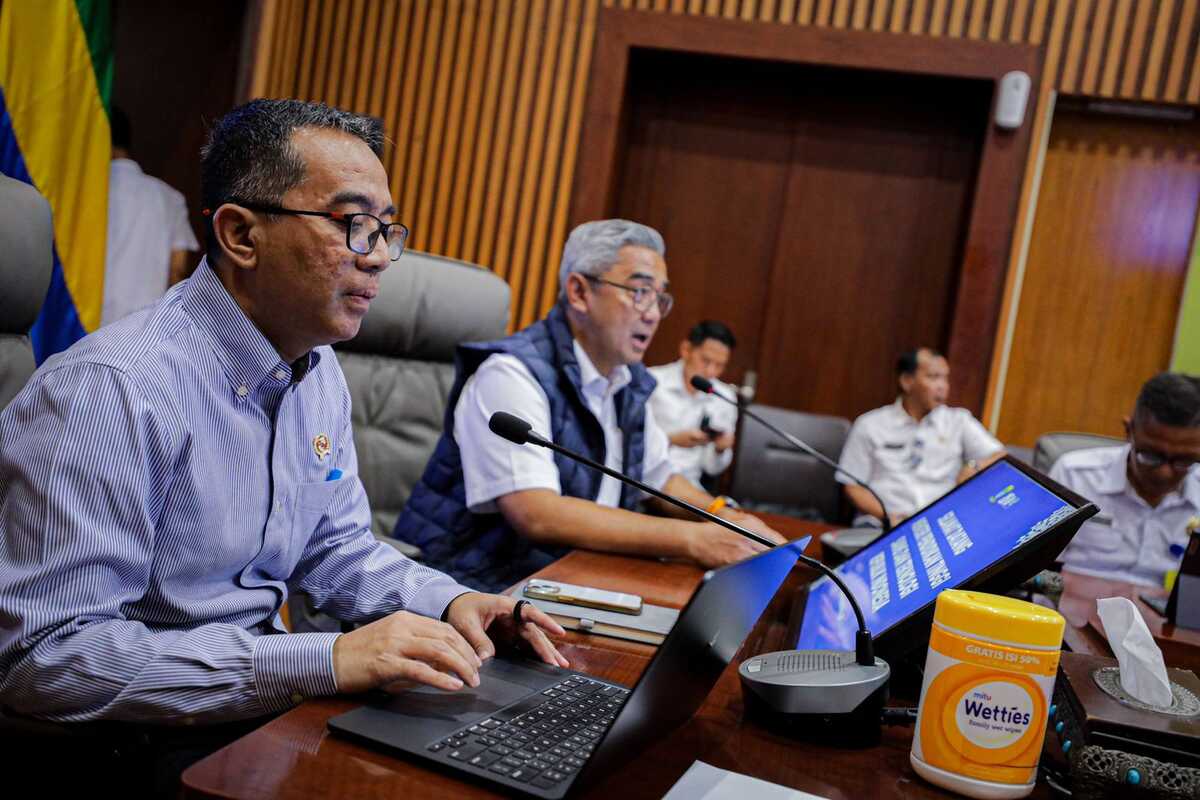
The Minister of Education, Science, and Technology (Mendiktisaintek), Brian Yuliarto, stated that he is ready to help the Bandung City Government overcome the waste problem. One way is by involving students during their Community Service Programs (KKN).
Brian believes that Bandung has a strong asset, namely a large network of universities and a large number of students. Therefore, campuses will be involved in mapping infrastructure needs, conducting business model studies, educating the public, and deploying students through thematic KKN programs.
“Campuses will map the needs for composting, maggotization, biodigesters, RDF, and their supply chains. After that, we will propose it to the central government. This will not burden the regional budget. This approach is much more efficient than building large-scale waste-to-energy facilities that can cost Rp2-3 trillion per unit. If this model is successful in Bandung, it can be implemented in all cities in Indonesia next year,” he explained during a visit to the Bandung City Hall on Wednesday (February 25).
According to Brian, this program will involve campuses, the central government, the Bandung City Government, and elements of the military and police for supervision, especially in the horeca (hotels, restaurants, cafes) and market sectors. Law enforcement measures will also be prepared, along with incentives for businesses that comply. “We will make Bandung a national pilot project. This year, we will work together,” he said.
Previously, the central government designated five regions as pilot projects for waste management based on collaboration between campuses and local governments, namely Bandung, Bogor, Tangerang, Purwokerto, and Yogyakarta.
The Mayor of Bandung, Muhammad Farhan, explained that currently, the amount of waste reaches 1,507.85 tons per day. About 60% comes from households, dominated by food waste and leaves. However, according to an evaluation by the Ministry of Environment (KLH), only about 21.63% of the waste is properly managed, sorted, processed, and utilized. The rest still ends up in landfills or is scattered in the environment.
“The mindset that needs to be changed is that after paying, the waste should disappear. That is wrong. Waste is not about disappearing, but about being managed. I also highlighted the practice of illegal waste disposal in border areas and certain areas, including the involvement of individuals in unofficial transportation chains,” he said.
As a response to the upstream problem, the Bandung City Government, according to Farhan, has launched the Gaslah program (Waste Sorting and Processing Officers) and has recruited 1,597 Gaslah officers, or one person per neighborhood unit, to knock on residents’ doors, educate them about sorting, and collect organic waste. Each officer is targeted to collect at least 25 kilograms of organic waste per day.
“This program is supported by a budget of around Rp24 billion per year and is monitored through a real-time digital dashboard, which also serves as an indicator of performance for sub-district heads and village heads. Without social engineering and enforcement, it will not be resolved. The upstream must be addressed first,” he emphasized.
The Bandung City Government, according to Farhan, also integrates Kang Pisman, Buruan Sae, and Dapur Sehat Atasi Stunting into a single circular ecosystem. Organic waste is processed into compost/maggots and used for urban farming, the harvest is used for residents’ kitchens, and the remaining kitchen waste is managed again. This is Bandung Utama’s circular system. We are building a culture, not just technology.
“The key to success is reducing waste production per person. Currently, residents of Bandung produce an average of 0.58 kg of waste per day. The target is to reduce it to below 0.4 kg. If awareness is not built, any technology will fail,” he added.