
Ministry of Education and Culture Supports Local Languages: Improving School Facilities and Launching a Digital Makassar Dictionary for Young People
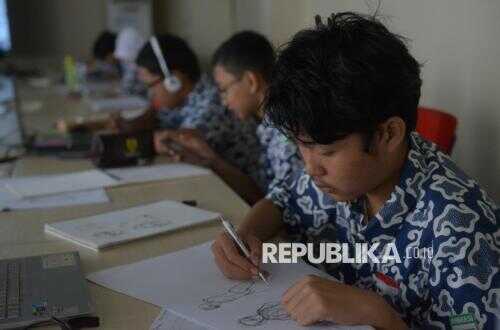
REPUBLIKA.CO.ID, JAKARTA – The Ministry of Education and Culture is revitalising education in Eastern Indonesia and launching a digital Makassar language dictionary to protect local languages.
The Ministry of Basic and Secondary Education continues to strengthen equal access and quality of education through the Educational Unit Revitalisation Programme, especially in Eastern Indonesia (KTI).
The Director General of Vocational Education, Special Education, and Special Services Education (PKPLK), Tatang Muttaqin, emphasised that equity in revitalisation does not mean equal distribution, but rather greater support for regions and educational units that need it most.
“When classrooms are safe, skills rooms are functional, and sanitation is adequate, the quality of learning improves. The impact is widespread: the enthusiasm of educators increases, community participation increases, and public trust in education services is strengthened,” said Tatang in a written statement in Jakarta, Thursday.
This programme not only targets formal schools, but also non-formal educational units such as Community Learning Centres (PKBM) and Learning Activity Centres (SKB). As many as 21 PKBM and SKB in KTI have received revitalisation assistance with a total budget of more than IDR 15 billion, ensuring that communities not served by formal education still have access to quality and relevant learning.
The real impact can be felt in Mimika Regency, Central Papua Province. The head of PKBM Kasih Julius, Yakobus Natalis Fatubun, recounted the significant changes after receiving more than IDR 1 billion in assistance to improve classrooms, skills rooms, and sanitation. “Our area is swampy and humid, making it difficult for buildings to last. The classroom structure was once damaged due to unstable soil and repeated earthquakes. Now, with the embankment to prevent landslides, the learning space is safe and comfortable,” he said.
In Rote Ndao Regency, East Nusa Tenggara Province (NTT), SKB Rote Ndao has also undergone a drastic transformation after revitalisation worth IDR 2.2 billion, including the construction of six classrooms complete with furniture. The head of SKB, Fadlun Sururiyadi, said, “We never thought that SKB would change like this. Its appearance has changed almost 180 degrees, and now it is used by the entire community who love non-formal education.”
The availability of separate classrooms for each level allows students to attend together, learn in an orderly, comfortable, and focused manner, from early childhood education to Package C in an inclusive environment. “SKB is now a new space of hope: learning, improving skills, and opening up better future opportunities,” added Fadlun.
In addition to revitalising infrastructure, the Ministry of Education and Culture is also focused on protecting and revitalising local languages through digital technology. The Language Development and Fostering Agency (Badan Bahasa) has launched the Dictionary in Schools programme in the form of a Digital Makassar-Indonesian-English Dictionary, as an effort to reach young people so that their mother tongue remains alive in their daily lives.
The Minister of Basic and Secondary Education, Abdul Mu’ti, emphasised, “Young people are the focus because they master information technology. The goal is to ensure that their mother tongue is not foreign to them.” The head of Badan Bahasa, Hafidz Muksin, added that by 2025, Badan Bahasa will have revitalised 120 languages and compiled 228 local language dictionaries as a form of protecting cultural identity.