
Ministry of Culture and BPS to Synergise on Economic Census to Strengthen Cultural Data Base
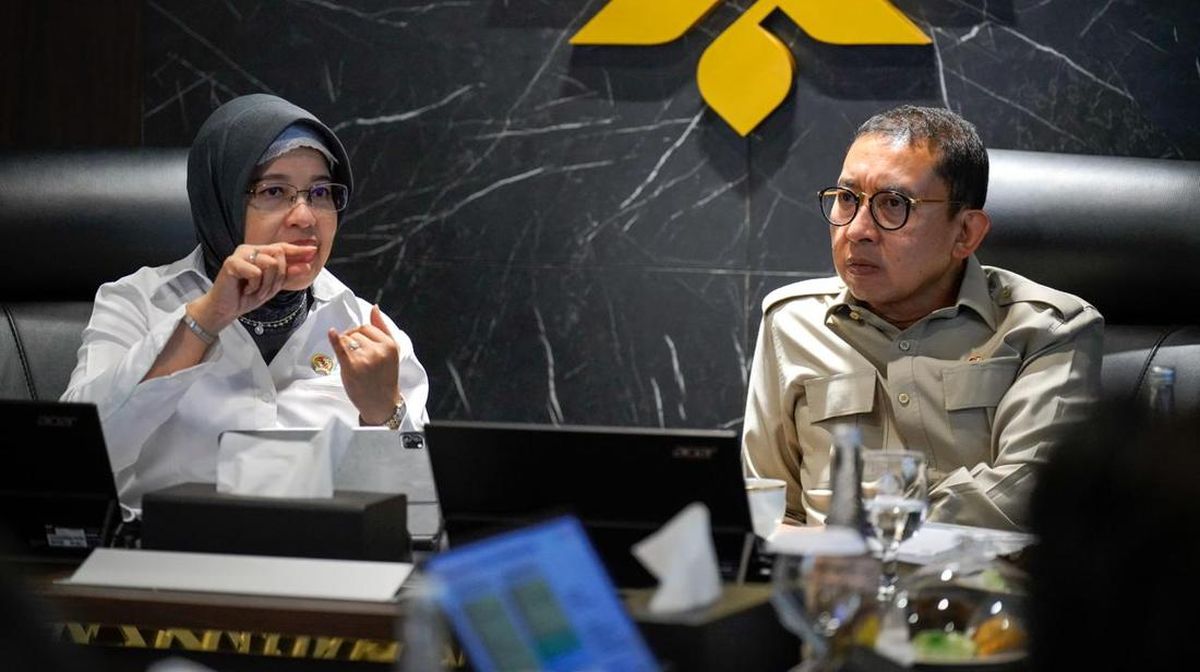
The Ministry of Culture and Statistics Indonesia (BPS) will collaborate on the 2026 Economic Census.
The Ministry of Culture has expressed full commitment to supporting the implementation of the Economic Census through socialisation, information dissemination, and encouraging active participation from the public and cultural actors.
In a written statement, Culture Minister Fadli Zon stated that this support is expected to strengthen the national cultural data base while serving as a foundation for future data-based policy development.
This collaboration is also hoped to promote culture as an engine of growth that contributes to the national economy.
Fadli Zon appreciated BPS’s support in strengthening the national cultural data base. He emphasised that since the establishment of the Ministry of Culture, efforts to advance culture have been directed comprehensively towards ten Objects of Cultural Advancement, not limited to the arts alone.
“Culture is often correlated with the arts, whereas its scope is far broader. Indonesia possesses extraordinary diversity that can be called megadiversity, reflected in various cultural expressions,” said Fadli on Tuesday (7/4).
According to Fadli, the advancement of culture is carried out comprehensively through efforts in protection, development, utilisation, nurturing, and cultural diplomacy.
He stressed the importance of strengthening the data base to support targeted policies, particularly in measuring the contribution of the cultural sector to the national economy.
“We hope that through the Economic Census, we can obtain a more complete picture of the economic contributions of culture. With accurate data, the resulting policies will also be more precise,” he said.
Meanwhile, BPS Chief Amalia Adininggar Widyasanti stated that statistical data has great potential in supporting the formulation of more measured cultural policies.
“The potential from the Economic Census can be utilised by the Ministry of Culture,” she said.
According to Amalia, public participation in cultural activities shows interesting dynamics. Based on BPS data, 47.56 percent of the population aged 5 years and above watch performances or exhibitions directly.
Music/sound performing arts is the type of art most favoured to be watched, either directly or indirectly, with a percentage of 52.55 percent.
Amalia also highlighted the aspect of oral traditions. Knowledge of folktales and folk stories is higher in urban areas compared to rural ones.
Meanwhile, in the context of tourism, cultural tourism has not yet become the primary destination for the public, with a visit rate of around 13.19 percent of total commercial tourist visits, still below nature tourism which dominates.