
Ministry of Communication and Digital Affairs Trains Vocational Students as Local Digital Talent to Create Regional Job Opportunities
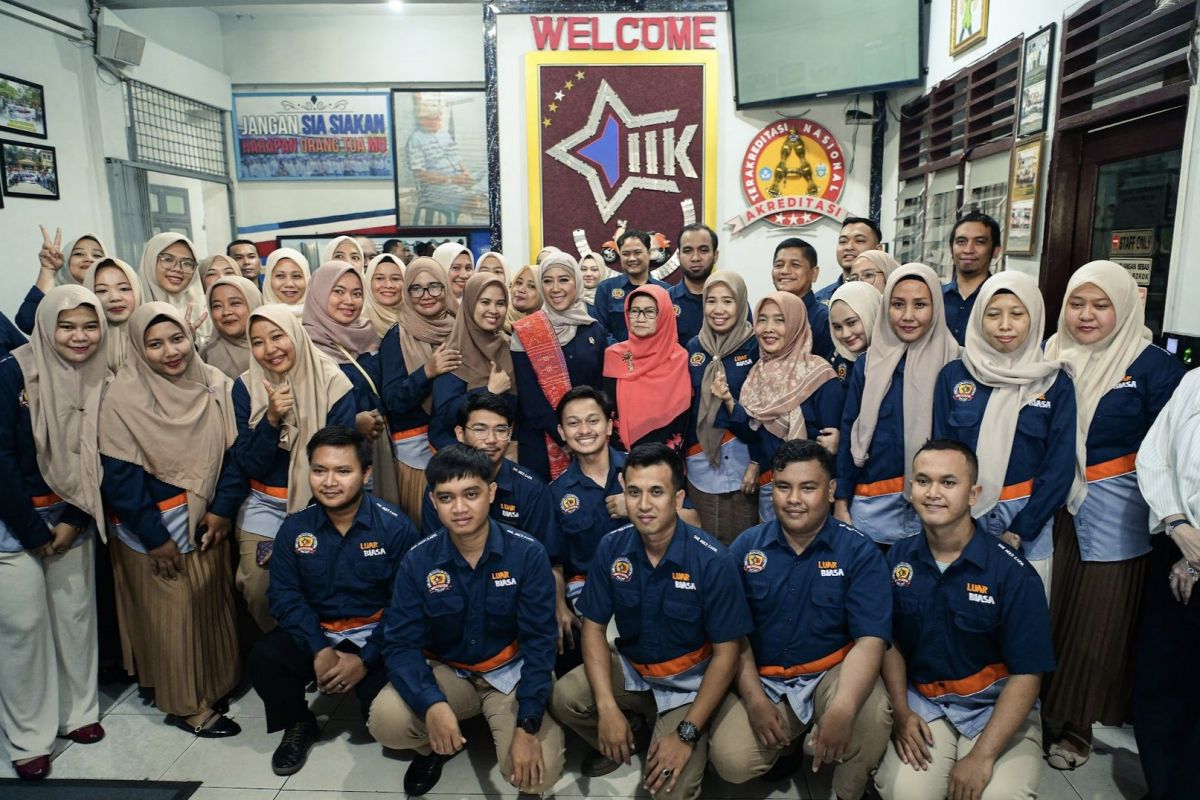
The Ministry of Communication and Digital Affairs (Kemkomdigi) is preparing vocational high school (SMK) students to become local digital talent capable of building, maintaining, and repairing telecommunication networks in their respective regions. One such effort was a fibre optic network training session for SMK students in Medan, part of the government’s strategy to expand internet access while creating new job opportunities for young people in the regions. “Going forward, we have a concept that fibre optic networks in various regions will no longer need to send workers from Java or other areas,” said Minister of Communication and Digital Affairs Meutya Hafid at the Fibre Optic Network Training event for students at SMK Multi Karya, Medan, North Sumatra, on Saturday. Meutya added that the availability of local digital talent has the potential to create new job opportunities in the regions. She noted that the need for skilled workers in the digital infrastructure sector will continue to rise along with society’s high dependence on the internet. She cited data showing that the average Indonesian uses the internet for eight hours per day. Of the approximately 230 million internet users in Indonesia, around 60 to 70 percent are young people. “Young people are the ones who use this technology the most. Therefore, we hope they will not only be technology users but also become parties who maintain the infrastructure that supports this connectivity,” she stressed. According to Meutya, the government is committed to expanding connectivity to reach areas still experiencing limited internet access. Consequently, the wider the network built, the greater the need for skilled workers capable of installing, repairing, and maintaining telecommunication infrastructure. “These networks always require attention. Once they have been used for quite a long time, they definitely need human touch, repairs, and periodic maintenance,” she said. The fibre optic network training programme for SMK students is part of the strategy of Kemkomdigi’s Directorate General of Digital Infrastructure (DJID) to support the national fixed broadband infrastructure development target. The government is targeting fixed broadband service penetration to reach 50 percent of Indonesia’s population in the 2025–2029 period. Currently, penetration has only reached around 25 percent of the population. “The deployment of digital infrastructure is not just about devices and cables, but also human resources. That is why we see training like this as important for preparing skilled workers who can later support the development and maintenance of networks in their respective regions,” she explained. The current development of telecommunication technology has entered an era dominated by fibre optics, which opens up business opportunities and new jobs in various regions. “This creates business opportunities and also opportunities to become partners for the thousands of telecommunication providers in Indonesia,” she said. The training held by DJID Kemkomdigi in Medan this time was attended by 40 participants, consisting of 20 students from SMK Multi Karya Medan and 20 students from SMK Negeri 4 Medan. The participants received instruction on installation, splicing, testing, and maintenance of fibre optic networks according to the current needs of the telecommunication industry. As a form of support for vocational education, Kemkomdigi also handed over fibre optic installation practice equipment to SMK Multi Karya Medan and SMK Negeri 4 Medan for use in continuous learning activities. In addition to face-to-face training, participants can also continue learning through the Learning Management System (LMS) platform prepared by the Directorate General of Digital Infrastructure.