
Ministry of Communication and Digital Affairs Summons Meta and Google for Violating Ministerial Regulation 9/2026
The Ministry of Communication and Digital Affairs (Kemenkomdigi) has issued a summons to Meta, which oversees Facebook, Instagram, and Threads, as well as Google, which oversees YouTube, for violating Ministerial Regulation No. 9/2026, a derivative regulation of the Tunas Government Regulation.
Kemenkomdigi emphasised that this is a firm step by the state in enforcing the Tunas PP by issuing a summons to Meta and Google for examination regarding alleged violations and non-compliance.
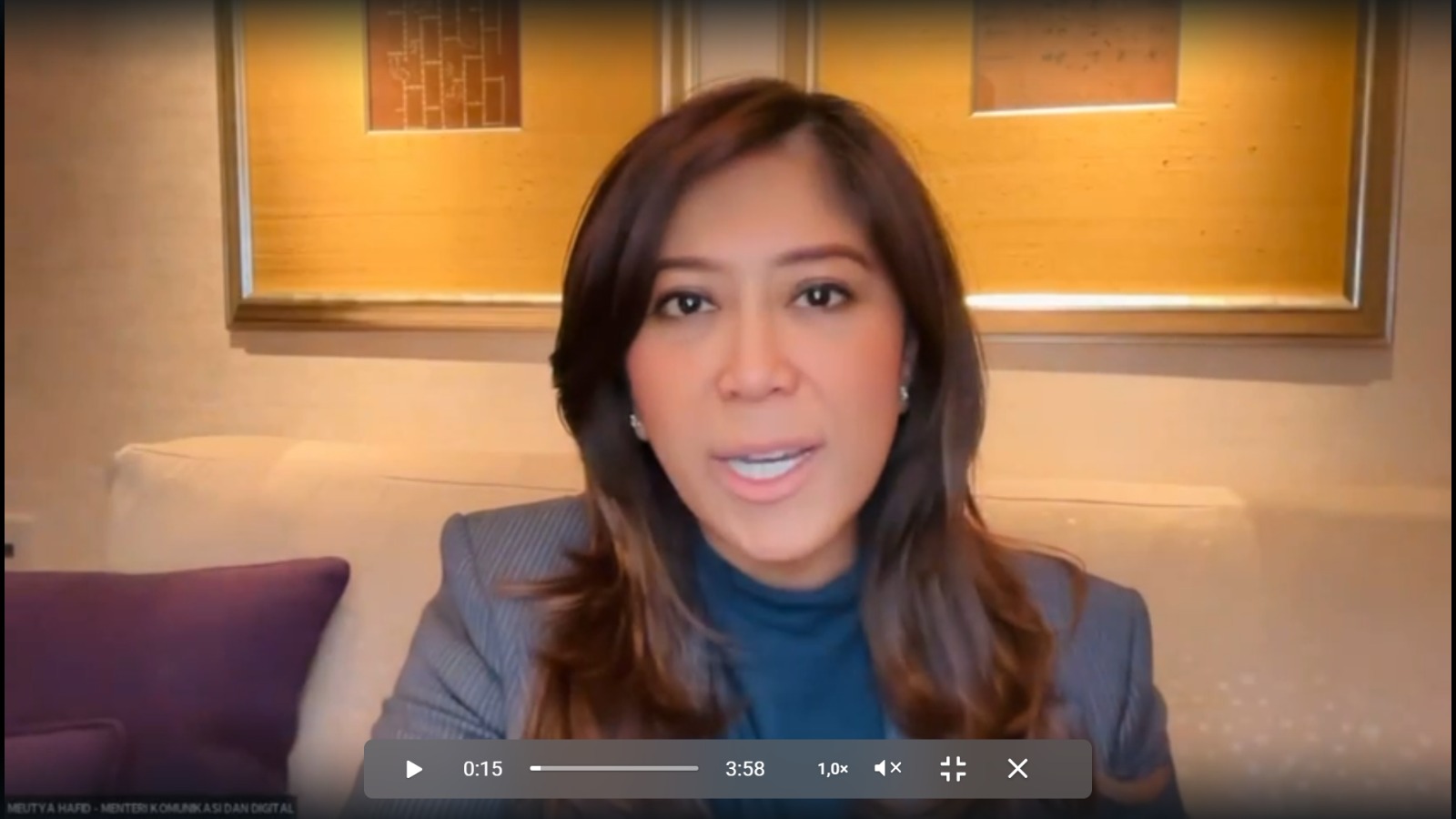
Additionally, Minister of Communication and Digital Affairs Meutya Hafid also praised platforms X and Bigo Live for complying with the age delay rule for child users on their platforms.
“We also note that there are two business entities that do not comply with the law, namely Meta, which oversees FB, IG, and Threads, as well as Google, which oversees YouTube. ‘Both have violated the applicable law in Indonesia, namely Ministerial Regulation No. 9 of 2026 as a derivative of the Tunas PP,’ said Minister Meutya Hafid on Monday (31/3), directly from Japan where she is accompanying President Prabowo on his visit.
Therefore, Kemenkomdigi has sent a summons letter as part of the implementation of administrative sanctions in accordance with applicable provisions.
‘From our monitoring over the two days of implementation of the Tunas PP and its derivative regulations, there are two compliant platforms, namely Platform X and Bigo Live, which have carried out compliance to delay the age for child users to 16 years and above,’ praised Minister Meutya.
The government has also categorised platforms that are deemed not fully compliant but are making efforts or are cooperative. ‘These are the TikTok platform and also Roblox, and to both, the government today issues a warning letter. If subsequently these two platforms still do not show full compliance, the government will adjust by also sending a summons to both platforms,’ said Minister Meutya.
On that occasion, Minister Meutya also emphasised the focus on collaborating with platforms that have the intention to respect Indonesia and not just treat it as a digital market. ‘But also committed to legislation and legal products in Indonesia in order to carry out child protection, the path that the country has indeed chosen, namely delaying until the child is ready,’ stressed Minister Meutya, who is in Japan accompanying President Prabowo on his visit.
Minister Meutya also added that the Government needs to convey that it is not too surprised if there are attempts to evade from 1-2 companies trying to avoid obligations, especially since from the beginning of the discussion of the Tunas PP, both platforms quite resisted from the start.
‘Considering that this policy is a major step for Indonesia as one of the countries with the largest number of social media users in the world with around 70 million children under 16 years old. The government also understands that this is not a 1-2 day step, but the government believes that this is the right step with the right direction; similar regulations are also implemented in many other countries, including in Asia, Asia Pacific, Europe, the Middle East, and other countries,’ explained Minister Meutya.
In this regard, the Government, said Minister Meutya, will invite all parents and children to also monitor and reprimand platforms that refuse this compliance. ‘We understand this is not easy; Indonesia is indeed the most active country in the digital space with an average scrolling usage of 7-8 hours per day. This is not just a new policy; this is a change in habits, behaviour, ways that require effort, time, and energy. Including efforts to combat addiction which may not be easy or comfortable for both children and parents,’ she concluded.
At the end of her statement, Minister Meutya invited everyone to stay focused and continue the struggle for the protection of Indonesian children. ‘Let us wait until the child is ready,’ she closed.
Monitoring of the policy will focus on aspects of child protection, including ensuring that children’s rights in the digital space are still fulfilled.
Digital space protection requires comprehensive steps that include public education and strengthening the capacity of users in understanding cyber risks.
In addition to AI, popular online games like Roblox and Minecraft are also seen to pose risks because children often have difficulty distinguishing between the game world and reality.
Compared to implementing total access bans, YouTube chooses an approach with integrated and age-based protection features.
DKI fully supports the central government’s policy, especially those related to protecting children from potential negative impacts due to age-inappropriate consumption.