
Ministry of Basic and Secondary Education Reports 74% Completion of SPMB Guidelines by Local Governments
Jakarta (ANTARA) - The Ministry of Basic and Secondary Education (Kemendikdasmen) reports that technical guidelines (juknis) for implementing the Student Admission System (SPMB) for the 2026/2027 academic year, prepared by local governments (pemda), have reached 74% completion.
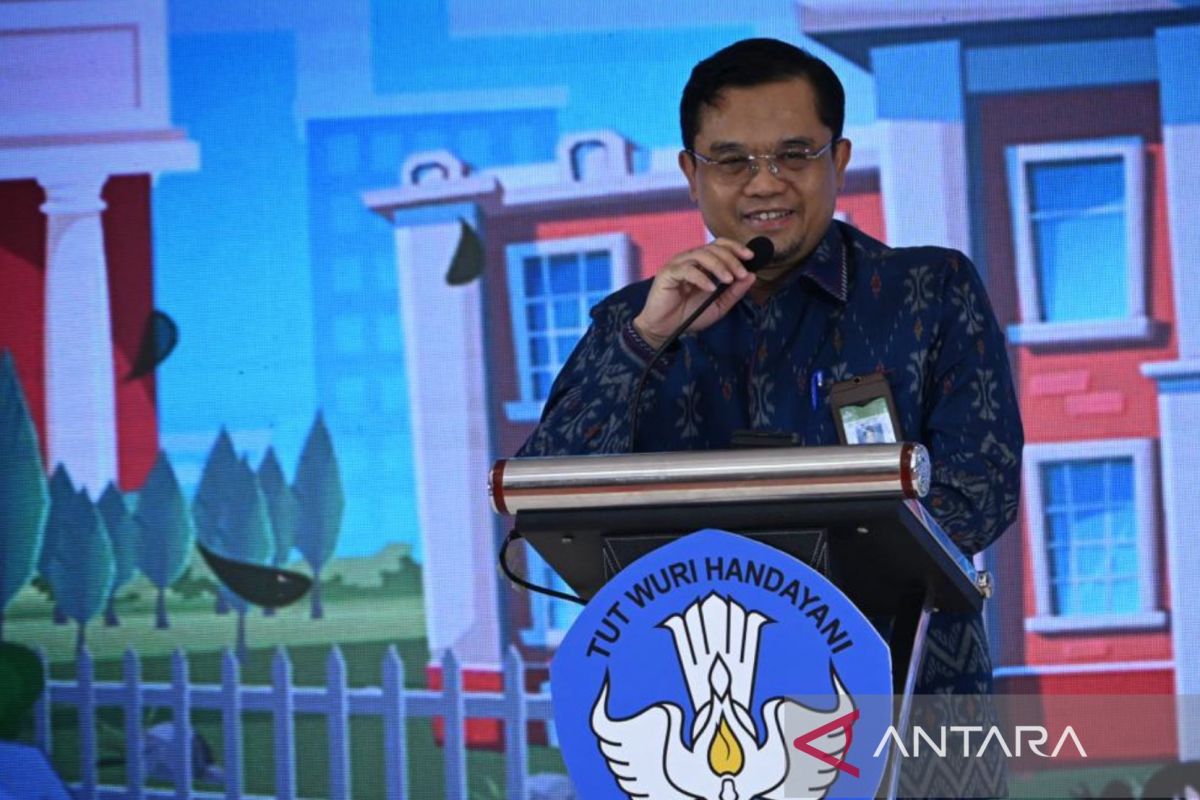
Director General of Early Childhood Education, Basic Education, and Non-Formal and Informal Education at Kemendikdasmen, Gogot Suharwoto, emphasised that the legal basis for SPMB still refers to Ministerial Regulation Number 3 of 2025 on the Student Admission System.
“However, considering changes in capacity calculations for educational units, we have also issued Director General’s Circular Number 0301/C/HK.04.01/2026,” he stated in Jakarta on Friday.
“As of 3 May, 74% of districts/cities and provinces have completed it. However, 26% of regional SPMB guidelines are still in the finalisation stage, consisting of 64% in the legal bureau process and 36% awaiting signing by regional heads,” he added.
Furthermore, he continued, the authority for capacity calculations has been delegated to the Major Education Quality Assurance Centre (BBPMP) in each province.
This step is taken to enable direct resolution of issues at the provincial level without relying on the central government.
His side is also encouraging the involvement of private schools to ensure that students from low-income families can still study at private schools without fees.
From those figures, he said, 53 regions are intervening through operational assistance funds for schools (BOS), while 25 other regions through Student Personal Assistance.
With the involvement of 811 private schools at the senior high school (SMA), vocational high school (SMK), and vocational secondary school (SKh) levels, Gogot noted that Banten Province has the largest private education intervention.
To facilitate 9.4 million children transitioning to the next education level, he requested regional heads to instruct coordination among at least four agencies: the Education Agency (Disdik) for socialising admission pathways and school capacities, the Civil Registry and Population Agency (Dukcapil) for verifying and validating domicile pathway data, the Communication and Informatics Agency (Diskominfo) for preparing online registration, and the Social Agency (Dinsos) for verifying and validating affirmative pathway data.