
Ministry of Basic and Secondary Education: Private Sector Collaboration Supports Student Talent Management
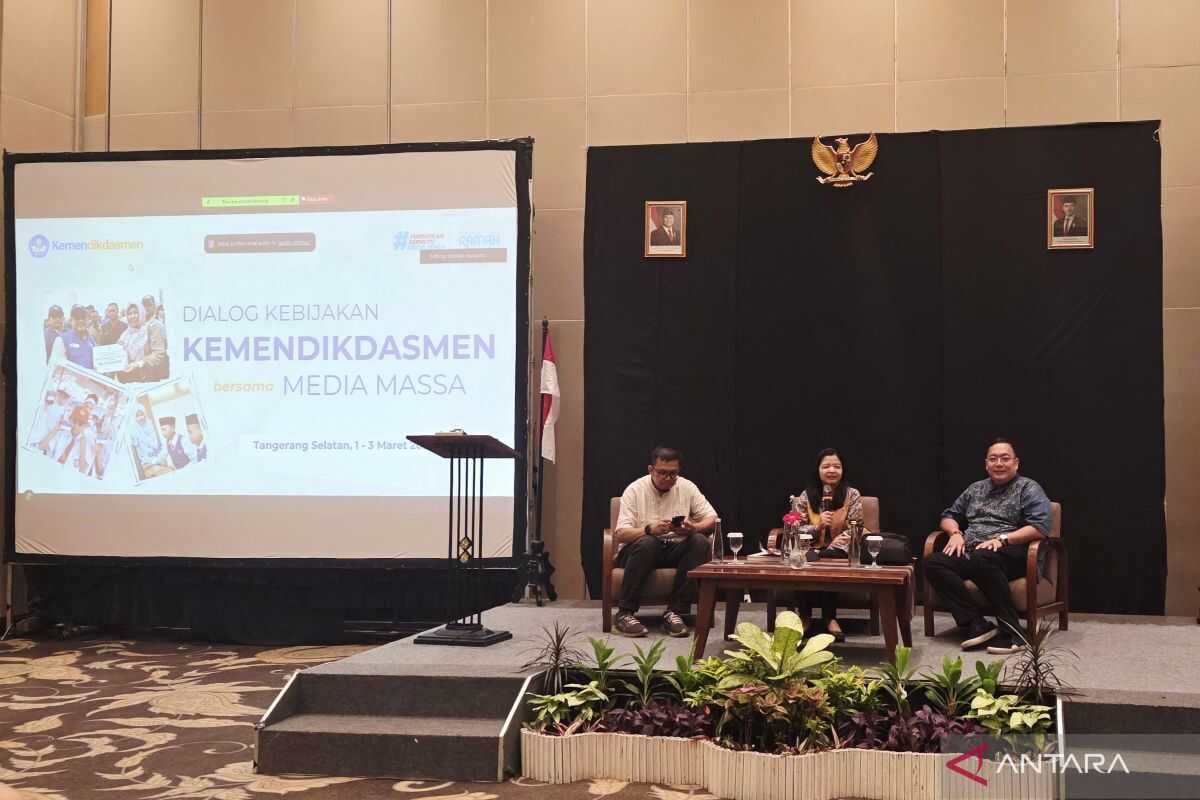
Jakarta - The Ministry of Basic and Secondary Education (Kemendikdasmen) states that collaboration with private companies supports the implementation of Ministry Regulation Number 25 of 2025 on Student Talent Management through the provision of career development recognition opportunities.
Maria Veronica Irene, Head of the National Achievement Centre (Puspresnas) under Kemendikdasmen, said the regulation serves as a bridge for talented students who choose to develop their interests and abilities in the professional world in accordance with applicable laws and regulations.
“Through career development recognition facilities, we bridge the pathways available to them. This doesn’t mean they directly enter any particular company or become civil servants, et cetera,” she said during a Policy Dialogue event held by Kemendikdasmen in South Tangerang, Banten Province, on Sunday afternoon.
She stated that the regulation strengthens collaboration with private companies that have previously been involved in various Student Skills Competitions (LKS), thereby providing wider opportunities to recruit talented students in professional fields.
She cited examples where numerous companies have recruited secondary school (SMA) and vocational school (SMK) students who were LKS champions as specialist staff.
“Several private companies supporting the LKS directly recruit these students, so companies immediately observe which students are specialists in particular fields. For instance, automotive companies involved in the competition observe which candidates could become employees in their various locations or offices,” she said.
On Saturday (10 January), Kemendikdasmen issued Ministry Regulation Number 25 of 2025 on Student Talent Management to manage students’ talents, interests, and best capabilities in a planned, structured, and sustainable manner.
Minister of Basic and Secondary Education Abdul Mu’ti stated that student talent management is an important component in efforts to create superior and competitive human resources.
“Through this regulation, the government reaffirms its commitment to ensuring every student receives equal opportunities to develop their best potential in accordance with national education objectives,” he said.
As a form of recognition, the regulation also provides for appreciation of high-achieving talented students through facilitation of learning careers, work careers, further development, and welfare support.
Additionally, the student talent capitalisation policy is directed at empowering students’ potential and work to support the development of superior human resources and enhanced national competitiveness.