
Ministry of Basic and Secondary Education: Distance Learning for Secondary Education Offers New Hope to Reduce Out-of-School Children
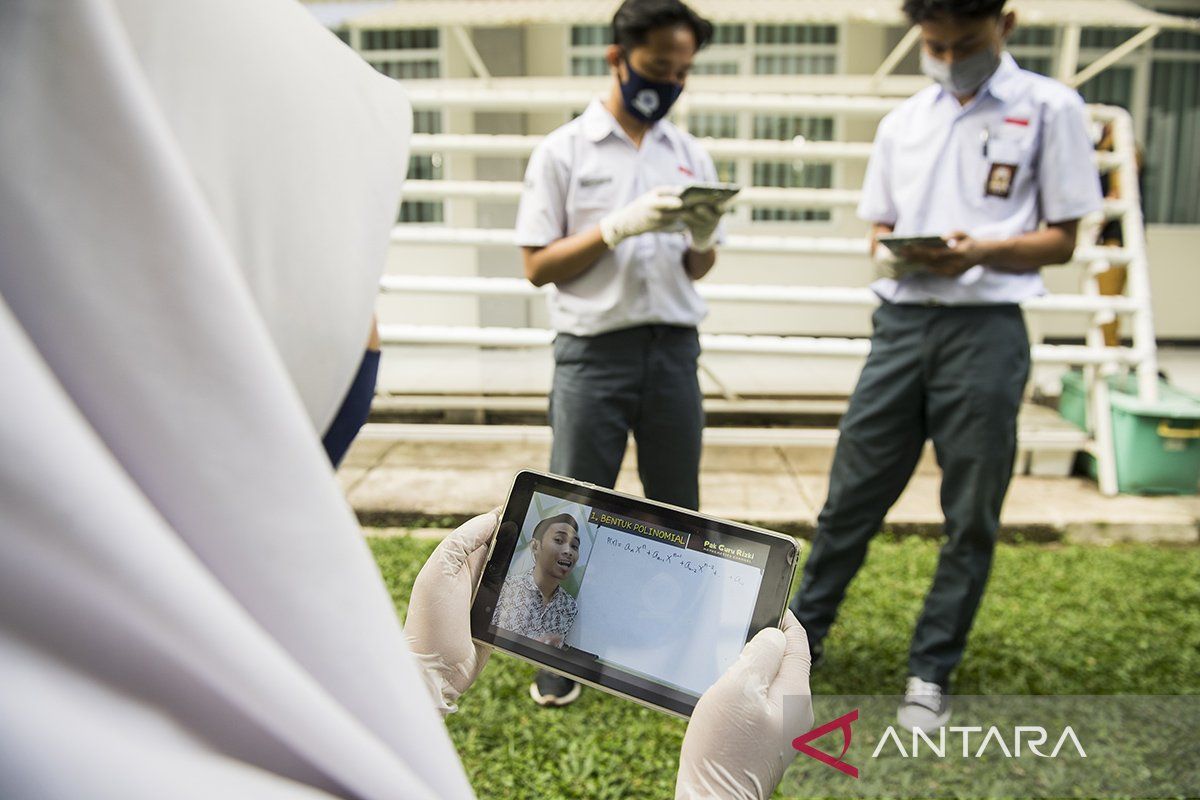
The Indonesian Ministry of Basic and Secondary Education (Kemendikdasmen) states that the launch of the distance learning (PJJ) programme for secondary education brings new hope in reducing the number of out-of-school children (ATS) in various regions of Indonesia.
Head of Administration at the Indonesian School Kota Kinabalu (SIKK) Malaysia, Sukma Sabdani, in a written statement in Jakarta on Saturday, said the PJJ programme has proven to provide real solutions for hundreds of Indonesian students in the Sabah region, Malaysia, who face obstacles in continuing their education.
So far, he said, the implementation of PJJ has run well and significantly increased access to education.
“From around 1,700 SMP graduates each year, the PJJ programme will be able to accommodate more than half of the students who were previously not accommodated in the regular formal education programme. PJJ becomes an effective solution for those living in remote areas, including Indonesian children in plantation areas that are hundreds of kilometres from the city centre or SIKK,” Sukma stated.
“Going forward, SIKK plans to continue developing the scope of the PJJ programme to reach more students, including those who are already working but have not completed their education. We hope this programme can continue and receive ongoing support from the government,” he added.
Furthermore, as the parent school that will implement PJJ, Head of SMAN 1 Ternate in North Maluku Province, Sabaria Umahuk, stated that the school has carried out various preparations to support the implementation of the PJJ programme.
In its implementation, SMAN 1 Ternate is entrusted as the parent school that will collaborate with three partner schools, namely SMAN 1 North Halmahera, SMAN 1 Morotai Island, and SMAN 2 East Halmahera.
“This programme is a great opportunity to reach children who have so far not had access to education, especially in our region, North Maluku. Through strong collaboration and support from the local government, we are optimistic that we can provide maximum educational services to reduce ATS and realise quality education,” Sabaria said.
In line with Sukma and Sabaria, Head of SMAN 2 Padalarang in West Java Province, Kicky Eceu Wardani, expressed full readiness and support for the implementation of PJJ as an effort to expand access to education, especially for students who cannot attend face-to-face learning directly.
She explained that her school has similar experience in organising the Open SMA programme. For her, that experience becomes important capital in managing PJJ learning.
Regarding support from the local government, her school has also coordinated with the education office and various schools in the West Java region to strengthen readiness for PJJ implementation.
“This programme is very helpful because it facilitates students who cannot attend school directly. The current focus of PJJ is also directed at children who have temporarily stopped schooling so they can continue their education. We hope the implementation of PJJ runs well and brings new hope for ATS in the West Java region,” Kicky said.
SIKK plans to continue developing the coverage of the PJJ programme to reach more students.