
Ministry of Basic and Secondary Education Confirms Continuation of School Revitalisation Programme
The Ministry of Basic and Secondary Education (Kemendikdasmen) has confirmed the continuation of its School Revitalisation Programme in 2026, with budget allocations already secured in the state budget (APBN).
Policy focus has been firmly directed towards three key priorities: schools in severely damaged condition, schools in disadvantaged, frontier and outermost regions (known as 3T areas), and schools in disaster-affected areas.
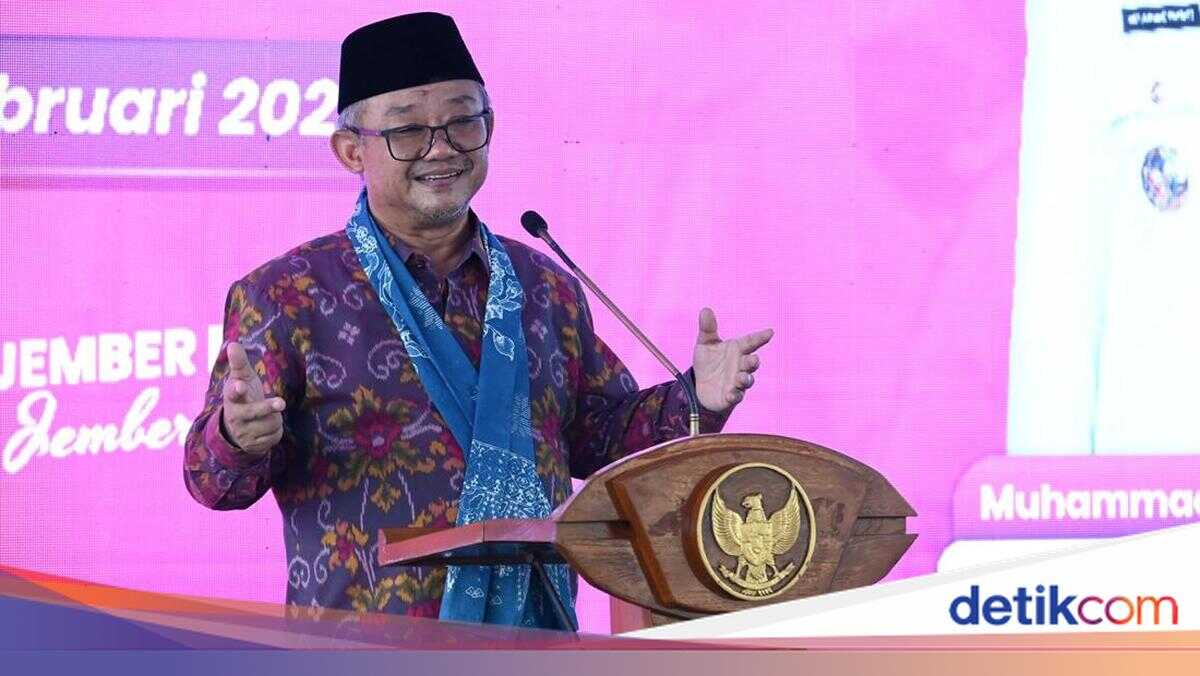
Minister of Basic and Secondary Education Abdul Mu’ti stated that the government has allocated approximately Rp14 trillion for the programme’s implementation in 2026. The verification and validation process for prospective recipient educational units is currently under way.
“For 2026, Rp14 trillion has been secured in the APBN for revitalisation. Meanwhile, what we have allocated — now in the verification process — covers approximately 11,470 educational units,” said Abdul Mu’ti in a statement on Monday (23 February 2026).
He emphasised that the policy reflects the government’s consistency in ensuring every Indonesian child learns in a safe and adequate environment. Sufficient educational infrastructure serves as a crucial foundation for improving learning quality and ensuring equitable access to education.
Abdul Mu’ti further revealed that, in accordance with President Prabowo Subianto’s directive during National Teachers’ Day 2025, the scope of revitalisation in 2026 will be significantly expanded. The government is targeting an additional 60,000 educational units for revitalisation, bringing the projected total for 2026 to more than 71,000 educational units.
This directive, he said, demonstrates Prabowo’s strong commitment to making education the foremost national development priority. Prabowo views education as the key to eradicating poverty.
“The President is committed to transforming Indonesian society into an advanced society with education as its priority. He has repeatedly stated that the formula for eradicating poverty is education,” he explained.
In 2026, the programme will continue to use a self-management mechanism, as previously implemented. This scheme is considered effective in encouraging active participation from educational units whilst ensuring construction quality is better maintained, as schools are directly involved in the process.
Abdul Mu’ti affirmed that three priority criteria will serve as the primary basis for determining aid recipients.
“The priorities for 2026 are severely damaged schools, schools in 3T regions, and schools in disaster-affected areas. These three areas are the focus of revitalisation in 2026,” he concluded.
Through the continuation of this programme, Kemendikdasmen reaffirms its commitment to delivering fairness and equitable quality of educational infrastructure across Indonesia.
With safe, adequate and dignified learning environments, education is expected to increasingly serve as a pathway out of inequality and poverty, whilst guiding Indonesia towards sustainable progress.