
Ministry of Basic and Secondary Education Accelerates Learning Digitalisation in Remote Regions
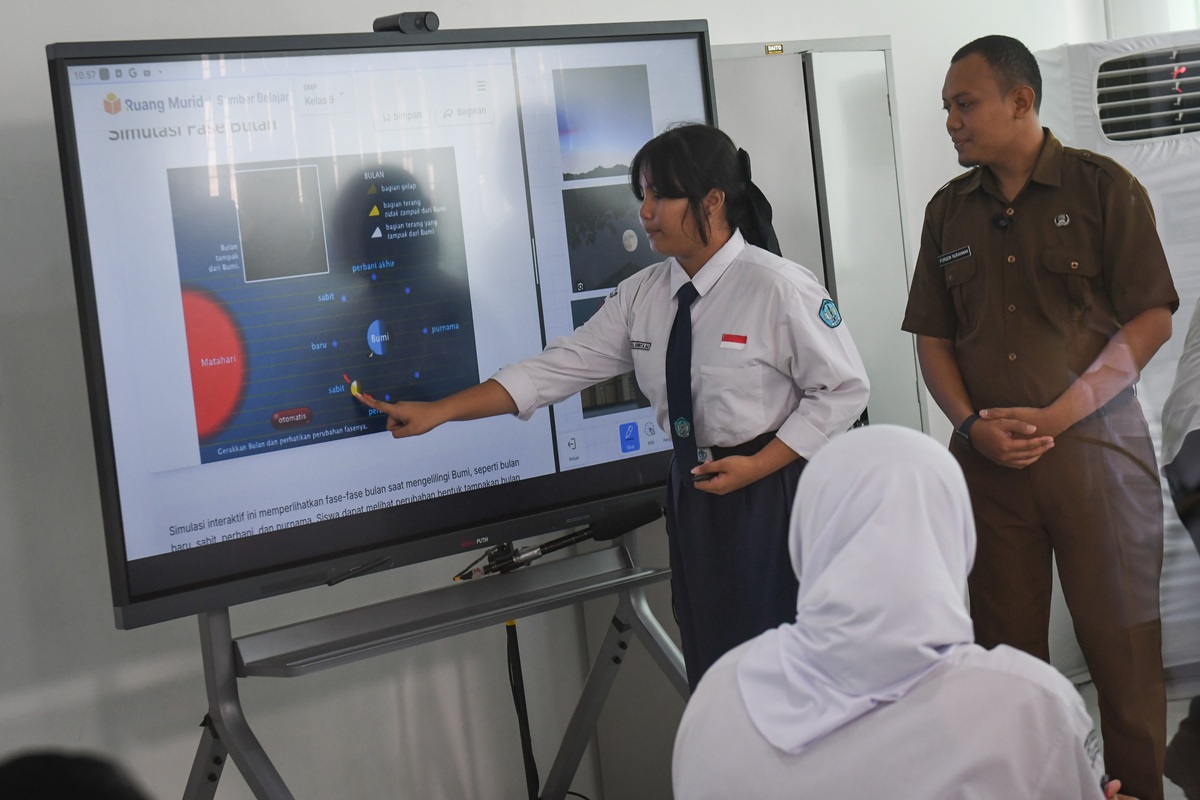
The Ministry of Basic and Secondary Education (Kemendikdasmen) continues to accelerate the equalisation of education quality in Tertiary, Frontier, and Remote (3T) regions. These efforts are focused on digital transformation of education and character formation of young people capable of adapting to global developments.
This initiative aligns with President Prabowo Subianto’s vision emphasising the importance of youth collaboration in improving human resources quality. The government seeks to expand access to education services and optimise regional potential to strengthen national competitiveness towards Advanced Indonesia.
Minister of Basic and Secondary Education Abdul Mu’ti stated that national education must be present among society and provide solutions to various national problems. “Our education must be grounded and present among the people, capable of providing solutions to various challenges. We want to build a generation that not only excels in global achievement but maintains strong integrity and nationalism as cadres of the nation,” Abdul Mu’ti said when opening the Second Assembly of Muhammadiyah Youth in Bali.
As implementation of the programme, Kemendikdasmen collaborates with various parties to deploy professionals and scholarship recipients to Papua, Maluku, and East Nusa Tenggara (NTT). They are assigned to provide digital education and technical support to students in remote areas.
Vice President Gibran Rakabuming Raka emphasised the importance of strengthening technology infrastructure in remote schools to reduce educational disparities. According to Gibran, the utilisation of modern learning devices such as Interactive Flat Panels (IFP) or Digital Interactive Boards must continue to expand to reach Papua and NTT regions.
“We want to ensure education programmes reach areas that have been difficult to access. Digitalisation through modern educational tools must be operatable and utilised maximally by teachers and students in 3T regions,” he stressed.
Beyond strengthening basic education digitalisation, the government also focuses on developing advanced skills for secondary education students. This step is considered important to address global challenges whilst utilising demographic dividends through improved youth productivity.
Through strengthened educational technology and cross-sectoral collaboration, Kemendikdasmen targets equalising access to quality education for all children of the nation. The government believes that improving human resources quality through equitable and adaptive education responsive to technological developments is the main foundation in realising an advanced and just Indonesia.