
Ministry of Agriculture supplies 1.7 tonnes of red cayenne pepper to Kramat Jati Central Market
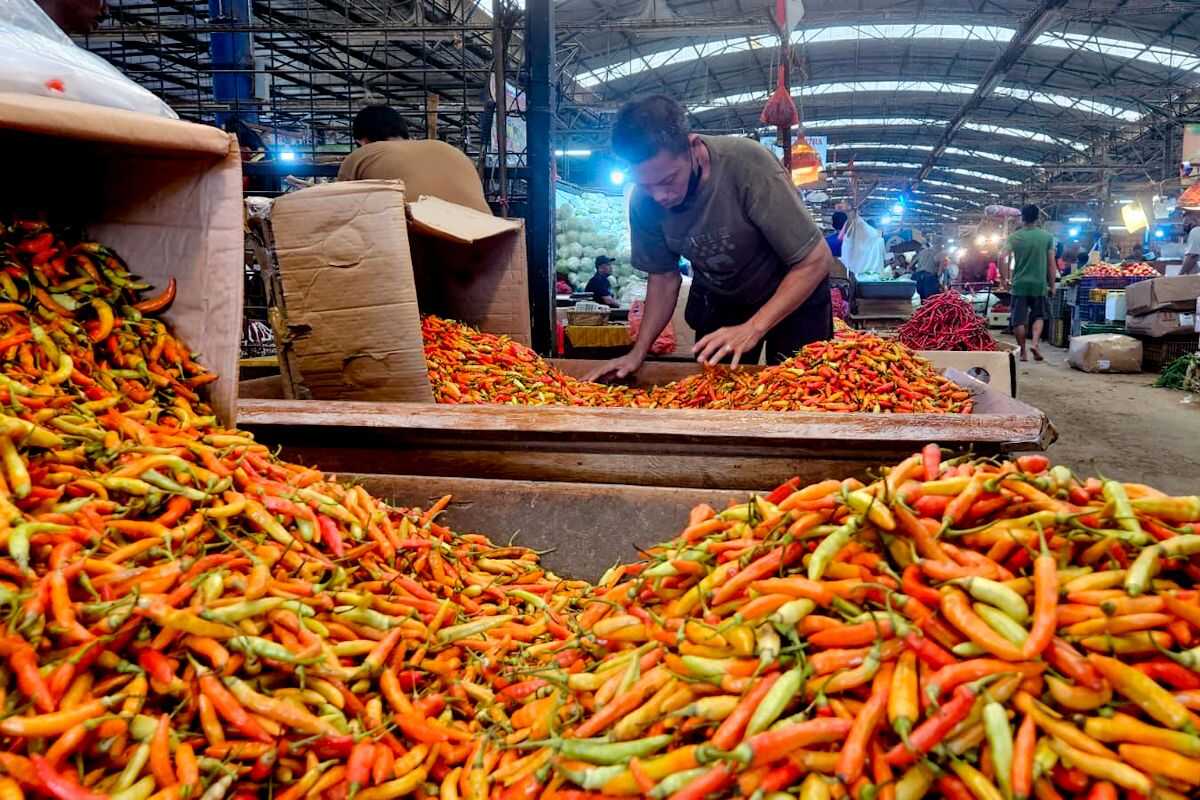
Jakarta (ANTARA) - The Ministry of Agriculture has supplied 1.7 tonnes of red cayenne pepper to the Kramat Jati Central Market (PIKJ) in Jakarta, in a bid to maintain supply stability and control consumer-level prices during the Ramadan 1447 Hijriah period.
“This is part of the government’s concrete efforts to maintain supply stability and control the price of red cayenne pepper at the consumer level,” said Muhammad Agung Sunusi, Director of Vegetables and Medicinal Plants at the Ministry of Agriculture’s Directorate General of Horticulture, in a statement in Jakarta on Tuesday.
He explained that PIKJ would continue to receive supplies of red cayenne pepper from production centres through strong support from chilli champions — a network established by the Ministry of Agriculture across various regions.
“We will continue to safeguard supplies to PIKJ. Chilli champions at production centres are ready to send red cayenne pepper on an ongoing basis so that public demand during Ramadan remains fulfilled,” Agung said.
He confirmed that the price of red cayenne pepper supplied by chilli champions has been set at around Rp50,000 per kilogram.
To keep prices affordable at the consumer level, Agung continued, the government through the National Food Agency’s (Bapanas) Food Distribution Facilitation (FDP) programme is subsidising transport costs from production centres to PIKJ.
“Under this scheme, the highest consumer-level price is expected not to exceed Rp65,000 per kilogram,” Agung said.
Furthermore, Agung explained that prices for other horticultural commodities have remained relatively stable. White cayenne pepper is priced at around Rp30,000 per kilogram, green curly chilli at Rp25,000 per kilogram, large red chilli at Rp40,000 per kilogram, and red curly chilli at Rp50,000 per kilogram.
Of all chilli varieties, only red cayenne pepper has experienced a significant price increase in recent times.
The rise in red cayenne pepper prices at the start of Ramadan has been influenced by heavy rainfall across several production centres. The increased rainfall intensity has prevented optimal harvesting, causing supply disruptions.
Additionally, the onset of Ramadan brings the tradition of nyekar, or grave visits, in various regions, which also increases chilli demand at the beginning of the fasting month.
“Heavy rainfall has prevented farmers from harvesting optimally. Combined with increased public consumption ahead of Ramadan, prices rose temporarily. However, with this distribution intervention, we are optimistic that prices will stabilise soon,” Agung explained.
He affirmed that in line with the policies of Agriculture Minister Andi Amran Sulaiman and Deputy Agriculture Minister Sudaryono, his office would continue to monitor chilli price developments and supply across all regions of Indonesia.
Intensive coordination with regional governments, business operators, chilli champions, and other stakeholders continues to be strengthened to ensure smooth distribution from production centres to markets.
These stabilisation efforts form part of the government’s commitment to maintaining national food stability whilst protecting public purchasing power during the holy month of Ramadan.
“Distribution interventions will continue to be carried out responsively whenever price surges occur, so that public needs can be met at affordable prices,” Agung said.