
Ministry of Agriculture studies use of sorghum harvest in Cirebon for seed production
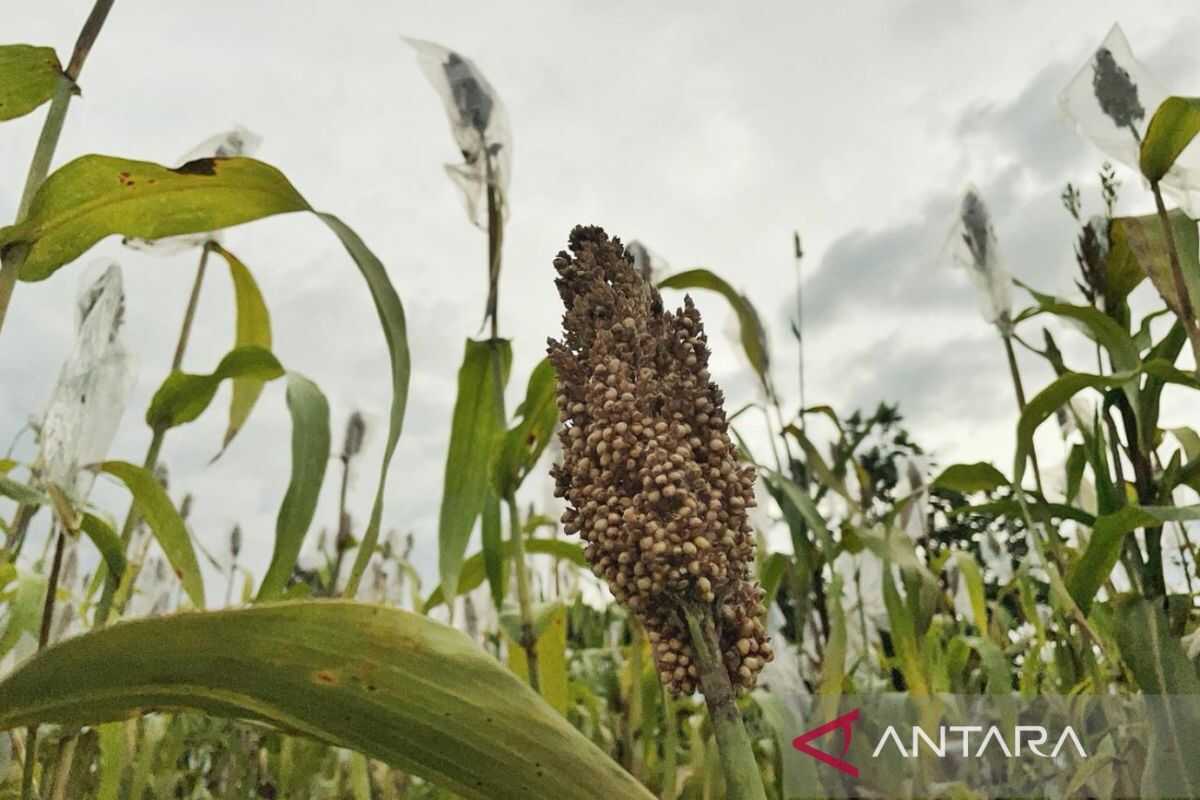
Cirebon, West Java — The Directorate General of Food Crops at the Ministry of Agriculture is examining the use of sorghum harvests developed in Cirebon Regency as seed stock to support the expansion of the crop in several regions. Gunawan, Director of Cereals at the Directorate General of Food Crops, said the seeds produced from development activities in Cirebon could be used to help expand sorghum planting areas. He explained the government aims to develop sorghum production over an area of 2,500 hectares by 2026, thus requiring seed supply from breeders or domestic producers. He also noted that industry involvement is important to strengthen the sorghum agribusiness ecosystem. Gunawan views collaboration with PT Dirgantara Indonesia (PTDI) and the West Java provincial government as positive steps, especially in promoting the use of technology in the downstream sector of the commodity. ‘We welcome PTDI as an entity that will participate in agribusiness development, particularly in downstream management,’ he said. He explained that sorghum has great potential because its production can be used for food as well as alternative energy such as biofuel and biomass. Gunawan stated developing the downstream industry is important to absorb farmers’ production, hence sorghum cultivation has clearer economic prospects. ‘The strength of sorghum lies in how we can absorb its production for the next processes, whether for food, biofuel, or biomass,’ he said. He acknowledges that sorghum development in Indonesia has been limited, partly because downstream processing has not developed optimally. However, with industry involvement in processing the grain and stalks, opportunities for the commodity appear wider. He added that sorghum can also be grown on marginal land or land with low fertility, making it an alternative for farmers to utilise unproductive land. ‘In areas where essential nutrients are already thin, sorghum can be used as an alternative crop in the future,’ he said.