
Ministry of Agriculture: CPO Downstreaming Strengthens National Energy-Economic Independence
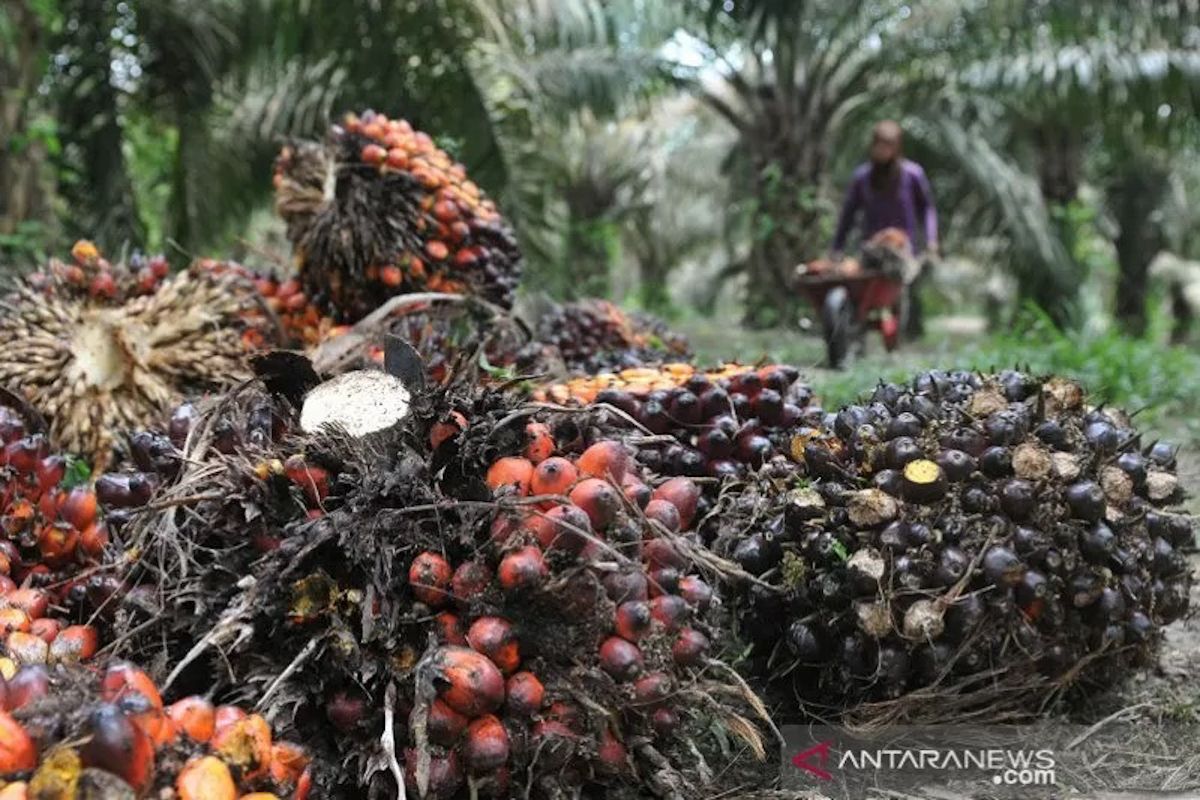
Jakarta (ANTARA) - The Ministry of Agriculture (Kementan) asserts that downstreaming crude palm oil (CPO) is a key strategy to strengthen the national economy, promote energy independence, and improve farmers’ welfare.
Head of the Bureau of Communication and Information Services at Kementan, Moch Arief Cahyono, stated that Indonesia, as the world’s largest CPO producer with more than 60% of global production, holds a strategic position to control the palm oil industry’s value chain through strengthening the downstream sector.
“Indonesia can no longer merely be an exporter of raw materials. CPO downstreaming is a concrete step to transform Indonesia from a raw material supplier into a major producer of high-value-added products needed by the global market,” Arief said in his statement in Jakarta on Wednesday.
He explained that processing CPO into various derivative products such as processed foods (margarine), cosmetics, soap, oleochemicals, and bioenergy will strengthen national economic resilience while enhancing the competitiveness of the domestic industry.
“With control over more than 60% of the world’s CPO market, Indonesia has significant leverage in determining the direction of supply and prices of global palm derivative products,” he emphasised.
Furthermore, palm oil downstreaming also serves as an important foundation for achieving national energy independence through the development of B50 biodiesel (a 50% mixture of palm-based biodiesel with diesel).
“Optimal utilisation of palm biofuel has the potential to significantly replace diesel imports. In fact, with full implementation of B50, Indonesia has the opportunity to no longer import diesel and meet energy needs from domestic resources,” he explained.
He stated that this assertion also clarifies various incomplete framings of statements by Minister of Agriculture Andi Amran Sulaiman regarding global geopolitical dynamics, including the illustration of the closure of the Strait of Hormuz, which only represents about 20% of the world’s oil distribution.
According to him, the statement is not a crisis prediction but an illustration to show how global supply disruptions can impact energy prices.
In that context, he said Indonesia actually has a strategic advantage. With control over more than 60% of global CPO production, Indonesia’s potential influence on the plant-based alternative energy market is far greater.
If managed optimally through downstreaming, he continued, that position can become a strategic strength and bargaining power for Indonesia in the global economic arena.
Government calculations show that implementing B50 biodiesel requires about 5.3 million tonnes of CPO. That volume can be diverted from exports to be processed into biofuel, thus potentially significantly replacing diesel imports, saving foreign exchange, and strengthening national energy resilience.
“So far, the prices and trade standards for global energy products have often been determined by other countries,” he said.
However, with the palm resource strength it possesses, Indonesia has the opportunity to play a larger role in determining market directions, given the world’s high demand for more sustainable alternative energy sources, including those based on palm oil.
The performance of the national palm oil sector also shows a very positive trend. Based on the official release from the Indonesian Palm Oil Entrepreneurs Association (GAPKI) as of 13 March 2026, Indonesia’s CPO production in 2025 reached 51.66 million tonnes, an increase of 7.26% (up about 3.5 million tonnes) compared to the previous year. Total CPO and PKO production was recorded at 56.55 million tonnes, up 7.18%.
On the trade side, palm oil product exports showed strong growth with a volume of 32.34 million tonnes (up 9.51%) and a value of 35.87 billion US dollars or approximately Rp590 trillion (up 29.23%). This increase also drives farmers’ welfare, as seen from the Farmers’ Exchange Rate (NTP) reaching 125.45 in February 2026.
The increase in production and palm oil export performance also contributed to the rise in the NTP for the plantation subsector to its highest level. This condition reflects improving welfare for palm oil farmers, in line with increasing demand and more competitive prices at the farmer level.
Palm oil downstreaming has also proven able to significantly increase the added value of products, ranging from 3 to more than 30 times compared to merely exporting raw CPO.
In general, downstreaming can increase economic value 3–10 times, and even for high-value products like vitamin E and certain oleochemicals, the added value can reach more than 30 times.
The development of the downstream palm oil industry has currently produced more than 193 types of derivative products, from food, cosmetics, chemicals, to bioenergy.
According to him, this transformation not only strengthens the national industrial structure but also increases prices at the farmer level, expands employment opportunities, and creates broad chain economic effects.