
Ministry of Agriculture Confident Chilli Price Spike Will Soon Ease as Ramadan Supply Secured
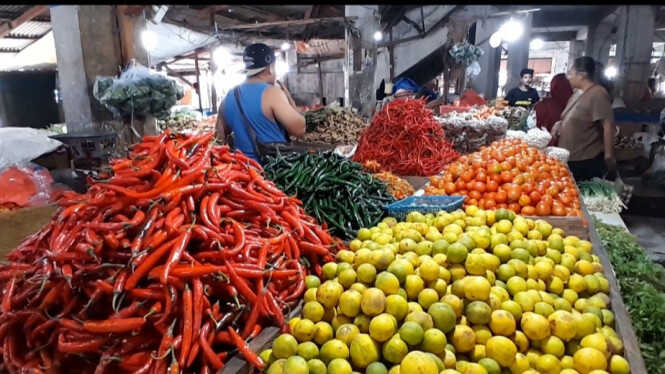
Jakarta, VIVA – The Ministry of Agriculture has stated that the current spike in chilli prices will soon subside, assuring the public that the national supply of various chilli varieties is secure and in surplus to meet demand during the holy month of Ramadan and Eid al-Fitr 1447 Hijriah/2026.
Director General of Horticulture at the Ministry of Agriculture, Muhammad Taufiq Ratule, affirmed that the government is actively ensuring the availability of strategic food commodities for the public. In line with directives from Minister of Agriculture Andi Amran Sulaiman, ministry officials have been conducting direct monitoring in the field.
“This assurance is the result of strengthened national production, intensive monitoring at key production centres, and cross-sector synergy in maintaining the stability of strategic food supply and prices,” Taufiq said in a statement in Jakarta on Thursday, 19 February 2026.
He confirmed that, based on national food balance projections, chilli availability is in a surplus position. For bird’s eye chilli, the projected surplus stands at approximately 54,000 tonnes in February 2026, rising to 99,000 tonnes in March 2026.
“The government is ensuring that national chilli production and supply are in a safe and controlled condition. Through strengthened production, smooth distribution, and price oversight, we guarantee that public demand during Ramadan and Eid al-Fitr can be adequately met,” Taufiq said.
Meanwhile, large chilli varieties have also recorded surpluses of 14,000 tonnes in February and 11,000 tonnes in March 2026 respectively. This reflects sufficiently robust national supply resilience in the face of increased demand during major national religious holidays.
Taufiq explained that national chilli production during the February–March 2026 period is supported by tens of thousands of hectares of harvest area spread across various production centres, both on the island of Java and beyond.
Key production centres include West Java, Central Java, East Java, Sumatra, Sulawesi, and West Nusa Tenggara, with harvesting taking place in phased and continuous patterns.
Director of Vegetables and Medicinal Plants at the Directorate General of Horticulture, Muh. Agung Sunusi, added that his team has conducted visits to various chilli production centres, particularly in Garut, Sumedang, Bandung, and East Lombok.
The visits showed that chilli crops are generally growing healthily and harvesting continues despite challenges posed by climate anomalies and plant pest organisms.