
Ministry of Agriculture and SOEs Reaffirm Commitment to Integrated Chicken Downstreaming in Bone for Rural Farmers
The Ministry of Agriculture (Kementan) and food state-owned enterprises (BUMN) have reaffirmed their commitment to developing an integrated chicken downstreaming program in Bone Regency, South Sulawesi, to strengthen rural poultry farming and establish new food hubs outside Java. The programme is designed to integrate the supply chain from upstream to downstream, covering seed supply, feed, breeding, and the absorption of rural farmers’ production outputs.
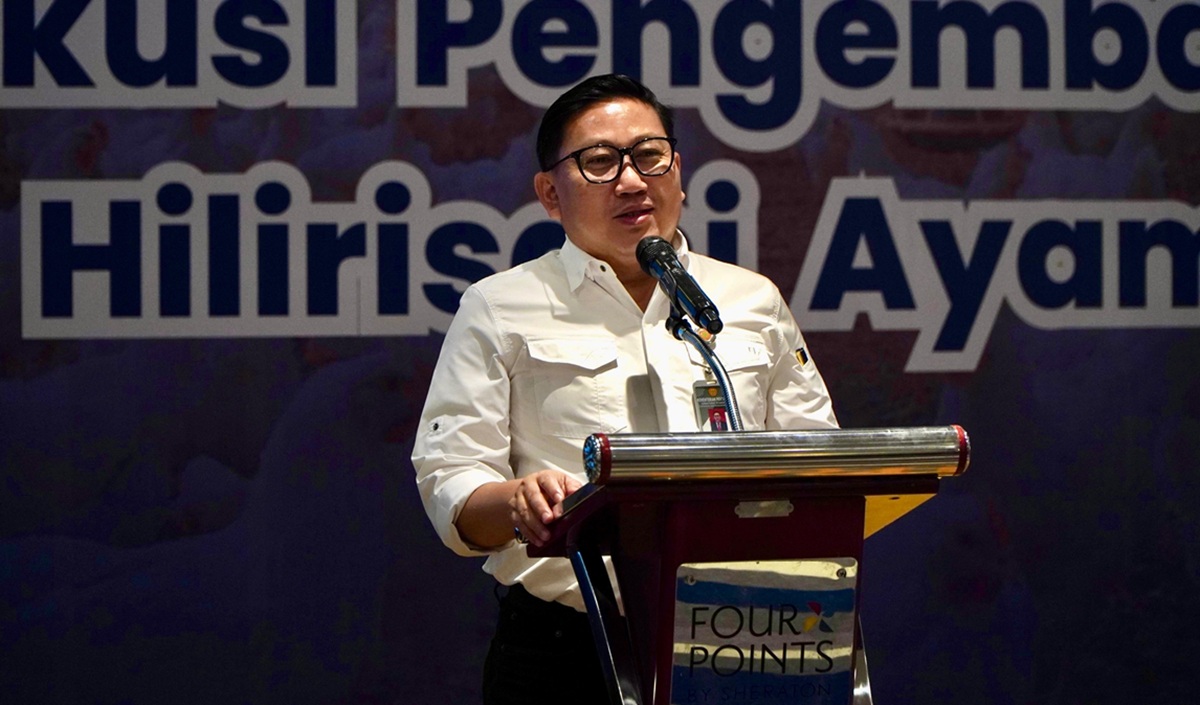
Agung stated during a meeting in Makassar on Thursday, 28 May 2026, that the integrated chicken downstreaming programme is a national strategic project monitored directly by the central government due to its role in long-term rural poultry industry development.
“This is no joke. It is a national strategic project designed to build an integrated chicken downstreaming ecosystem and strengthen the position of rural farmers,” Agung said.
According to Agung, South Sulawesi was chosen as one of five priority provinces for national chicken downstreaming due to its strong rural poultry base and corn supply for feed. Bone Regency was selected as the main location due to its prepared ecosystem and strong local government support.
“If Bone succeeds, Insha Allah other areas will too,” Agung said.
He explained that the government’s model places rural farmers at the centre of the ecosystem. The state, through BUMN, will strengthen the upstream sector by providing seeds and feed, while the production outputs will be absorbed through an integrated partnership system.
“The state, via BUMN, will prepare the seeds and feed, then absorb the produce. This is the spirit initiated by the Minister of Agriculture,” Agung said.
Bone Regency’s regent, Andi Asman Sulaiman, stated the local government is fully committed to accelerating the programme, believing it will create new jobs and strengthen the local economy.
“We have around 60,000 hectares of corn farming in Bone, which can reach up to 120,000 hectares during certain seasons. With the integrated chicken downstreaming programme, we are grateful as the feed raw materials can now be supplied locally,” Andi Asman said.
He also confirmed the local government is ready to assist with on-the-ground requirements, including permits, labour, and materials to expedite the project.
“If there are any issues regarding permits, land, labour, or materials that we can assist with, we are ready to support to ensure the project progresses swiftly,” he added.
PT Berdikari’s Operational Business Director II, I Putu Yastika, emphasised that BUMN’s involvement is not merely about building a poultry project but creating a business ecosystem that provides certainty for rural farmers from upstream to downstream.
“This is not a small project. It is a crucial part of national chicken downstreaming development that must be built collaboratively,” Yastika said.
He stressed that the programme’s success requires synergy among all parties to ensure economic benefits reach local communities and rural farmers.
“Strong openness and collaboration are key to the programme’s success. It will not succeed without good communication and synergy,” Yastika said.
Meanwhile, H. Mulyadi Atma, Chairman of the People’s Economic Empowerment Agency (LPER), said rural farmers in South Sulawesi are ready to support the integrated chicken downstreaming initiative as it provides the business certainty they have long needed.
“We hope the programme can immediately commence in the breeding sector by involving existing independent farmers in South Sulawesi,” Mulyadi Atma said.
He explained that the partnership model positions rural farmers as a core part of the poultry value chain, ensuring raw material and market certainty for them.
“The state, via BUMN and supported by the government, creates raw material and market certainty. This is what rural farmers have long needed,” he said.
Kementan views the integrated chicken downstreaming development in Bone as a national model for modern partnership-based poultry farming that not only strengthens food security but also improves rural farmers’ welfare.
PT Berdikari is pushing for cross-sectoral synergy to achieve national food self-sufficiency through the Integrated Chicken Downstreaming (HAT) Project.
The GPS facility is built on 5.6 hectares of land with a capacity of 18,000 GPS units.
Integrated chicken downstreaming is seen as a proactive step by the state to ensure the continuity of protein self-sufficiency.
The integrated chicken downstreaming aims to improve farmers’ welfare through affordable Day Old Chickens (DOC), enhanced competitiveness, and business stability.