
Ministry of Agriculture and Public Works Optimise Water Management to Anticipate Drought in Central Java
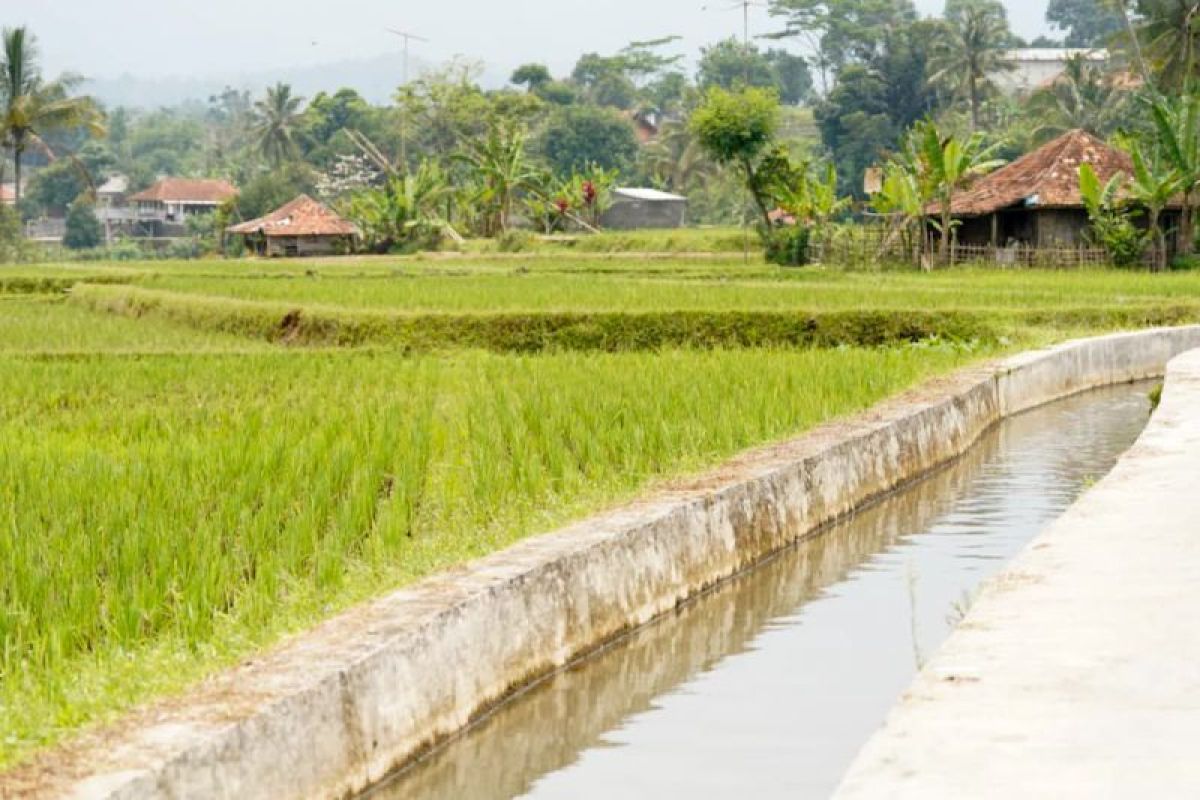
Jakarta (ANTARA) - The Ministry of Agriculture, in synergy with the Ministry of Public Works (PU), is accelerating the construction and optimisation of irrigation systems to support increased planting frequency in anticipation of drought, including in Central Java (Jateng). “The government continues to strengthen water resource management as a strategic step in improving the crop index (IP) and national agricultural productivity,” said Special Staff to the Minister of Agriculture for Agricultural Policy, Sam Herodian, in a statement in Jakarta on Saturday. He expressed optimism about agricultural performance in 2026. According to him, increasingly solid cross-regional coordination, especially in Java, is an important asset in maintaining national food production stability. “We are optimistic that this year will be better. The cooperation that has been built is now heading towards an integrated pilot model, from water preparation to seeds. This must be continued and expanded throughout Indonesia,” said Sam. He emphasised the importance of proper water management in rice cultivation. According to him, rice is not a water-intensive crop that requires abundant water, but rather sufficient water with optimal regulation to achieve better productivity. “If water management and planting patterns can be synchronised, including accelerating planting after harvest, the production cycle will be more efficient and the results optimal,” said Sam. Separately, the Director General of Agricultural Infrastructure and Facilities (Dirjen PSP) of the Ministry of Agriculture, who is also the Acting Head of Self-Sufficiency in Central Java, Andi Nur Alam Syah, emphasised that all ranks must not lose enthusiasm in facing future agricultural sector challenges, especially entering the crucial period of April to May. “We must not lower our spirits in maintaining sustainable self-sufficiency. The months of April and May, in line with the Minister of Agriculture’s instructions, must be guarded together. Hopefully everything can run smoothly,” said Alam. Meanwhile, the Director of Conservation and Development of Agricultural Water Sources at the Directorate General of Land and Irrigation of Agriculture (Ditjen LIP) of the Ministry of Agriculture, Asmarhansyah, reminded that the potential for drought will still occur in 2026. For this reason, the Ministry of Agriculture is pushing for the acceleration of the 2026 Irrigation Programme (Pumped Irrigation, Piped Irrigation, Conservation Structures, and Tertiary Irrigation Networks) and investments from the previous year. “This programme must be accelerated so that the dry season can be anticipated early. Optimisation of facilities that have already been built is also important, with active support from local agencies and extension workers in the field,” he said. The Ministry of Agriculture also urges regional governments to strengthen anticipatory measures, from mapping areas to optimising the use of available water sources. With strengthened integrated water management, the government is optimistic that the crop index can increase and national food production remains maintained. The Head of the Pemali Juana River Basin Organisation (BBWS), Sudarto, stated that as a Technical Implementing Unit of the Ministry of Public Works in Central Java, they have prepared a spatial-based overlay map as a policy reference. “We integrate drought potential data with water resource infrastructure such as dams, reservoirs, and other storage. This serves as the basis for predicting and handling drought more accurately,” said Sudarto.