
Ministerial and Parliamentary Salary Cuts Deemed Ineffective, Corruption the Root Problem
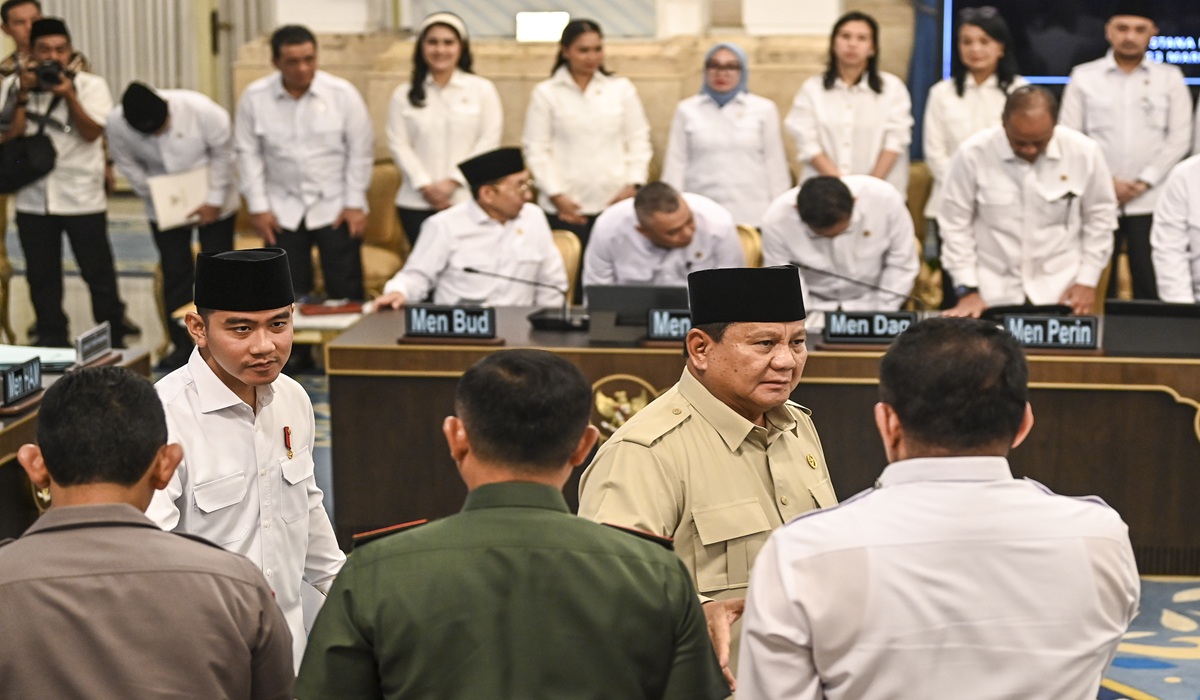
Proposals to cut the salaries of ministers and members of parliament in response to global economic pressures are unlikely to have a significant impact on Indonesia’s fiscal conditions, according to public policy observer Agus Pambagio.
Pambagio highlighted the need for clear understanding between the official salaries received by public officials and other sources of income that often accompany their positions. “Salary is the official remuneration from the state for the position held. But beyond that, there is income that can come from various sources because of the position. The amount can be substantial and unlimited,” he stated.
According to Pambagio, the salary structure for officials in Indonesia is relatively uniform and not particularly large. However, in practice, many officials enjoy luxurious lifestyles due to additional income sources beyond their official salaries.
For this reason, Pambagio assessed that even a 50% salary cut would have little bearing on the financial circumstances of these officials. “Even without a salary, some could still live off this other income. So if asked whether it’s effective or not, it’s not effective,” he said.
Pambagio viewed the policy as having only a communicative impact on public perception, without addressing fundamental issues in state financial management. “From a communication standpoint, it might look good, as if there’s savings. But in terms of the state budget burden, the impact is very minimal,” he noted.
Furthermore, Pambagio emphasized that the principal problem burdening state finances lies in budget leakage resulting from corrupt practices and suboptimal governance. “If the government truly wants to save, the answer is not salary cuts, but eradication of corruption. That is what has made us suffer,” he said.
He also highlighted several government programmes deemed to require substantial budgets, such as the credit guarantee scheme and roof tile assistance. “The government is welcome to have many programmes; those are necessary. But it must be clear who will execute them, what the rules are—it shouldn’t appear haphazard. This nation is not a private company,” he remarked.
According to Pambagio, the public is fundamentally not opposed to paying substantial taxes as long as the funds are used transparently and targeted appropriately. “If our taxes are used for infrastructure development and public interest, people will certainly be willing. The problem arises when large sums are then embezzled,” he concluded.