
Minister Yusril: Organisational Reform to Realise Clean Public Service
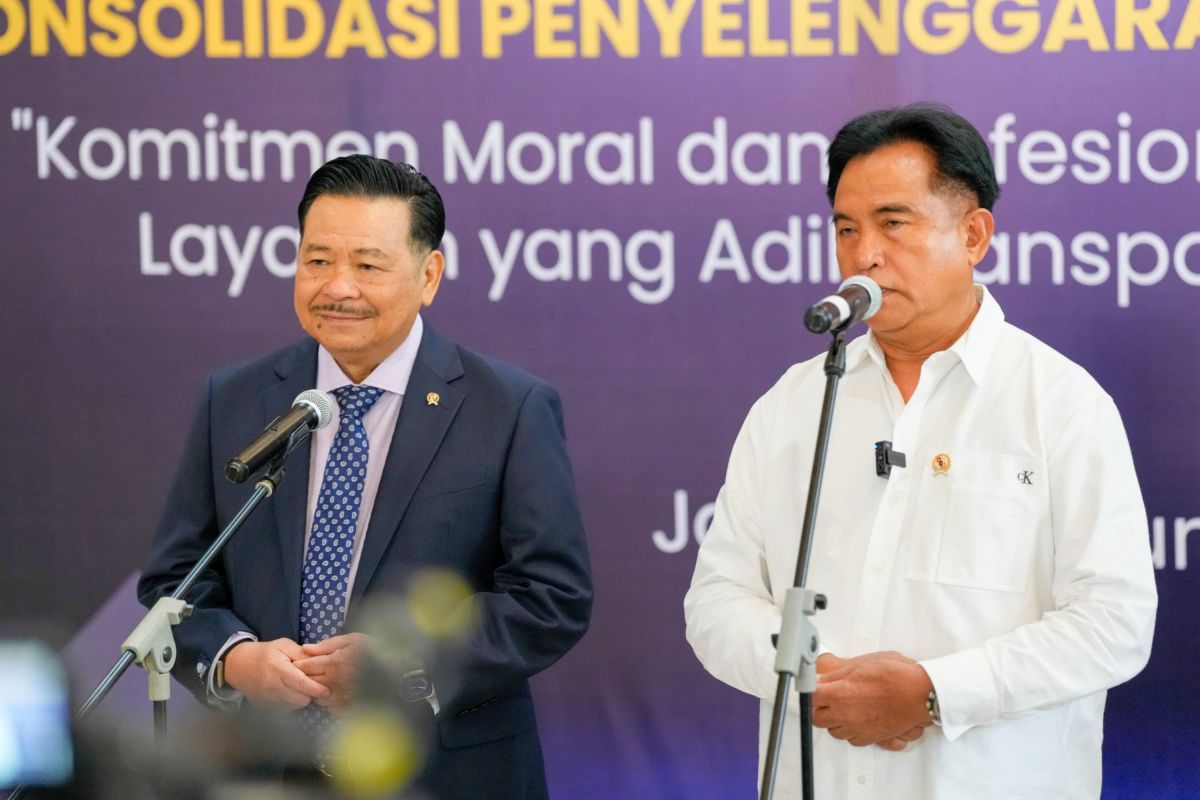
Jakarta (ANTARA) - Coordinating Minister for Law, Human Rights, Immigration, and Corrections Yusril Ihza Mahendra stressed the importance of comprehensive organisational reform to realise public services that are clean, transparent, responsive, and have integrity. During a Public Service Consolidation event in Jakarta on Monday, he emphasised that improvements must be made through concrete and measurable steps, with a primary focus on organisational reform so that all services to the public operate according to the principles of legal certainty, transparency, accountability, and justice. ‘All public service units must be able to provide services that are easily accessible, responsive, and oriented towards the public interest,’ Yusril stated. According to him, this service approach is a fundamental step to ensure the public obtains their service rights clearly, equally, and without undue hindrance. Yusril outlined eight organisational reform agendas requiring attention from all ranks. First, mapping public service points to ensure all units are truly accessible, responsive, and oriented to the public interest. Second, reviewing service standards in every work unit to align them with the principles of legal certainty, transparency, and service quality enhancement. He noted such standards must cover clarity of procedures, costs, service times, and the legal basis used in each service process. Third, strengthening public complaint mechanisms to be more effective and responsive. Complaint channels should serve as instruments of oversight and evaluation to continuously improve service quality. Fourth, identifying and eliminating potential practices of illegal levies and intermediaries that can disrupt objectivity, transparency, and fairness of service. ‘Such practices can damage public trust in the state and harm honest officials,’ he remarked. Fifth, reinforcing service systems by closing every loophole that could potentially lead to irregularities. System strengthening is necessary so that public service does not depend on informal patterns but operates based on sound procedures, provisions, and governance. Sixth, halting all practices and habits inconsistent with regulations and the principles of good governance. He asserted reform will not be effective if deviant practices are still allowed to continue. Seventh, taking action against any indication of irregularities objectively, professionally, and according to the rules. Enforcement must be carried out regardless of the rank or position of the parties involved, leaving no room for abuse of authority in public service. Eighth, providing protection and appreciation to employees who uphold integrity and professionalism. ‘Employees who work honestly and reject irregularities must receive organisational support, not be ostracised in their work environment,’ the Coordinating Minister stated. He conveyed that these eight agendas are part of efforts to strengthen a clean and community-oriented work culture. Public service improvement must not stop at administrative commitments but must be realised through system reform, consistent oversight, and firm enforcement of rules. Through the organisational reform agenda, the Coordinating Minister urged all ranks to make bureaucratic reform a tangible action. He expressed hope that public services within the Coordinating Ministry, the Ministry of Law, the Ministry of Human Rights, and the Ministry of Immigration and Corrections will become increasingly clean, professional, transparent, and capable of strengthening public trust in the state. The consolidation activity was held to strengthen the shared commitment to maintaining public service quality, particularly amid scrutiny of alleged immigration service irregularities currently being processed by the Corruption Eradication Commission (KPK). The agenda was also attended by Minister of Immigration and Corrections Agus Andrianto, Deputy Coordinating Minister Otto Hasibuan, Deputy Minister of Human Rights Mugiyanto, and several high-ranking officials within the coordinating ministry and its related ministries.