
Minister Yandri and BPJS Health CEO Sign MoU to Strengthen JKN in Villages
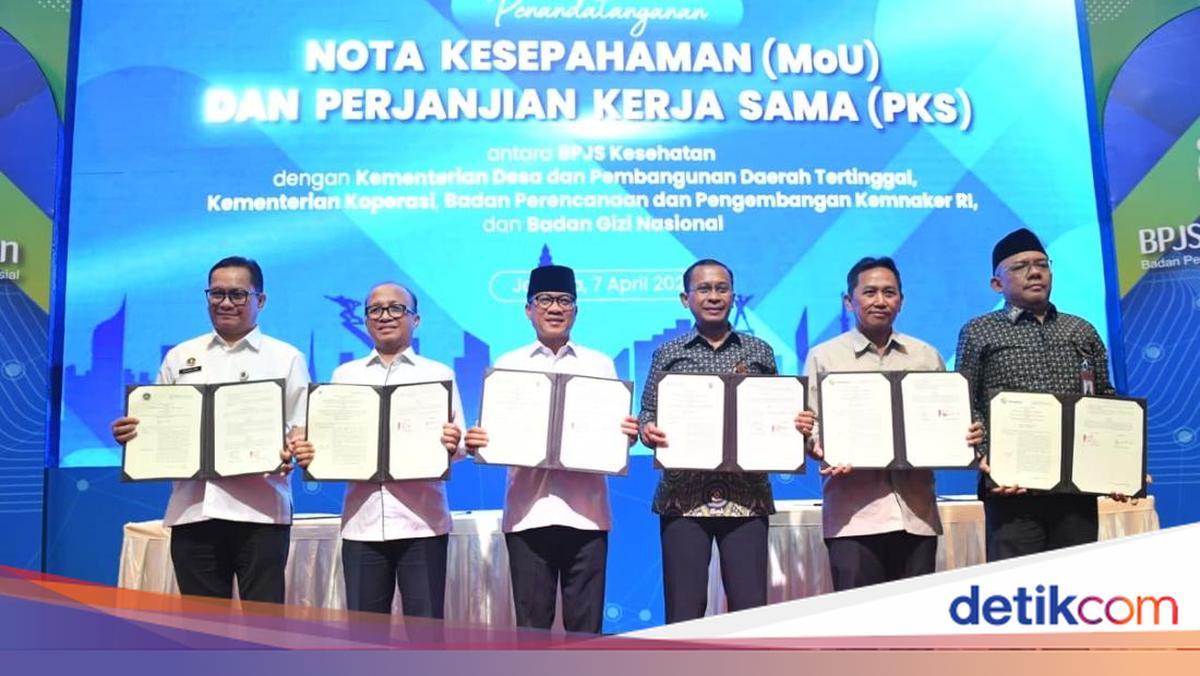
The Minister of Villages and Underdeveloped Regions (Mendes PDT), Yandri Susanto, signed a Memorandum of Understanding (MoU) and Cooperation Agreement (PKS) with the Director of BPJS Health, Prihati Pujowaskito, at the BPJS Health headquarters in Central Jakarta.
With the signing of this memorandum, the Ministry of Villages and Underdeveloped Regions and BPJS Health agreed to strengthen synergies in duties and functions to optimise the implementation of the national health insurance programme in villages and underdeveloped areas.
In his remarks, Yandri stated that to ensure all villagers have health coverage and are aware of the importance of health, health literacy efforts in villages must be intensified.
Moreover, President Prabowo Subianto’s programme under the sixth Asta Cita—building from the villages and from the bottom up for economic equality and poverty eradication—is closely linked to the health of rural residents.
“So there is the Free Nutritious Meals (MBG) programme whose raw materials will mostly come from villages, requiring healthy people. This includes those who will drive and directly participate in the Red and White Village Cooperatives, who also need to be healthy. So we certainly welcome and thank the Director and all BPJS staff, and we will oversee this MoU,” said Yandri in a written statement on Tuesday (7/4/2026).
“Thus, all citizens will realise that BPJS is a government tool that can ensure services are genuinely provided, with the state present. And we support the BPJS Director’s statement: villagers should not become poor due to illness or poor health; with BPJS, God willing, the burden will be lighter when they fall ill,” he continued.
Therefore, Yandri added, the Ministry of Villages and Underdeveloped Regions will make maximum efforts to ensure that the national strategic programme, namely JKN, is truly felt, enjoyed, implemented, and becomes a basic need for rural people.
“Because with 75,296 villages, most Indonesians live in villages. If the villages are healthy, advanced, and prosperous, then Indonesia will truly be healthy, prosperous, and advanced,” Yandri stated.
Meanwhile, BPJS Health Director Prihati Pujowaskito emphasised that strengthening data interoperability and increasing active participation are the main strategies to maintain the sustainability of the National Health Insurance (JKN) Programme. This commitment is affirmed through cooperation with four ministries/institutions focused on integrating data, expanding participant coverage, and improving compliance sustainably.
According to him, this cooperation will involve the Ministry of Villages and Underdeveloped Regions, the Ministry of Cooperatives, the National Agency for Planning and Development of the Ministry of Manpower, and the National Nutrition Agency.
Furthermore, he said the cooperation with the Ministry of Villages and Underdeveloped Regions will strengthen the expansion of health protection to villages and affirmative areas. This cooperation will ensure JKN participants receive national health insurance protection up to the villages.
“In summary, this entire cooperation forms a grand orchestration to strengthen JKN from upstream to downstream, starting from strengthening the data base, expanding participation coverage, increasing participant activity, to integrating national health development programmes,” Pujo asserted.
Accompanying Yandri in this event were Director General of Village and Rural Development Nugroho Setijo Nagoro, Head of BPSDM of the Ministry of Villages and Underdeveloped Regions Agustomi Masik, and Head of BPI of the Ministry of Villages and Underdeveloped Regions Mulyadin Malik.