
Minister says waste sorting habit reaches 60 per cent in Denpasar
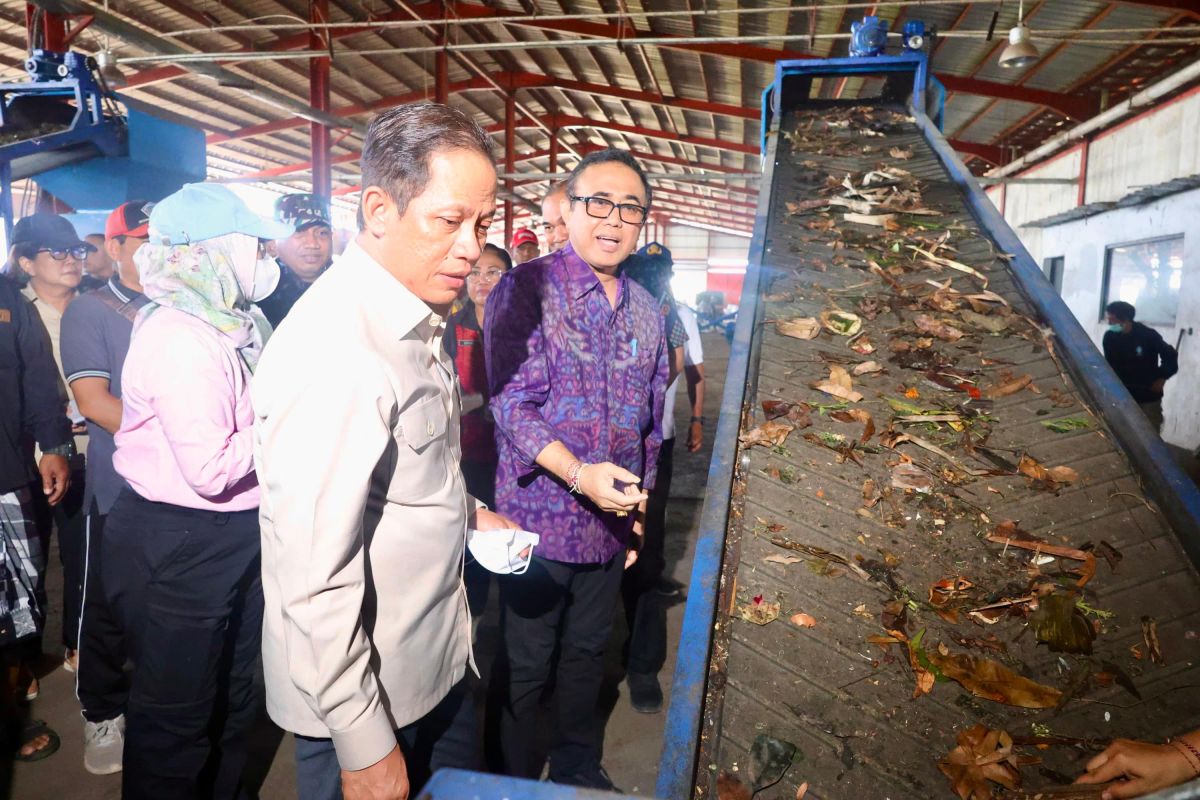
He said this during a visit to the Kesiman Kertalangu Integrated Waste Processing Site (TPST) in Denpasar, Bali, on Friday.
He viewed this accomplishment as a remarkable cultural leap that requires considerable effort to achieve.
“This is a manifestation of the hard work of all components of Balinese society, from the governor and mayor to traditional village officials. Building a habit of waste sorting is not easy, but Bali has shown significant progress,” Nurofiq said.
He explained that waste management in Bali Province, particularly in Denpasar and Badung, is currently under the supervision of the Ministry of Environment and the Bali Provincial Government, in line with Law Number 18 of 2008 on Waste Management, which mandates the governor to oversee the implementation of waste management policies in their respective regions.
With waste sorting rates reaching 60 to 70 percent, local governments are deemed necessary to implement minor criminal sanctions for those who fail to sort their waste or litter carelessly, the minister emphasized.
He then highlighted the operational progress of the Kesiman Kertalangu TPST, which has been operating optimally since its establishment in 2021. Current processing capacity is around 60-80 tons per day and is targeted to increase to 200 tons per day by June.
Furthermore, he outlined that reduction in waste load at the Suwung Landfill (TPA) has also shown significant progress, with a processing capacity approaching 200 tons per day.
Combined with the Tahura Landfill’s contribution of approximately 100 tons per day, the total waste handled through TPST in Bali is projected to reach 500 tons per day.
Nurofiq emphasized that all open dumping at Bali landfills must end by next August, warning that the central government will take legal action against operators who persist.
The Suwung Landfill is specifically planned to be developed into a waste-to-energy waste processing facility.
Therefore, the quality of incoming waste must be properly sorted to meet the requirements of this technology.
“Only certain non-organic waste will be allowed to enter Suwung. This is crucial to support waste-to-energy operations in the next few years,” he remarked.
The minister is optimistic that Bali can transform its waste management culture, noting that progress is measured not only by infrastructure development but also by environmental management.
“A developed country is not only characterized by tall buildings, but also by proper waste management. Cleanliness is a true reflection of culture,” he remarked.
Related news: Bali waste workers stage 400-truck rally over landfill policy
Related news: Indonesia targets end of open dumping by July 2026
Related news: Prabowo leads strategic meeting on key national programs
Translator: Rolandus Nampu, Resinta Sulistiyandari