
Minister of UMKM: Flood of Illegal Imports Making It Difficult for Local SMEs to Upgrade
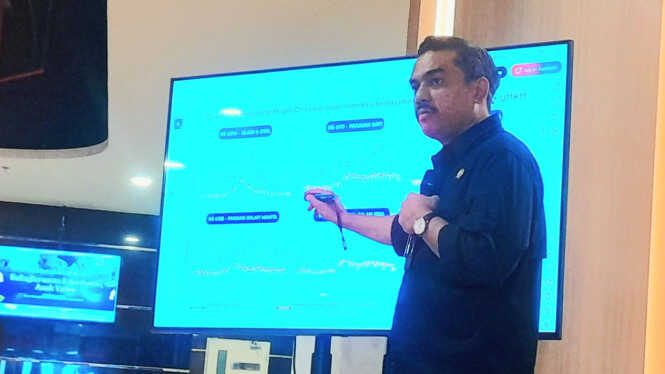
Jakarta – Indonesia’s Minister of UMKM, Maman Abdurrahman, has emphasised that the primary root cause of SMEs struggling to upgrade is not inadequate access to financing or training, but rather a market problem overwhelmed by illegal imports.
Regarding financing, Maman has assured that the government has provided substantial support to the UMKM sector. In particular, access to financing for UMKM has reached 1.6 quadrillion rupiah, representing significant growth compared to 20 years ago.
“I want to say that from the financing side, there is no issue with access to financing – it has increased,” Maman stated during a media gathering at his office in the Gatot Subroto area, South Jakarta, on Friday, 27 February 2026.
According to him, the main problem lies in the market side, where the domestic market is currently filled with illegal imports that make UMKM products difficult to compete.
Despite SME operators receiving capital support and training, they continue to struggle to sell their products because the market has been inundated with cheap imports.
“The Indonesian market is messy, dirty, and filthy. So no matter how well we help UMKM today – for example, if we help them with financing, we support them with training – they can produce, but they cannot sell their goods,” he said.
Maman also highlighted the practice of underinvoicing in international trade activities. He provided an example of discrepancies between the value of imports recorded in Indonesia and export data from China.
“The problem is illegal imports entering the country through underinvoicing. Import data recorded here shows goods at 100. But from China, recorded export data shows 900. This means there are 800 that are not recorded,” Maman stated.
According to him, the data discrepancy indicates illegal imports entering the domestic market. This situation not only impacts government revenue from import duties but also creates social problems by squeezing domestic businesses.
“It is flooding our domestic products and our domestic market. What happens then? Problems. It is not just about government revenue loss from imports. No. I always say this has become a social problem,” he concluded.