
Minister of Public Works emphasises road repairs in Aceh as presidential priority
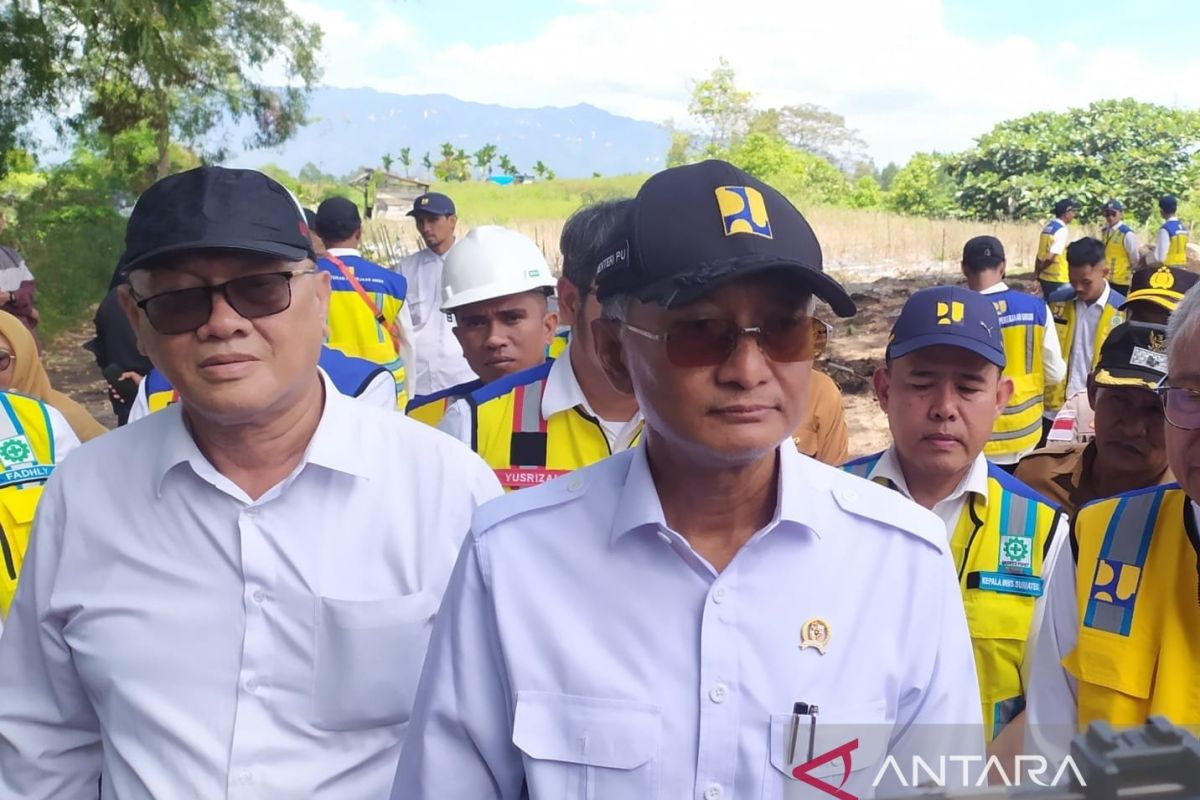
Banda Aceh – Indonesia’s Minister of Public Works Dody Hanggodo has confirmed that the repair of roads and bridges damaged by floods and landslides in Aceh is a government priority in line with directives from President Prabowo Subianto.
“For Aceh, in accordance with President Prabowo’s directives, the reconstruction of roads and bridges will be prioritised to improve their condition,” Dody said whilst inspecting infrastructure in Bener Meriah, Aceh, on Monday.
The statement was made in response to remarks from Bener Meriah Regent Tagore Abubakar concerning the economic impact of road and bridge damage following the disaster, during an inspection of the SPAM clean water facility in Lampahan, Bener Meriah.
Dody stated that the central government will assist in repairing all damaged infrastructure, not only national roads but also provincial and district roads affected by the disaster.
“The government will assist in repairing approximately 154 bridges and a number of provincial and district road sections that currently remain in poor condition,” Dody said.
He added that these roads and bridges represent vital access routes supporting the economic activities of communities, making the acceleration of infrastructure recovery a government priority.
According to Dody, the Public Works Ministry can contribute to the development of provincial and district roads, particularly following the issuance of Presidential Instruction Number 11 of 2025.
The presidential instruction aims to accelerate improvements to regional road connectivity in support of food and energy self-sufficiency programmes.
“With this presidential instruction, central government support for regional road development has a clear legal basis,” Dody said.
Based on local government data, bridge damage in Bener Meriah caused by floods and landslides reached 154 locations spread across the national, provincial, and district road networks.
Meanwhile, the number of road sections experiencing damage is recorded at 184 sections, some of which are national roads that have already begun repairs.
Community welfare
Regent Tagore previously stated that community welfare in his region is heavily dependent on the smooth functioning of road and bridge access.
According to him, this infrastructure serves as the primary distribution route for community agricultural produce, particularly arabica coffee, the flagship commodity of the Gayo highlands.
Tagore estimated that road damage could result in potential revenue losses of up to Rp500 billion annually from arabica coffee trade.
He explained that the price of coffee cherries can reach Rp25,000 per kilogramme when road access is good, but can fall to approximately Rp22,000 per kilogramme when road conditions deteriorate.
The difference of approximately Rp3,000 per kilogramme, according to Tagore, has a significant impact on the economic value of coffee production for communities.
Additionally, only approximately 17 per cent of coffee cherries are processed into green beans or raw coffee beans ready for export.
Arabica coffee from the Gayo highlands, including Bener Meriah, is largely marketed internationally.
Approximately 70 per cent of arabica coffee production from the region is exported, thereby contributing to national foreign exchange earnings from the plantation sector.
Tagore added that the condition of national roads in Bener Meriah has begun to improve following several repair efforts.
However, he believes that continued government attention is needed to accelerate repairs to provincial and district roads.
“If road access improves further, community economic activity will increase and the welfare of coffee farmers can be maintained,” Tagore said.