
Minister of National Development Planning Confident that Strengthening Research will Boost Livestock Productivity
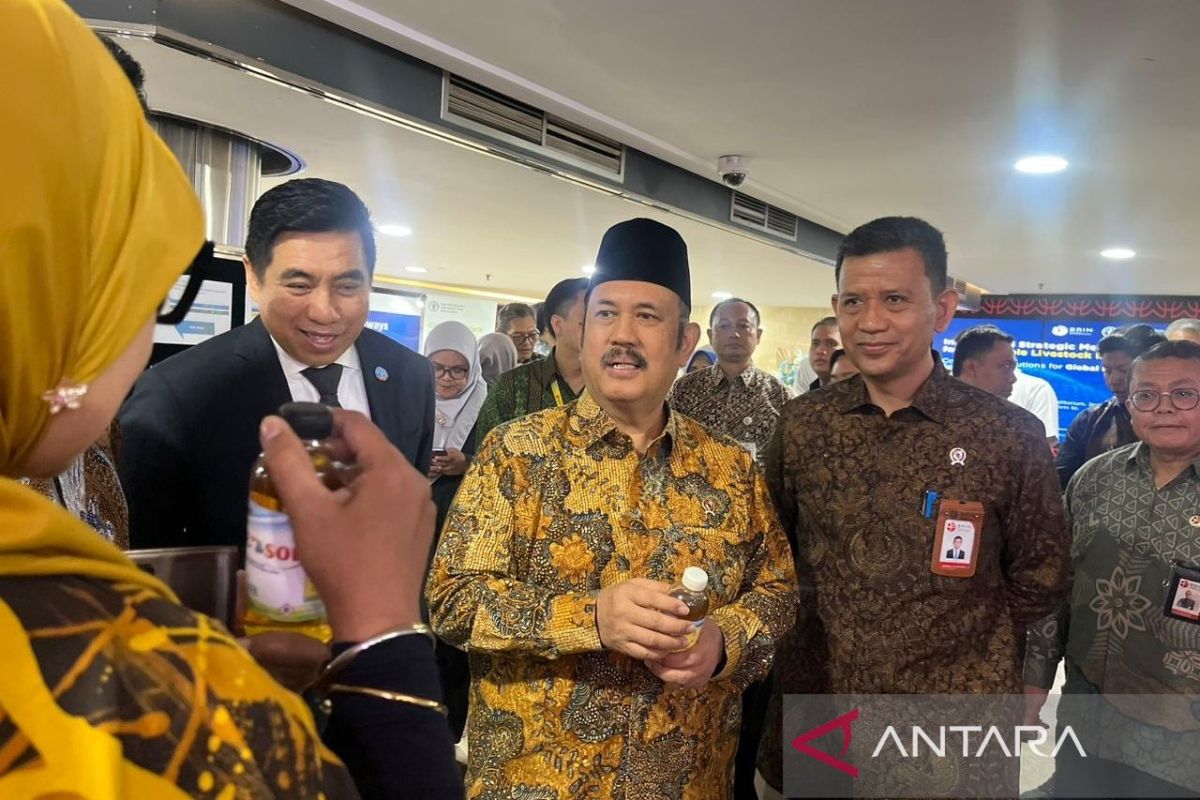
All agricultural and livestock advancements begin with intensive research.
Jakarta (ANTARA) - Minister for National Development Planning (PPN)/Head of Bappenas Rachmat Pambudy has stressed that strengthening research and development is key to driving improvements in national livestock sector productivity.
“All progress in agriculture and livestock starts with intensive research. Therefore, BRIN’s role in building and enhancing our livestock productivity, from poultry to ruminants and dairy cattle, is greatly needed,” Rachmat stated after the International Strategic Meeting on Scientific Pathways for Sustainable Livestock Industry Transformation at the National Research and Innovation Agency (BRIN) office in Jakarta on Friday.
For this reason, according to him, BRIN’s role is considered highly strategic in establishing the foundation for productivity improvements, from the poultry subsector to livestock such as beef and dairy cattle.
Rachmat emphasised that livestock productivity enhancements must begin with improving the quality of livestock breeds, particularly dairy cows, given that superior breeds are a fundamental factor in increasing national milk production.
“Breeds are the source of progress in production and productivity improvements,” he added.
He also viewed BRIN’s initiative in today’s event, which brings together various stakeholders to promote livestock research, as an important step that will have long-term impacts.
Additionally, he noted that Indonesia has significant potential in providing livestock feed, particularly from plantation waste. This potential, he assessed, can be maximised to reduce production costs while increasing efficiency in the livestock sector.
Meanwhile, BRIN Head Arif Satria stated that the institution he leads is currently developing various strategic research efforts to produce superior livestock, particularly high-productivity dairy cows.
This research encompasses breeding development, as well as innovations in nutrition and livestock feed. These efforts, according to him, are part of BRIN’s flagship programmes in the food sector, which also include strengthening the livestock subsector.
“The research currently being developed at BRIN concerns how we produce superior cattle through breeding, as well as for nutrition and livestock feed,” Arif said.
He added that research development is not carried out in isolation but through collaboration with various parties, including universities, government, and the private sector.
Furthermore, Arif emphasised that one of the main goals of strengthening research is to reduce Indonesia’s dependence on imports, particularly dairy products.
This, he said, is achieved by increasing domestic milk production and productivity through the development of superior dairy cows.
“The most important thing is to reduce import dependency by increasing milk production and productivity,” he explained.
In addition, BRIN is directing livestock research to adapt to climate change challenges. Thus, according to Arif, the livestock systems developed will not only be productive but also sustainable.