
Minister of Imipas Takes Firm Action Against Personnel Involved in Drug Circulation in Prisons
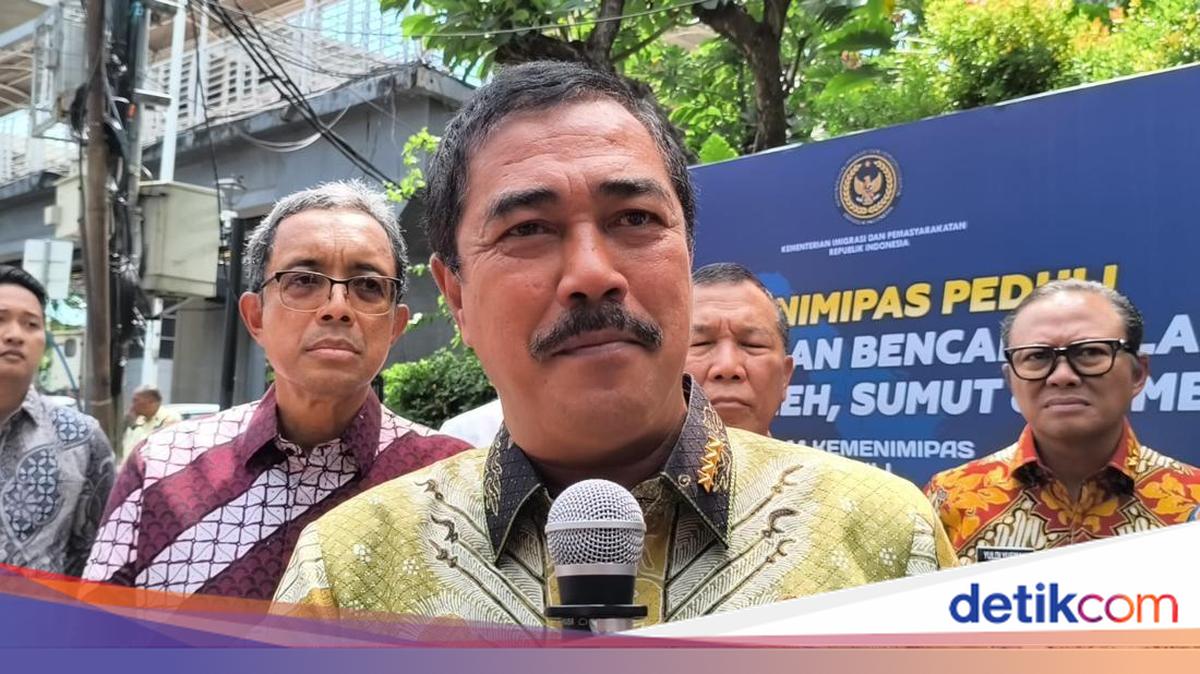
Minister of Immigration and Corrections (Imipas), Agus Andrianto, has emphasised the government’s full commitment to eradicating the circulation of narcotics in correctional institutions (lapas) and detention centres (rutan). Agus stated that his ministry will take firm action against any personnel or inmates involved in drug trafficking practices within these facilities.
“We view this as a collective concern in strengthening efforts to combat narcotics. All forms of drug circulation, whether involving inmates or rogue personnel, constitute serious violations that we will not tolerate,” said Agus Andrianto to reporters on Friday (10/4/2026).
Minister Agus explained that various concrete steps are continuously being taken to tighten surveillance and close loopholes for drug circulation in lapas and rutan. These efforts include strengthening technology-based security systems, such as the installation of integrated CCTV, as well as increasing the frequency of routine and incidental raids in collaboration with law enforcement agencies like BNN and the Police.
The Ministry of Imipas is also enhancing synergy with law enforcement apparatus, including the National Narcotics Agency (BNN), the Indonesian National Police (Polri), and the Indonesian National Armed Forces (TNI), to carry out integrated enforcement actions.
In terms of internal matters, enforcing discipline and integrity among personnel is a primary focus. The Ministry of Imipas ensures that any violations by rogue personnel will be dealt with firmly in accordance with applicable legal provisions.
“We are committed to acting without favour. If any personnel are proven to be involved, strict sanctions up to legal proceedings will be imposed,” Agus stated.
He mentioned that several rogue personnel have already been subjected to disciplinary punishments ranging from severe to dismissal due to proven involvement in drug circulation, with some even being transferred to the Nusakambangan prison.
“The transfer of drug lord inmates and high-risk individuals has so far reached 2,284 people,” he added.
Minister Agus noted that the transfer of drug lord inmates and high-risk individuals to Nusakambangan is not merely a relocation. The primary goal is that by moving the “root causes” of narcotics in lapas and rutan, it is hoped that these facilities can be cleansed of drug transactions and interactions.
The next goal is as a repressive and rehabilitative measure for these high-risk inmates so that they realise their mistakes and can properly follow guidance programmes, enabling them to return to society as independent individuals.
To this end, the Ministry of Imipas continues to strengthen guidance programmes for inmates, including rehabilitation and personality development programmes, to prevent re-involvement in drug abuse, in collaboration with relevant parties from both government institutions and NGOs (non-governmental organisations).
Minister Agus emphasised that the issue of drug circulation in lapas and rutan is a complex matter that requires comprehensive and collaborative handling. He stated that he welcomes input and opens space for discussion to optimise the resolution of drug circulation problems in lapas and rutan.
“We will continue to conduct evaluations and improvements so that lapas and rutan truly become safe places for guidance, free from narcotics, and support the social reintegration process of inmates,” he concluded.