
Minister of ESDM's Expert: Fertiliser Industry Becomes Priority for Gas Allocation
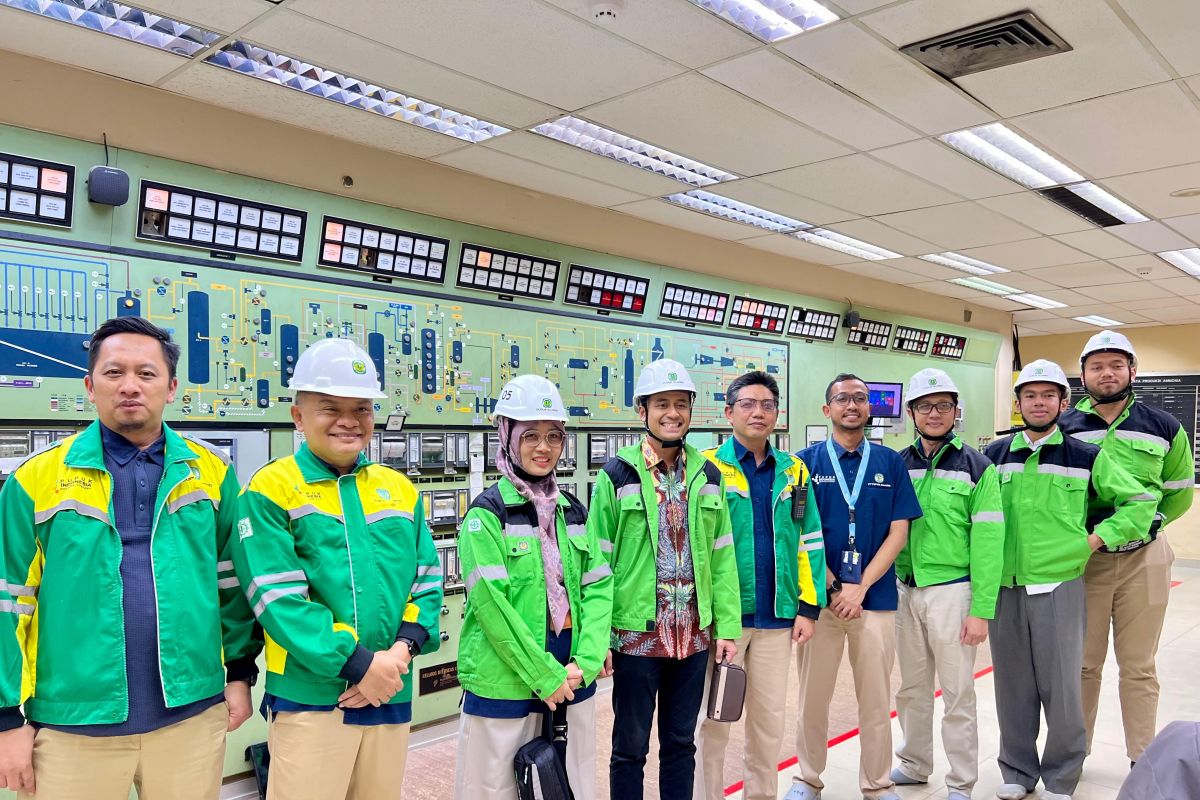
Jakarta (ANTARA) - Satya Hangga Yudha Widya Putra, an expert advisor to the Minister of Energy and Mineral Resources in the field of commercialisation and transportation of oil and natural gas, has affirmed that the fertiliser industry is a priority sector in the national natural gas allocation policy.
“This priority allocation is in accordance with Ministry of ESDM Regulation No. 6 of 2016 and Astacita Directive No. 2 on food and energy self-sufficiency,” he said in his statement in Jakarta on Monday.
According to Hangga, as he is known, unlike other industries, gas in fertiliser production serves as a raw material with no alternative substitute.
“The government continues to strive for certain natural gas prices (HGBT) to be provided to priority sectors,” he said during his working visit to PT Pupuk Kujang in Cikampek, West Java, on Monday.
According to him, special prices should not only stop at the upstream level but also extend to the downstream level, including adjustments to transportation costs (toll fees).
He stated that the Ministry of ESDM is continuously conducting comprehensive simulations to ensure that gas prices remain competitive for fertiliser producers, thereby keeping subsidised fertiliser prices affordable for farmers.
Hangga added that national food security cannot be separated from the certainty of energy supply, particularly natural gas, which is the main raw material in the fertiliser industry.
“The government’s commitment to safeguarding food sovereignty is carried out through the stability of gas supply and competitive pricing,” he explained.
Hangga’s visit serves as a crucial moment, given the vital role of Pupuk Kujang in supporting agricultural productivity for 1.5 million farmers in West Java, DKI Jakarta, and Banten.
Yana Nurrachmad, Director of Risk Management at Pupuk Kujang, explained that natural gas is not merely a cost component but the lifeblood of the company’s operational continuity.
Disruptions in gas supply have real domino effects, such as what occurred in 2025 when urea production dropped by up to 123,000 tonnes due to gas supply constraints.
“With fertiliser’s contribution of 60-66 per cent to food productivity, the stability of gas supply becomes the main determinant of societal food resilience,” Yana explained.
Furthermore, Hangga stated that the national energy resilience strategy is now integrated with the development of cross-regional natural gas transmission pipeline infrastructure, such as the Cirebon-Semarang (Cisem) pipeline project phase 2, which is now officially operational and capable of connecting natural gas from various sources to industrial centres.
Amid global oil and gas price fluctuations due to geopolitical conflicts, he added, energy independence through increased domestic lifting has become a top priority to reduce reliance on energy imports.
“With strong synergy between the energy and fertiliser industries, the government is optimistic that economic growth targets and the Indonesia Golden Vision 2045 can be achieved through a solid foundation of food and energy,” Hangga said.