
Minister of Environment: Jakarta Residents Must Transform Waste Processing
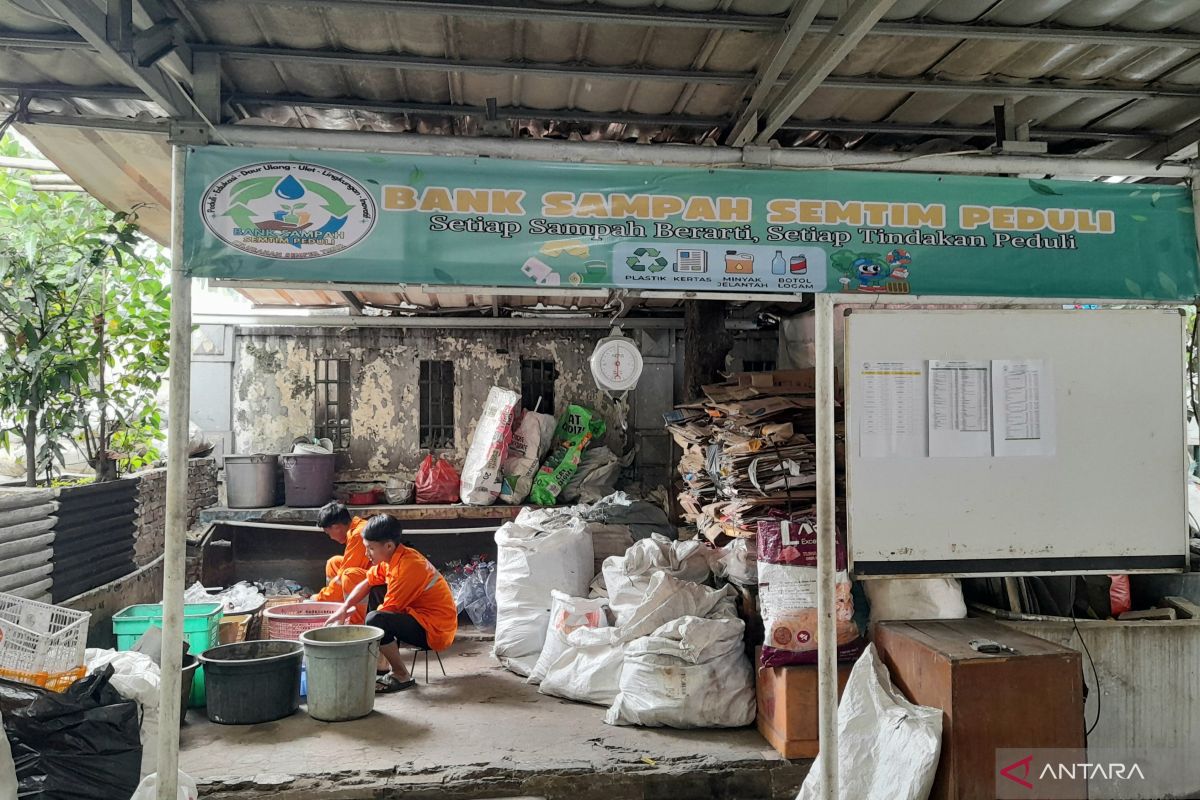
Jakarta (ANTARA) - The Minister of Environment Hanif Faisol Nurofiq stated that the burden of rubbish at the Bantargebang Final Processing Site has reached 8,000 tonnes per day, so the people of DKI Jakarta are urged to immediately carry out a transformation in waste processing.
“At present, the contribution of rubbish to the Bantargebang TPA reaches around 8,000 tonnes per day, originating from various areas in Jakarta. This situation is a shared responsibility, both for department heads and mayors. Therefore, change is needed through two main transformations, namely technological transformation and managerial transformation,” said Environment Minister Hanif Faisol Nurofiq in Jakarta on Friday.
Minister Hanif emphasised that the Ministry of Environment is encouraging every region to immediately prepare concrete and systematic steps in waste handling.
A monitoring system down to the RT/RW level needs to be built to know in detail the daily rubbish volume and which areas are still weak in management.
He also acknowledged that waste handling is not simple. The large capacity for processing organic waste requires adequate infrastructure, while existing facilities such as the Reduce, Reuse, and Recycle Waste Processing Site (TPS3R) are deemed insufficient.
Therefore, more detailed, data-based planning is needed.
“Every region is asked to have clear targets, concrete actions, and achievement indicators. Without targets, policy direction will not be clear. Jakarta is seen to have great capacity for transformation, both in terms of human resources, fiscal aspects, and proximity to the centre of government. With that potential, resolving the waste problem should be possible if there is the will,” stated the Environment Minister.
“In terms of composition, around 57 percent of rubbish comes from households, while 43 percent comes from commercial areas. Rubbish from commercial areas can be managed with a business approach, while household rubbish must be a priority for public services,” said Minister Hanif.
He also assessed that the lack of professionalism in waste management so far has been the root of various problems, including potential deviations.
“In the future, waste management is hoped not only to be carried out by the government, but by special bodies that are more professional and oriented towards economic value,” said Environment Minister Hanif Faisol Nurofiq.