
Minister of Energy and Mineral Resources affirms oversight of President's directives for energy transition
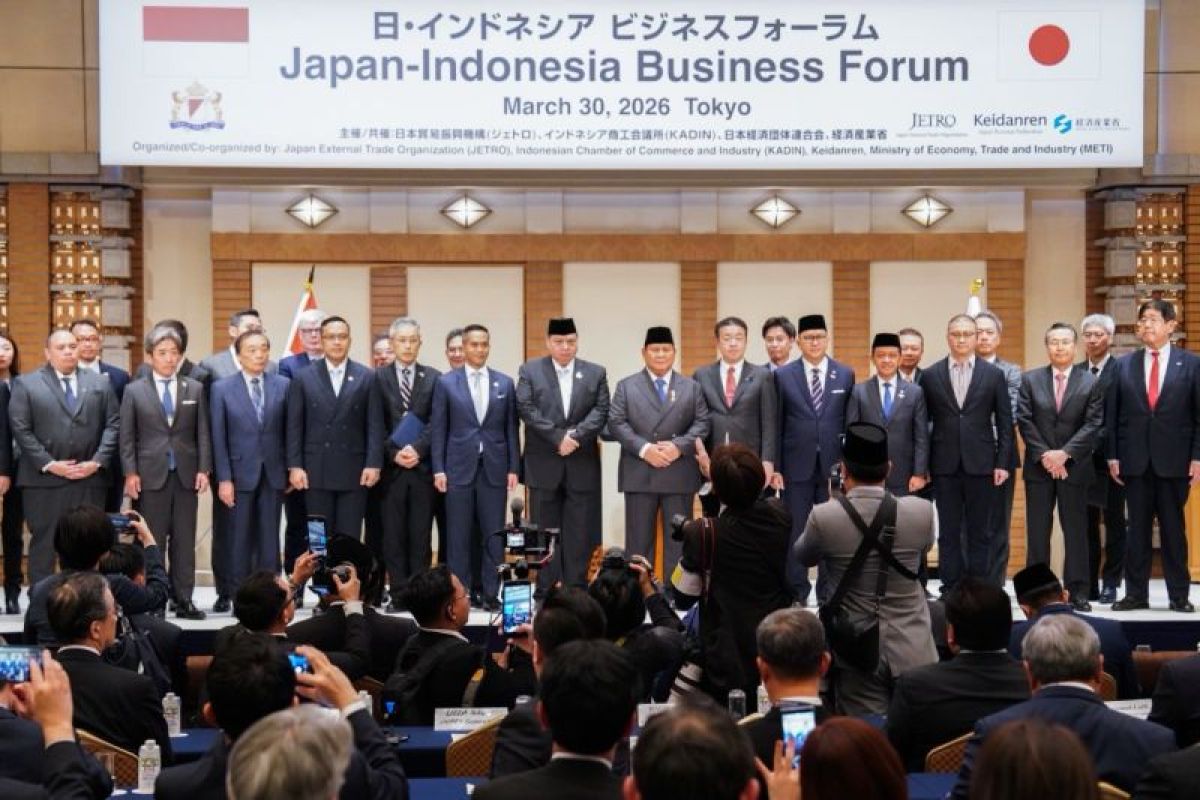
President’s directive provides strong affirmation that mineral downstreaming and energy transition must proceed in tandem
Jakarta (ANTARA) - The Minister of Energy and Mineral Resources (ESDM), Bahlil Lahadalia, has affirmed that the Ministry of ESDM is ready to oversee the implementation of energy and mineral resources policies in an integrated manner.
Bahlil assessed that mineral downstreaming and energy transition must be carried out in a balanced way so that economic benefits can be felt domestically while strengthening national energy resilience.
“The President’s directive provides strong affirmation that mineral downstreaming and energy transition must proceed hand in hand. We will ensure that all policies in the ESDM sector are directed towards increasing added value domestically while strengthening national energy resilience,” Bahlil stated in a press release in Jakarta on Monday.
Bahlil added that the acceleration of new renewable energy development will continue to be promoted through the optimisation of domestic potential, including solar energy, geothermal, and bioenergy.
The government is also opening opportunities for collaboration with international partners to strengthen technology transfer and investment in the clean energy sector.
“We will also promote the acceleration of new renewable energy development, including solar energy, geothermal, and bioenergy, as well as strengthen collaboration with international partners to support technology transfer and investment in the clean energy sector,” Bahlil explained.
Previously, at the Japan-Indonesia Business Forum, President Prabowo Subianto emphasised that Indonesia must step up to a higher value chain through industrialisation and the management of natural resources that provide greater benefits to the people.
He highlighted the importance of preserving the economic value of strategic resources so as not to stop at exporting raw materials alone.
“We must climb to a higher value chain. Indonesia wants to industrialise. We want a good quality of life for our people. We want to eradicate poverty. We want to eliminate hunger,” Prabowo explained.
Prabowo also reminded that mineral management must be carried out with principles of sustainability and a long-term orientation.
According to him, Indonesia’s natural resources must provide the greatest added value for the nation, while being preserved for future generations.
“We must protect our resources. We must secure the highest economic value from our resources. We can no longer be satisfied with exporting raw materials without added value. Our critical minerals are strategic assets. Our minerals must be protected for the future generations of our people,” Prabowo stressed.
In addition to downstreaming, the President also highlighted the importance of accelerating energy transformation amid increasingly uncertain global geopolitical dynamics.
The government, he said, will expand the development of new renewable energy, from solar energy, geothermal, to bioenergy, to strengthen national energy resilience and reduce dependence on fossil fuels.
“In three years, we want to achieve 100 gigawatts of solar energy. For us, this is becoming increasingly urgent due to the situation we see. The geopolitical situation in the Middle East is creating strategic uncertainty for our energy security,” Prabowo stated.
President Prabowo also affirmed his commitment to strengthening the biofuel programme, both through increasing the biodiesel blend based on palm oil and developing bioethanol from various domestic raw materials.
On the other hand, the transformation towards electric vehicles is also part of the government’s grand strategy to curb domestic fossil fuel consumption.
The business forum serves as an important momentum for Indonesia and Japan to strengthen cooperation in technology, investment, and sustainable energy industry.
From the government’s perspective, Prabowo’s directives simultaneously provide a foundation for the Ministry of ESDM to ensure Indonesia’s economic transformation proceeds through strong downstreaming and tangible energy transition.