
Minister of Culture Opens UNS Cultural Exhibition, Highlights Importance of Cultural Digitalisation
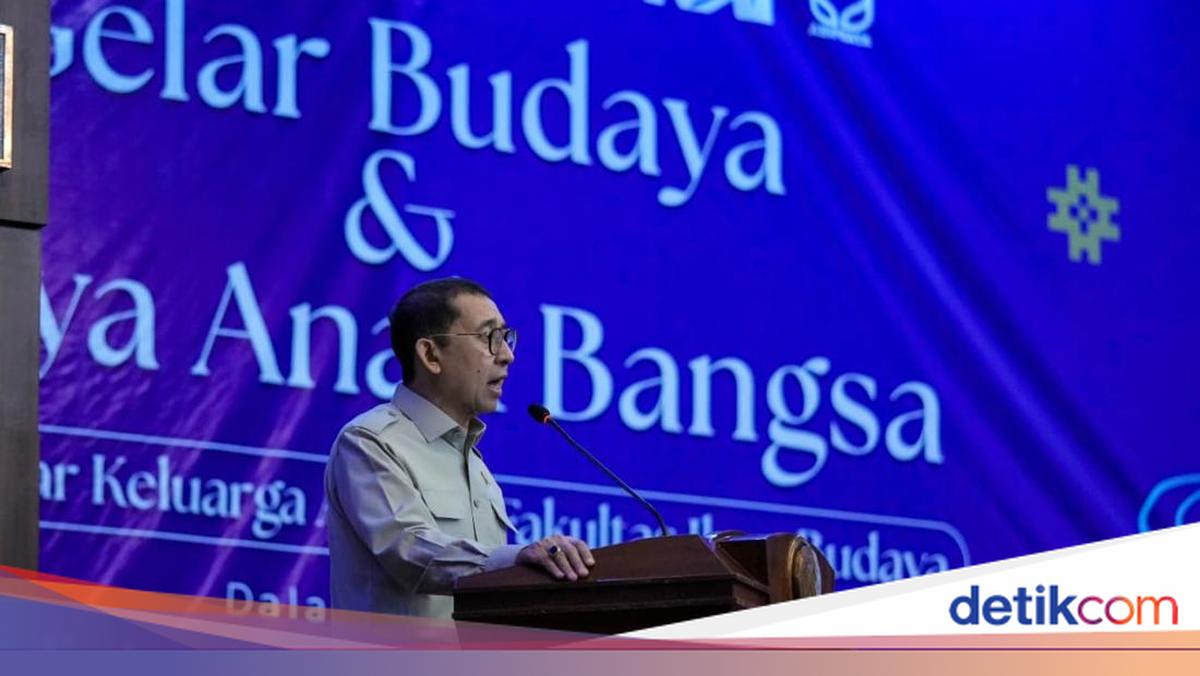
Indonesian Minister of Culture Fadli Zon opened the Gelar Budaya dan Karya Anak Bangsa exhibition hosted by Universitas Sebelas Maret (UNS) at the G.P.H. Haryo Mataram Auditorium. The event served as the highlight of a grand reunion for the Faculty of Cultural Sciences (FIB) UNS as part of the university’s 50th Dies Natalis, themed ‘Weaving the Rainbow of Nusantara Culture’.
The programme featured a variety of cultural activities, including wayang beber tani performances, exhibitions of archives, keris, manuscripts, and museum collections, student cultural arts showcases from FIB, as well as displays of UMKM alumni and the New Student Entrepreneurship (WIBAWA) programme.
In his address, Minister Fadli praised UNS’s initiative in creating a meeting space for academics, alumni, cultural practitioners, and the public. He noted that the theme reflects the university’s commitment to nurturing and developing culture as an essential part of national life.
During the occasion, Fadli delivered a cultural oration stressing the importance of culture as a strategic national asset. He reminded attendees that advancing culture is a constitutional mandate to be realised collectively.
‘The state advances Indonesian national culture amid world civilisations, by guaranteeing society in preserving and developing its cultural values,’ Fadli stated in a written remark on Thursday (26/3/2026).
Fadli highlighted Indonesia’s vast cultural wealth, or megadiversity, encompassing thousands of ethnic groups, hundreds of regional languages, and diverse cultural expressions from oral traditions, manuscripts, rituals, traditional knowledge, to cuisine. He argued that this wealth must be viewed as a strategic national strength amid global dynamics.
He also pointed out Indonesia as a nation with a very ancient civilisation, evidenced by various archaeological findings, including the world’s oldest prehistoric paintings. This, he said, reinforces Indonesia’s position not merely as a nation-state but as a civilisational state built on diverse great civilisations.
In the context of globalisation and digital transformation, Fadli asserted that culture must adapt without losing its roots. He emphasised that cultural digitalisation is not just documentation but an effort to revive cultural heritage to keep it relevant, expand access, and strengthen Indonesian cultural diplomacy globally.
Fadli also touched on the importance of culture as soft power and an economic driver. He assessed that Indonesia has great potential to develop an Indonesian wave through the utilisation of national cultural wealth.
He then highlighted three key aspects in cultural development in the digital era. First, digital cultural literacy, which involves not only technological skills but also understanding context, ethics, and copyright. Second, protection for cultural practitioners in the digital economic ecosystem to ensure fair access to promotion, monetisation, and capacity building. Third, strengthening cultural archives and databases that store information along with the full context and meaning of culture.
Furthermore, Fadli stressed the importance of collaboration between universities, communities, and government as engines of cultural innovation. He viewed universities as having a strategic role in research-based and technology-driven cultural development. Cultural diplomacy also needs strengthening through rooted narratives that reach popular culture and digital spaces.
‘Therefore, our task is not to choose between tradition and digital, but to make digital civilised for tradition, and to turn technology into a space for education, mutual cooperation, and cultural protection,’ he asserted.
In closing his address, Fadli invited all elements, including universities, to continue fostering cultural awareness as the foundation of national development. ‘Cultural advancement can only be achieved if we work together, with the awareness that culture is the main strength and capital of the nation moving forward,’ he added.
At the same event, UNS Rector Hartono stated that the activity is part of the campus’s commitment to making culture the foundation of education. He noted that culture is not just present in the form of artefacts or arts but also as the basis for shaping human character and civilisation.
He mentioned that UNS consistently integrates cultural values into higher education, including through strategic programmes and the establishment of the Cultural Development Agency. ‘Culture is the breath of national life. Therefore, education and culture must go hand in hand to form humans who are characterful and adaptive to the changes of the times,’ he said.
Meanwhile, Dean of FIB UNS Dwi Susanto described the event as a space for cross-generational collaboration that brings together the campus, alumni, communities, and society. He explained that the series of events is designed not only as performances but also as spaces for literacy, education, and networking.
He added that the activity involves students, lecturers, alumni, UMKM practitioners, and cultural communities to create a living cultural ecosystem. ‘This event becomes a warm meeting space where knowledge, traditions, creativity, and networks meet and have a broad impact on society,’ he stated.
As a symbolic marker of the event’s opening, Fadli, along with UNS leaders and attending figures, struck a gong. The event was also attended by House of Representatives Commission III member Muhammad Toha, National Archives Head Mego Pinandito, UNS leadership, cultural figures, alumni from various batches, students, and the general public. Accompanying the Minister of Culture were Director General of Cultural Protection and Traditions Restu Gunawan, Special Staff for Protocol and Household Affairs Rachmanda Primayuda, Secretary of the Directorate General of Cultural Protection and Traditions Wawan Yogaswara, Director of History and Museology Agus Mulyana, and Director of Cultural Heritage I Made Dharma Suteja.