
Minister of Culture Discusses Restoration of Prambanan Temple with Indian Archaeological Team
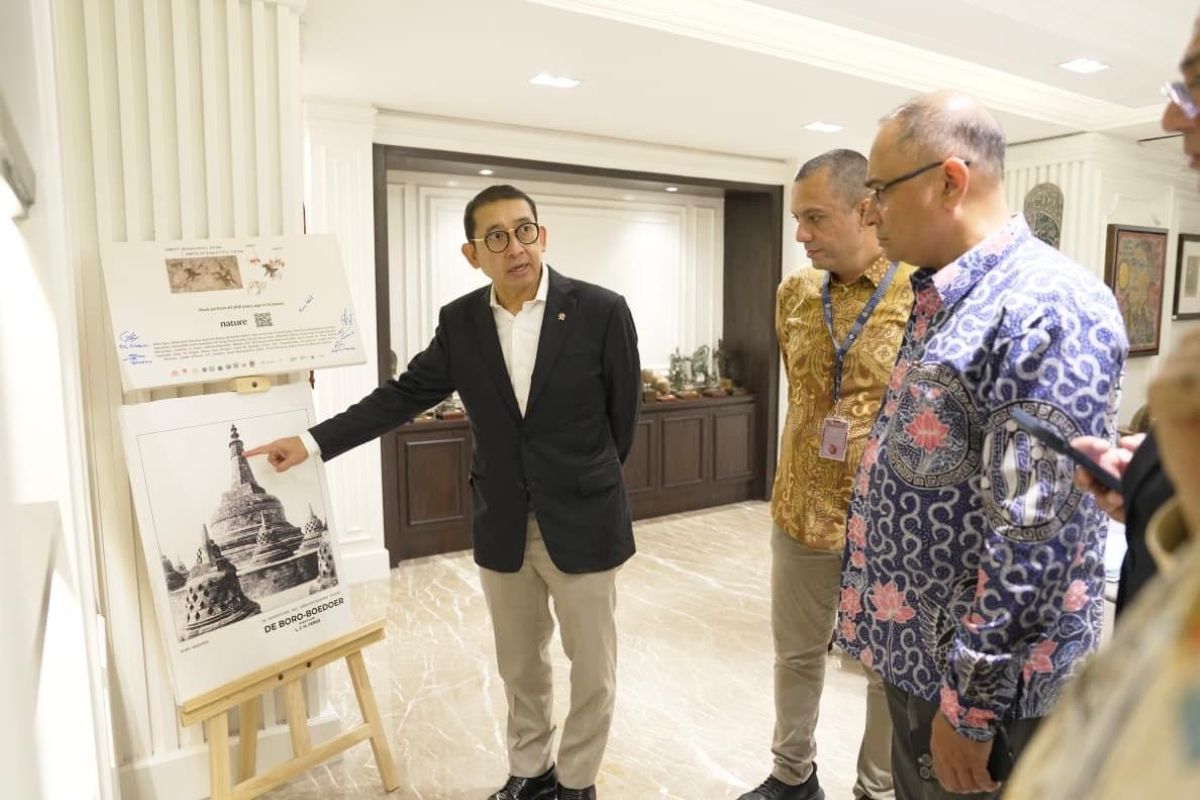
Jakarta — Indonesia’s Minister of Culture Fadli Zon held discussions with a restoration team from the Archaeological Survey of India (ASI) at the Ministry of Culture headquarters in Senayan, Jakarta to discuss follow-up cooperation on conservation and restoration of the Prambanan Temple Complex.
Fadli emphasised that preservation efforts at Prambanan must be understood within a broader cultural landscape context. The area forms part of a historical ecosystem encompassing important neighbouring sites such as Sewu Temple and Plaosan Temple, which demonstrate evidence of Hindu-Buddhist acculturation in the archipelago.
“The Prambanan Complex does not stand alone but is part of one large cultural landscape together with Sewu and Plaosan temples. Therefore, the conservation efforts we undertake aim not merely to restore the temple structures but also to preserve the entire cultural ecosystem in the area,” Fadli stated in Jakarta on Monday.
Based on initial field visits to the Prambanan area, the ASI team assessed that several subsidiary temples require further conservation and restoration efforts. The anastylosis method—restoration using original stones recovered from the site—needs to be employed.
The ASI team also highlighted a major challenge in the restoration process: architectural stone elements scattered across the site. This condition makes identifying stones from individual temples complex and requires careful documentation and stone typology classification stages.
Consequently, the initial work phase will focus on comprehensive documentation of the temple structures and available stone components. Furthermore, to ensure appropriate methods, the ASI team has proposed implementing a pilot project on one or two subsidiary temples first.
Results from these projects will serve as the basis for determining the most effective working methods before restoration proceeds to other structures on a wider scale.
In response, Fadli expressed appreciation for ASI’s experience and international contributions to restoring world heritage sites.
Fadli noted that the Indonesian government remains open to international cooperation that can strengthen conservation efforts at cultural heritage sites, particularly at Prambanan.
“We are also open to utilising technological developments, including digital approaches and artificial intelligence, to help identify and reassemble temple stone components,” he explained.
Fadli further affirmed that the Indonesian government is committed to strengthening international cooperation in preserving world cultural heritage. He hoped cooperation with ASI would be followed up through the drafting of technical documents and formal cooperation mechanisms.
ADG Conservation and World Heritage Janhwij Sharma explained that ASI is an Indian archaeological institution founded in 1861 and currently manages thousands of historical monuments, including several world heritage sites.
Beyond conservation work in India, ASI actively provides technical restoration support at important sites across various countries including Cambodia, Laos, Vietnam, Uzbekistan and Mongolia.