
Minister of Basic and Secondary Education Reveals Economic Factors and Early Marriage as Causes of Neglected Children in Indonesia
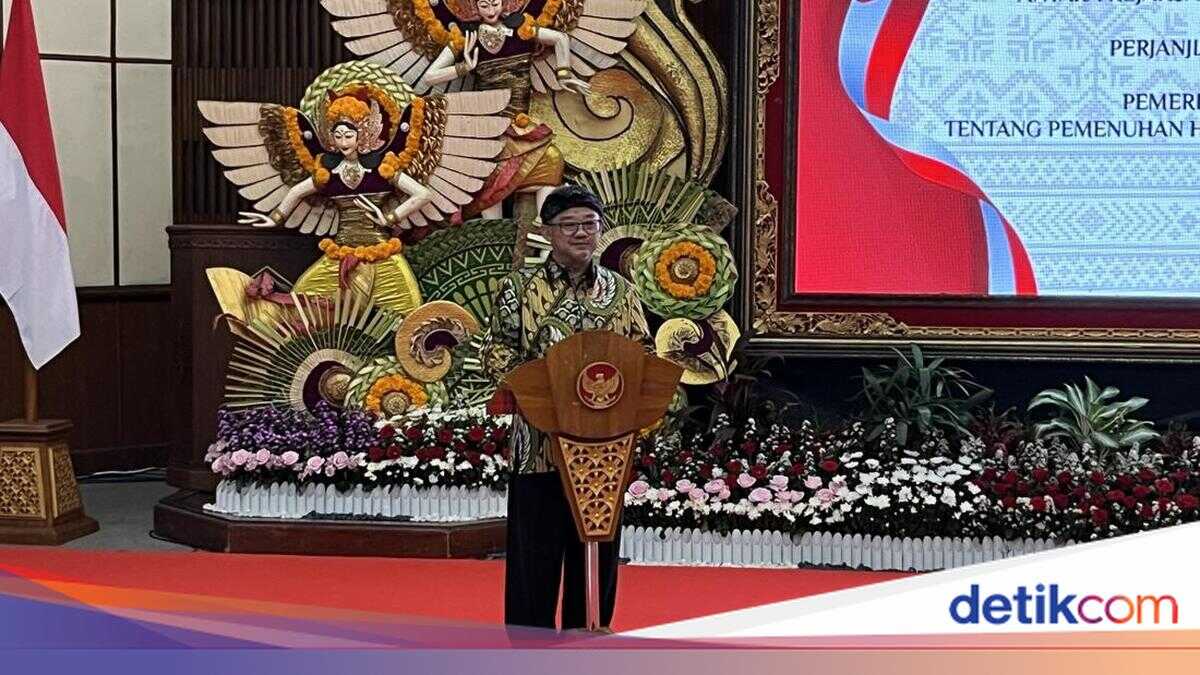
The Minister of Basic and Secondary Education (Mendikdasmen) Abdul Mu’ti revealed the causes of the high number of neglected children in Indonesia. Mu’ti stated that the causes are very complex, ranging from economic problems to cultural factors.
“Firstly, there are issues related to economic problems, which are linked to children not attending school and dropping out,” said Mu’ti during a speech at the signing of a Memorandum of Understanding (MoU) between the Prosecutor’s Office and local governments throughout Bali regarding the fulfillment of administrative rights for neglected children at the Bali Governor’s Office, Tuesday (24/2/2026).
Economic constraints are the main cause of neglected children. Furthermore, cultural constraints, mainly due to early marriage. He added that many children from early marriages are not registered. “Because they are not registered, they cannot be issued birth certificates and so on. Some are due to problems, as Ms. Chatarina (Bali High Prosecutor) mentioned, such as violence, and some are due to a lack of awareness,” explained the Secretary-General of PP Muhammadiyah.
Mu’ti understands that the problem is very complex and that children are the victims. The problem does not originate from the children themselves but from the circumstances surrounding them, making them victims.
He said that neglected children are entitled to education, but it should be non-formal. This is because some neglected children lack confidence in attending formal schools. “Therefore, non-formal education in the form of, for example, homeschooling or equivalent programs through PKBM, we are expanding it further,” said Mu’ti.
As a result, children who learn through PKBM receive educational assistance from the Ministry of Basic and Secondary Education. Therefore, the signing of the memorandum of understanding regarding neglected children is a concrete step and needs to be further developed throughout Indonesia. “We, the Ministry of Basic and Secondary Education, are committed to all Indonesian children, whoever they are, whatever their economic situation, whoever their parents are, wherever they are. We are committed to providing quality education,” said Mu’ti.
The Prosecutor’s Office Encourages Local Governments to Actively Fulfill the Rights of Neglected Children in Bali
The Bali High Prosecutor’s Office encourages local governments in Bali to take an active role in fulfilling the administrative rights of neglected children in the Bali region. This was conveyed by the Bali High Prosecutor, Chatarina Muliana, during her speech at the signing of a Memorandum of Understanding between the Prosecutor’s Office and the Bali Provincial Government at the Bali Governor’s Office, Tuesday (24/2/2026).
“I encourage this initiative to carry out MoUs and Cooperation Agreements for all prosecutors and local governments in Bali, as an effort to ensure that every neglected child in all regions of Bali, most of whom are Balinese people, has their rights fulfilled,” said Chatarina.
She said that she had received 900 representative submissions in the Badung Regency. This reflects that there are still many neglected children in Bali whose rights as children of the nation have not been fulfilled.
“And the most important thing is monitoring and evaluation in stages and continuously to ensure that our commitment will continue,” she explained.
The fulfillment of the rights of neglected children is not only in the education sector but also in health, both physical and mental. As well as ensuring protection from violence.
Chatarina said that based on Bappenas data in 2025, the number of children in Bali is 20,000. However, some of them are neglected children.
“So this number, although not the largest in Indonesia, when compared to the population of Bali, which is only 4.4 million, it is quite large,” she said.
Meanwhile, the Governor of Bali, Wayan Koster, said that he responded quickly when he learned about the initiative of the Bali High Prosecutor regarding the fulfillment of the rights of neglected children. He immediately held a coordination meeting with regents/mayors regarding this.
“We must take concrete action to follow up on this MoU. I, along with the mayors/regents throughout Bali, will immediately hold a coordination meeting on handling neglected children in the province of Bali,” said Koster.
According to him, Bali needs to have guidelines on this, in synergy with regional devices in districts/cities, such as the Social Service and the Population and Civil Registration Office.
“Down to the village heads, perbekel, and traditional villages, we must take action at the village and traditional village level to find neglected children in all regions of Bali,” he explained.
Koster said that the regions with the highest number of neglected children are in Buleleng, Jembrana, and Karangasem.
For information, the signing of the Memorandum of Understanding between the Prosecutor’s Office and the Local Governments of Bali was witnessed directly by the Minister of Women’s Empowerment and Child Protection, Arifah Fauzi, and the Minister of Basic and Secondary Education, Abdul Mu’ti.
(nor/nor) ”