
Minister of Basic and Secondary Education requests that basic-level mathematics not be too complex
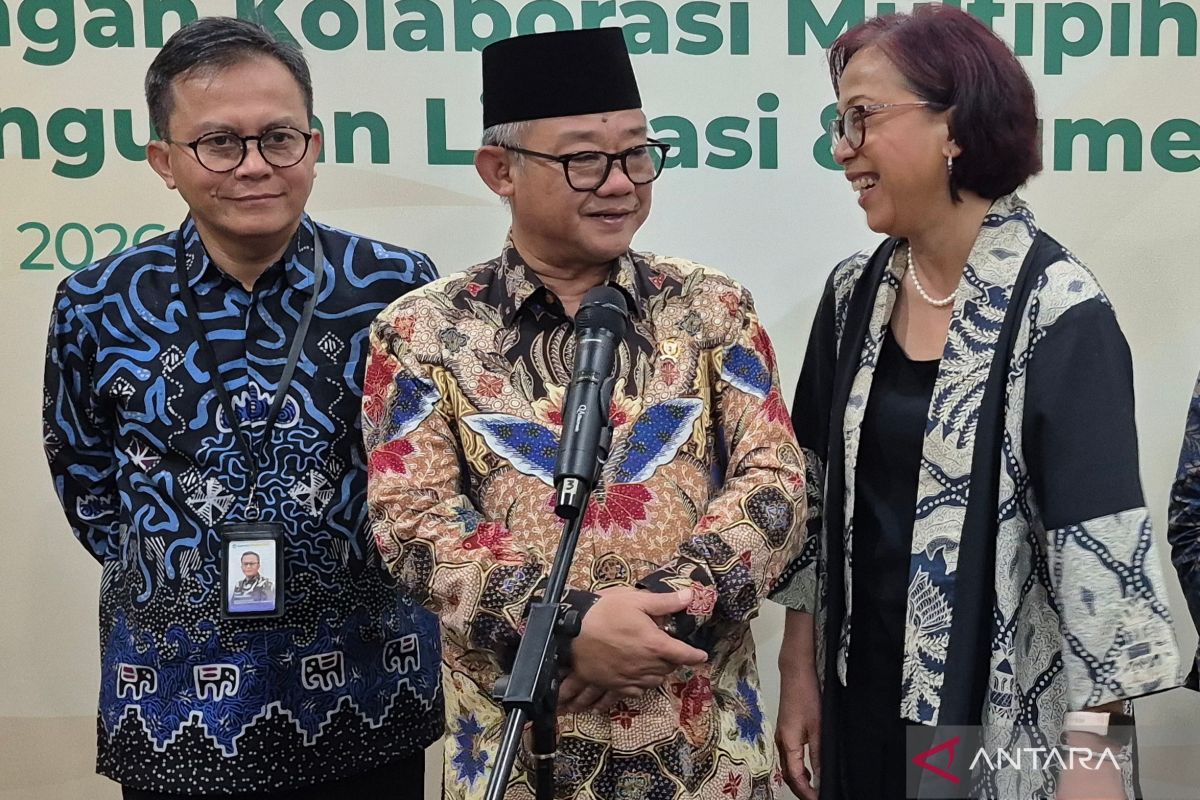
Jakarta (ANTARA) - Minister of Basic and Secondary Education (Mendikdasmen) Abdul Mu’ti has requested that mathematics questions at the basic level, such as in kindergarten and primary school years one and two, be made less complex to sharpen children’s logic.
During the launch of the Multi-Stakeholder Collaboration Programme for Strengthening National Literacy and Numeracy in Jakarta on Thursday, Mendikdasmen highlighted differences in basic mathematics education between Australia and Indonesia, where in the Land of the Kangaroo, mathematics education for young children generally takes the form of games to hone their logic.
He pointed out the issue of complex mathematics problems in Indonesia, such as multiplication and division being taught as early as second grade in primary school, or even in kindergarten.
“Yet, the early stages should emphasise logic. Because of logic, it often just involves playing around. Meanwhile, here, mathematical calculations are already emphasised with formulas and such, which should not be given in the early stages,” said Abdul Mu’ti.
“And then the difficulties they face when learning mathematics in the early stages will continue to impact subsequent levels. So some people say ‘math’ is synonymous with ‘dead’, hence the phrase that mathematics is a ‘matter of life and death’,” he added.
Therefore, the Ministry of Basic and Secondary Education, together with several partners, is now organising the Multi-Stakeholder Collaboration Programme for Strengthening National Literacy and Numeracy, which is being held in six districts/cities in Indonesia.
The programme will be implemented in four provinces representing Indonesia’s regional diversity, namely North Sumatra (Medan City and Pematangsiantar City), Jambi (Batang Hari Regency), Central Java (Tegal Regency), and East Nusa Tenggara (Sikka Regency and Ende Regency).
More than 500 schools and 1,500 teachers in basic education units are involved in this activity.
In this initiative, a deep learning approach will be trialled for implementation in teaching and learning activities. The programme is expected to serve as a model that can be replicated in other educational institutions across Indonesia.