
Minister of Basic and Secondary Education Outlines Steps to Reduce School Dropout Rates
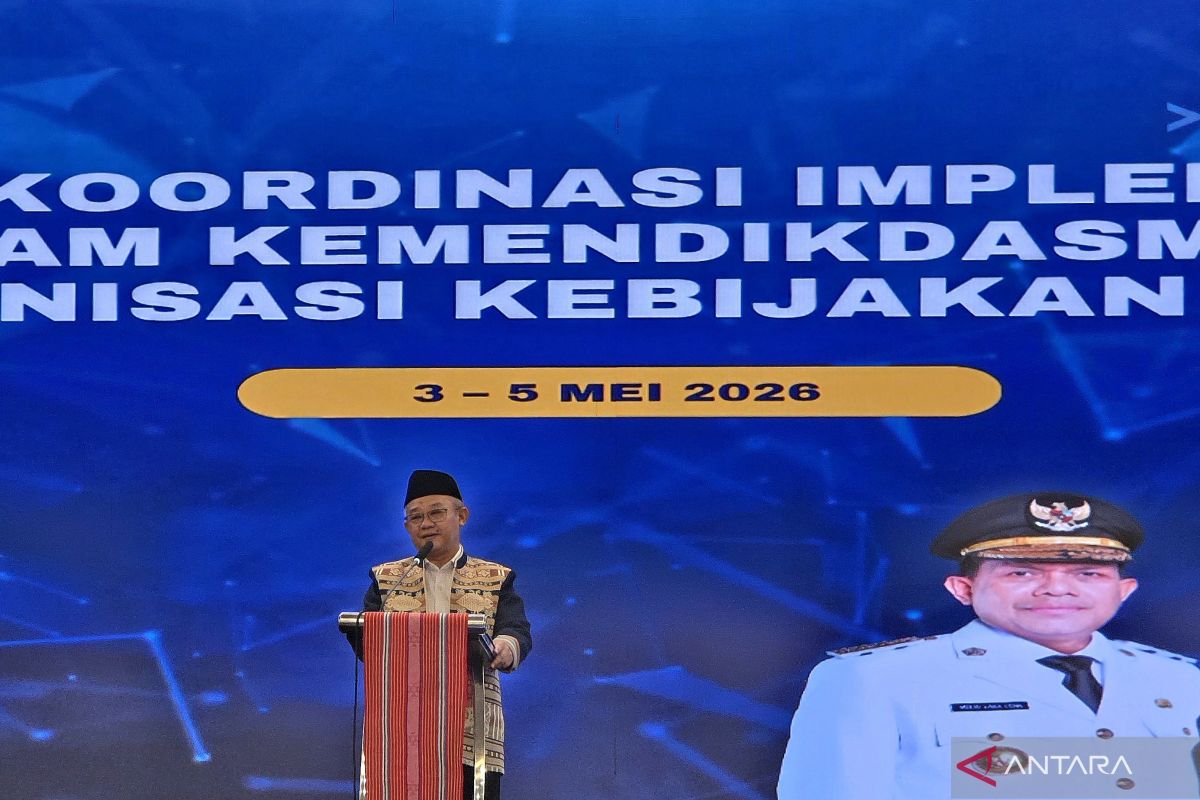
Kupang, NTT (ANTARA) - The Minister of Basic and Secondary Education (Mendikdasmen), Abdul Mu’ti, has outlined several steps to reduce the number of out-of-school children (ATS), including those who have never attended school or have dropped out, particularly in underdeveloped, remote, frontier, and outermost (3T) regions. He stated that the geographical conditions of the archipelago nation pose one of the challenges in realising quality education for all without exception, so his ministry is continuously preparing a series of strategies to address these challenges. Regarding improving access to formal education to reduce ATS in 3T areas, he said his ministry is ready to develop single-roof schools, which combine more than one education level within a single school complex. In addition, he continued, the ministry is currently intensifying the implementation of the Distance Learning Programme (PJJ), which has partnered with 20 provincial governments to collaborate in providing online formal learning services for students from 3T regions. Regarding this PJJ programme, he said that the ministry’s support is not limited to providing host schools ready to deliver formal teaching and learning activities online, but also extends to supporting the digital learning ecosystem. Mu’ti explained that his ministry is ready to provide Starlink internet services to learning communities, especially in 3T regions that wish to implement PJJ. “We can develop distance learning, which currently involves 20 provincial governments to support the programme. Then, we also assist with the provision of Starlink internet networks, there are learning communities, and there are also host schools that serve as the supervisors of this distance learning programme,” he said. Besides these two steps, he added that the Ministry of Basic and Secondary Education is also continuously strengthening the implementation of equivalency programmes, both through Chase Package A, Package B, and Package C. “Thus, we are creating an inclusive and equitable education programme, and the pathways are available,” said Mu’ti.