
Minister of Basic and Secondary Education: Halalbihalal and Mudik Strengthen Social Intelligence
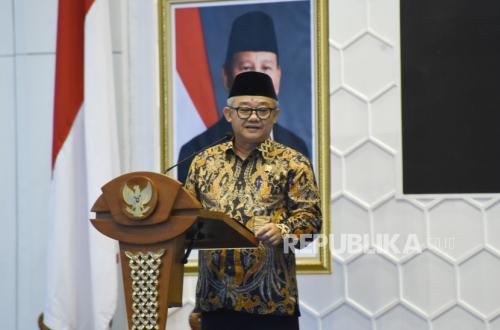
Indonesia’s Minister of Basic and Secondary Education (Mendikdasmen), Abdul Mu’ti, has assessed that halalbihalal and mudik in the context of Eid al-Fitr carry deep meaning. According to him, these two distinctive Indonesian traditions impact the health, happiness, and social intelligence of society.
He conveyed this at the national halalbihalal event titled “Syawal Spirit to Improve Education Quality,” attended by staff of the Ministry of Basic and Secondary Education (Kemendikdasmen) in person in Jakarta and online across Indonesia, recently.
Abdul Mu’ti explained that halalbihalal is a distinctive Indonesian tradition not found in other countries. Although not directly related to Islamic sharia, halalbihalal emerges from the practice and appreciation of religious values. The results are developed creatively so that they can be accepted universally.
In addition to halalbihalal, Abdul Mu’ti continued, mudik is also a distinctive Indonesian tradition. In fact, this habit is not only carried out by Muslims ahead of Eid al-Fitr, but also generally by citizens enjoying long holiday periods.
“I am a militant mudiker. I always go mudik and must be in my hometown before the Maghrib call to prayer echoes,” said Abdul Mu’ti, recounting his experience in front of participants at the National Halalbihalal of Kemendikdasmen RI, quoted from a written statement on Wednesday (8/4/2026).