
Minister of Basic and Secondary Education Directly Absorbs Aspirations on Education Policy Direction in NTT
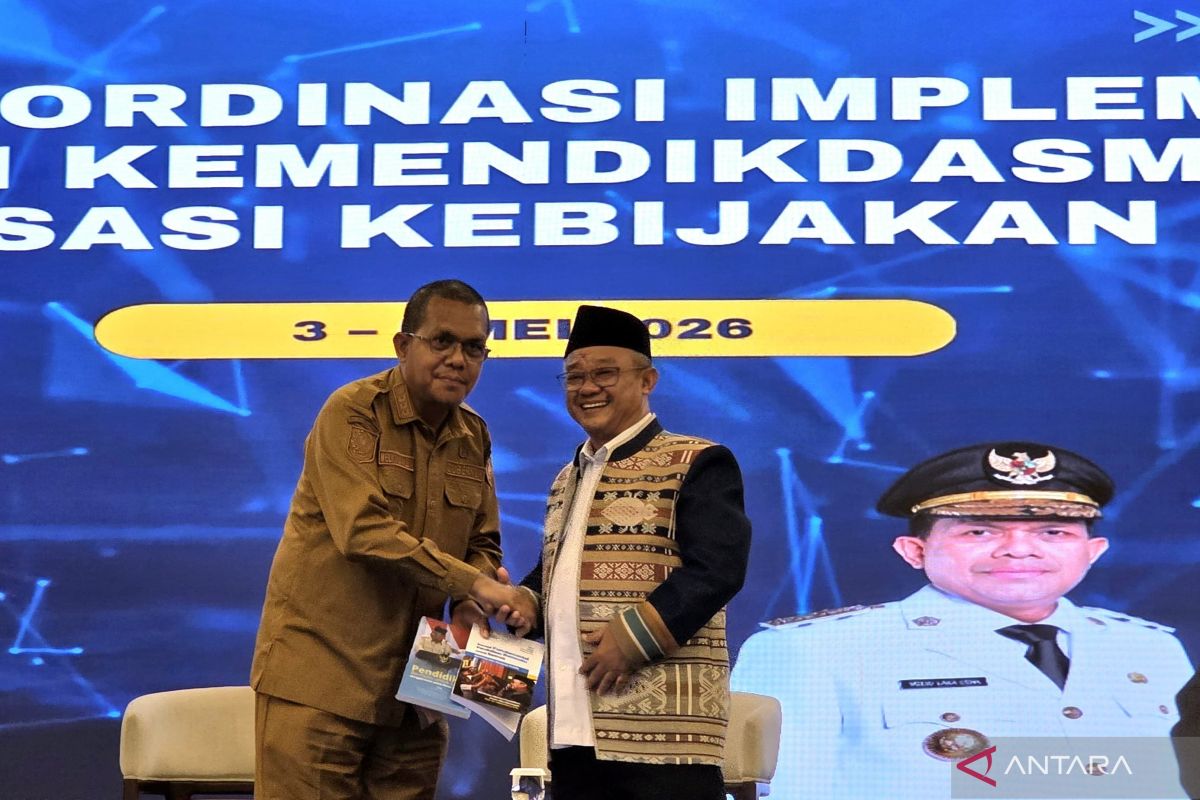
Kupang, NTT (ANTARA) - The Minister of Basic and Secondary Education (Mendikdasmen), Abdul Mu’ti, directly absorbed aspirations regarding the direction of education policy in Nusa Tenggara Timur (NTT) Province.
He stated that his side consistently requires support and aspirations from local governments as well as representatives from electoral districts related to the direction of education policy in 3T regions.
“We have just laid the foundation for various policies to realise quality education for all, because it relates to those living in 3T areas, we continue to need support and aspirations from you all,” said Mendikdasmen Mu’ti in Kupang City, NTT Province, on Tuesday.
On that occasion, member of Commission X of the Indonesian House of Representatives from NTT II electoral district, Anita Jacoba Gah, conveyed several proposals for the Ministry of Education and local government to strengthen the implementation of education policy, particularly in NTT Province as one of the 3T regions.
Through its legislative, budgetary, and oversight functions, she said that Commission X of the DPR RI is committed to continuing to push for education policies that favour regions with complex geographical and social challenges, such as NTT.
On that occasion, she proposed strengthening the data collection on the needs of teachers and education personnel based on real, continuously updated data to ensure targeted recruitment, distribution, and placement of human resources.
In addition, Anita also proposed strengthening affirmative programmes that provide incentives for teachers and education personnel serving in 3T regions.
“I propose that the arrangement of teacher and education personnel needs be carried out based on real data, to ensure targeted recruitment, distribution, and placement. As well as special affirmative programmes for remote areas by providing decent incentives to education personnel and tiered training for their potential development,” said Anita.