
Minister Maman: MSME Problems Not Financing, But Market
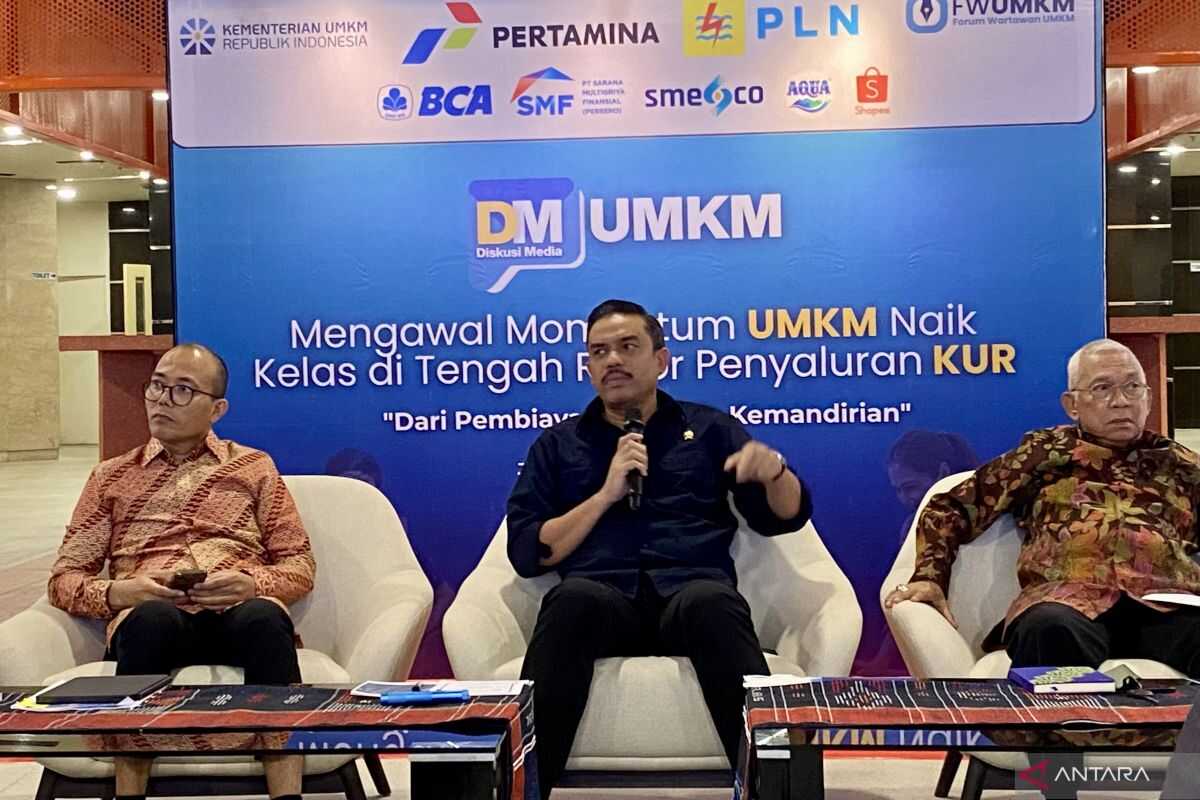
Jakarta — Indonesia’s Minister of Micro, Small and Medium Enterprises (MSMEs), Maman Abdurrahman, has emphasised that the root cause of MSME growth stagnation in Indonesia is not financing access but rather an unhealthy domestic market.
According to him, despite increased support through the People’s Business Credit (Kredit Usaha Rakyat, KUR) programme, training initiatives, and improved production facilities over the past two decades, MSME growth remains sluggish.
“Today’s problem is not access to production or financing. That has increased and is being supported by the government, banks, universities, and the private sector. But why is MSME growth still flat? Because the problem is in the market,” Maman stated during a media briefing in Jakarta on Friday.
Maman outlined that since KUR was launched in 2007, total banking credit has reached Rp8.149 trillion, with MSME credit at Rp1.580 trillion or 19.4 per cent, whilst non-MSME credit stands at Rp6.569 trillion or 80.6 per cent.
The realisation of KUR disbursement in 2025 reached Rp270 trillion with 4.58 million borrowers, comprising 2.75 million new borrowers and 1.54 million graduating borrowers.
Despite rising credit disbursement figures, Maman highlighted the condition of the domestic market, which he described as “corrupt” and filled with cheap imported goods, including those entering illegally.
He explained how underinvoicing compounds the problem, with export data from trading partners significantly exceeding Indonesia’s recorded import figures.
“For instance, if our imports are recorded at 100, China’s export figures show 900. This means there are 800 units of goods unrecorded, flooding our market,” he stated.
Maman considers this situation more than merely a revenue issue for the state—it has become a social problem. MSME products that should support the people’s economy are being crowded out by a flood of imported goods.
“We find ourselves trapped in a vicious cycle, blaming one another—ministries or KUR programmes. But the key lies in sterilising the domestic market,” he emphasised.