
Minister Hanif Urges Corporations to Manage Waste Independently
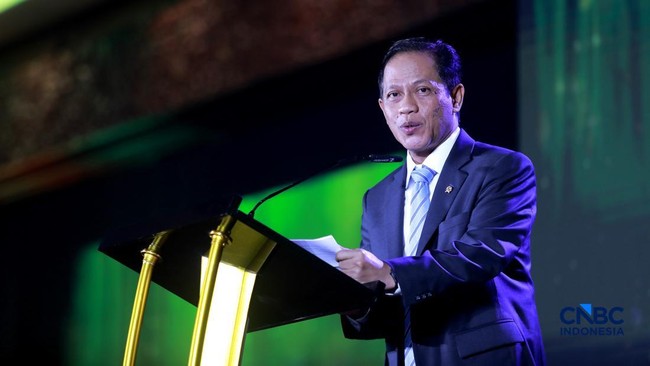
The government is beginning to take firm steps against businesses that have not yet managed waste independently. This policy forms part of a major push in the national waste management movement. Environment Minister Hanif Faisol Nurofiq emphasised that corporations make a significant contribution to the total national waste production. Therefore, the responsibility for management can no longer be shifted. A source-based approach is key to resolving the complex waste issue. “In the context of corporations, they are obliged to handle their own generated waste themselves. This is clearly regulated in the law,” Hanif stated during Nation Hub CNBC Indonesia, quoted on Saturday (25/4/2026). Waste from business areas falls into the category of household-like waste, which still carries the obligation for independent management. Field conditions show that many businesses are still non-compliant. This has prompted the government to implement widespread administrative sanctions. “The aim of these sanctions is not merely to punish, but to encourage behavioural change so that waste management is taken seriously,” he explained. According to Hanif, companies are given a maximum of three months to improve their waste management systems after sanctions are imposed. In addition, he highlighted the importance of sorting waste from the outset. Without sorting, the processing becomes inefficient and the economic value of waste cannot be utilised. “Sorting is mandatory. Both the public and corporations must do it to make management more effective,” Hanif stressed. He also acknowledged ongoing challenges at the local level, particularly when sorted waste gets mixed again during transportation. “If not done, the consequences are clear, from administrative sanctions to criminal ones. This is serious and must be enforced,” he concluded.