
Minister Hanif Aims for a Waste-Free Indonesia by 2029, Requiring Funds of This Amount
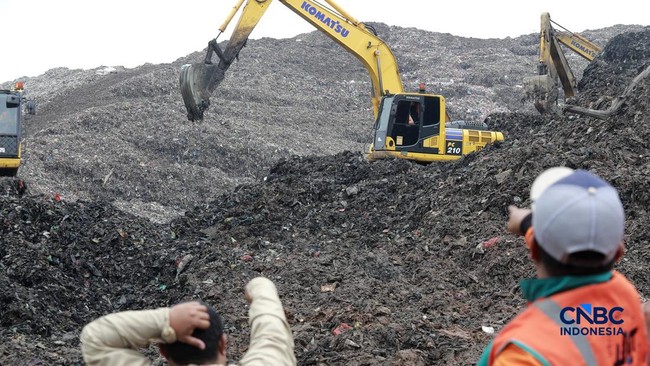
Jakarta, CNBC Indonesia - The government’s grand ambition to resolve the national waste issue by 2029 requires significant budgetary support. The total investment needed amounts to hundreds of trillions of rupiah. These costs encompass the construction of facilities to the operation of waste management systems.
“Total capex required until 2029 at current value is Rp139.44 trillion with total opex at Rp11.75 trillion,” said Minister of Environment Hanif Faisol Nurofiq during a working meeting with Commission XII of the House of Representatives, on Monday (6/4/2026).
Although it appears substantial, the government believes these operational costs can be covered through a circular economy scheme generated from waste processing.
“However, this total opex will generate a circular economy that will fund it itself,” Hanif stated.
The primary focus now is ensuring funding availability for building waste processing infrastructure in various regions.
“The most important thing is for us to immediately calculate the fulfilment of costs to prepare the necessary facilities nationally,” Hanif said.
The government also stresses the importance of thorough planning at the regional level to prevent partial development.
“We are currently collaborating with the Ministry of Public Works and Housing, the Ministry of Home Affairs, and Bappenas to compile detailed requirements for waste management,” Hanif added.
Additionally, the preparation of a master plan for waste management systems is mandatory for all local governments.
“The Ministry of Environment is pushing all regencies and cities to complete their master plans for waste management systems,” Hanif said.
These efforts are expected to create alignment between central policies and local implementation. On the other hand, the government also targets societal behavioural changes through waste sorting at the source.
“This year, we have two main targets: conducting national waste sorting into two categories, namely organic and inorganic waste,” he said.
With a combination of funding, technology, and behavioural changes, the government is optimistic that the national target can be achieved.
“Thus, the total waste achievement we aim for in 2026 is at least 57.75% of the national target,” Hanif stated.