
Minister for Basic and Secondary Education Says MBG Is Part of Students’ Character Education
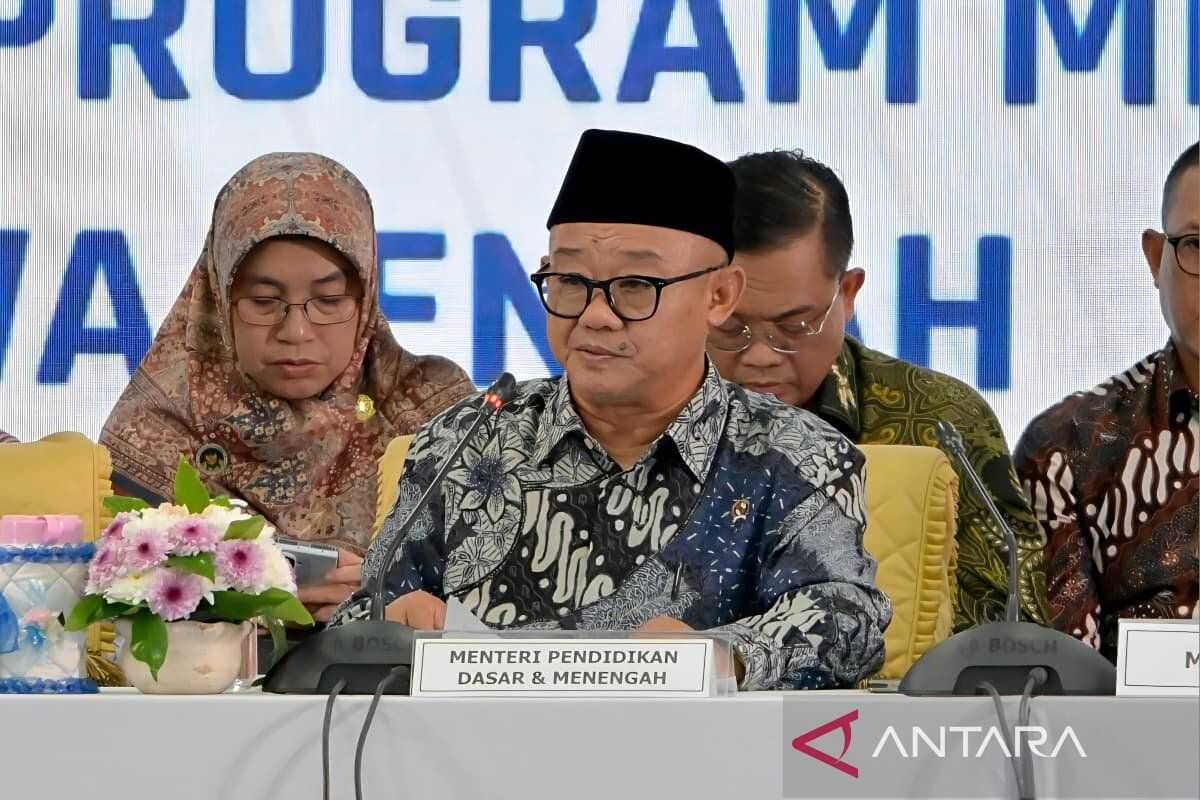
Jakarta (ANTARA) - The Minister for Basic and Secondary Education (Mendikdasmen) Abdul Mu’ti said the Free Nutritious Meal Programme (MBG) is an integral part of strengthening students’ character education through the 7 Habits of Great Indonesian Children (KAIH).
“Based on collaborative research with LabSosio UI, the MBG programme helps students increase learning motivation, provides a pleasurable experience for pupils both through the products and during communal meals, and also provides opportunities for students from low socio-economic groups to obtain nutritious meals,” Mu’ti said in a written statement in Jakarta on Wednesday.
Nationally, he said the programme has reached 49.6 million students (93 percent) of the total 53.4 million students across Indonesia, spread across 288,845 schools (66.5 percent).
The government, he said, has also distributed MBG education modules and implementation guidelines integrated with strengthening character education to all schools.
Mu’ti added that the education budget for 2026 is projected to rise to above Rp100 trillion to support the revitalisation of around 70 thousand schools and the strengthening of digital learning through the Digital Interactive Board (PID) or Interactive Flat Panel (IFP).
“Our principle is: what you cannot take everything, do not throw away everything. If there are obstacles in MBG implementation, we will keep improving it to ensure 100 percent of Indonesian children obtain the right to adequate nutrition alongside good character education,” he said.
In line with the programme’s massive coverage in schools, Coordinating Minister for Food Zulkifli Hasan also highlighted the correlation between nutrition intake and intelligence.
“Excellent human capital is determined by adequate intake. No matter how good a school is, if a child is undernourished or stunted, their IQ will be low. We must ensure food self-sufficiency and protein. If 82.9 million beneficiaries consume one egg daily, then the people’s economic movement will rise extraordinarily,” he added.
Support for children’s quality of life was also reinforced by the Ministry of Women’s Empowerment and Child Protection (PPPA), Arifah Fauzi.
“This programme is not only a nutrition intervention but child protection that places children as subjects of development. We ensure women are not only targets but also driving forces through involvement in MBG kitchens and local MSMEs,” Arifah said.
Through synergy with Ruang Bersama Indonesia, the Forum Anak spread across 34 provinces covering around 13,000 villages/kelurahan, and the Family Learning Centre (Puspaga), the PPPA Ministry also ensures spaces for children’s participation and community-based caregiving operate optimally.