
Minister Bahlil's Visit to Japan Said to Propel Indonesia into Major Global Energy Player
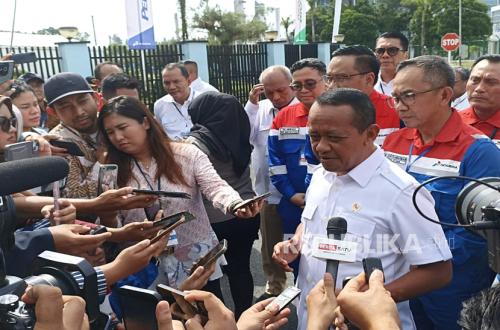
Public policy expert Prof. Dr. Henry Indraguna, SH., MH., views the energy diplomacy conducted by the Minister of Energy and Mineral Resources (ESDM) Bahlil Lahadalia in Japan as indicative of a shift in Indonesia’s position within the global landscape. He states that Indonesia is no longer merely an object but an active actor determining its own interests.
“Indonesia is no longer an object in global power relations, but a subject actively defining its own interests,” said Henry in Jakarta on Wednesday (25/3/2026).
The Professor at Sultan Agung Islamic University (Unissula) Semarang assesses the government’s steps as an effort to deconstruct the old narrative that positions developing countries solely as suppliers of raw materials. According to him, this diplomacy propels Indonesia to upgrade in the global value chain.
“This is a form of fluid yet solid sovereignty. It shows that our national laws can adapt to international standards without losing their constitutional identity,” said the Expert Advisor to the Balitbang of the Golkar Party’s Central Executive Board.
The statement responds to Energy and Mineral Resources Minister Bahlil Lahadalia’s visit to Tokyo, Japan, in mid-March 2026. During the visit, Indonesia strengthened strategic cooperation in the energy and minerals sector with the Japanese government.
In a meeting with Japan’s Minister of Economy, Trade, and Industry (METI) Ryosei Akazawa, Bahlil agreed on two memorandums of understanding (MoUs). The agreements cover strengthening the supply chain of critical minerals and developing low-carbon nuclear technology.
Additionally, Bahlil encouraged the acceleration of oil and gas investments by Inpex Corporation in the Abadi Gas Field Masela Block project, valued at Rp339 trillion. The project is deemed strategic for bolstering national energy resilience.
The Indonesian government also offered joint management of several strategic commodities to Japan. These commodities include nickel, bauxite, copper, and rare earth metals, which are key to the global energy transition.
Cooperation between the two countries was further expanded to the coal, liquefied natural gas (LNG) sectors, as well as energy transition projects under the Asia Zero Emission Community (AZEC) framework. Several focused projects include the completion of the Legok Nangka waste-to-energy plant (PLTSa) and optimisation of the Sarulla geothermal power plant (PLTP).
From a modern economic perspective, Henry views these steps as aligned with the concept of endogenous growth, which emphasises the importance of investment in technology and human resources.
“Mr Bahlil’s steps to secure nuclear technology and nickel downstreaming are efforts to avoid stagnant growth. This will grow from within through sustainable value addition,” said the Unissula Semarang Professor.
He added that integrating Japanese investment into the national industrial structure has the potential to create a more resilient economic ecosystem against external pressures. Legal certainty in strategic projects like the Masela Block is also seen as a positive signal for global investors.
“The legal certainty offered in the Masela project gives a positive signal to the global market that Indonesia is a credible partner,” he said.
From a juridical standpoint, Henry emphasises that the implementation of these memorandums of understanding must be monitored to remain aligned with national interests. He assesses that international cooperation must still provide fair and sustainable benefits.
“The utilisation of natural resources is not just about chasing growth figures, but also about sustainable energy independence,” said the Vice Chairman of the Board of Trustees of the Indonesian Advocates Congress (KAI).
He is confident that strengthening Indonesia’s position in the Indo-Pacific region through energy diplomacy will serve as an important foundation for positioning Indonesia as a new energy power centre in the future.