
Minister Bahlil Successfully Allays Public Concerns Over Fuel Shortages During Eid
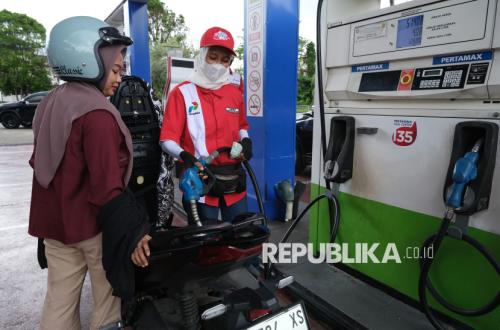
Energy and Mineral Resources Minister Bahlil Lahadalia has finally dispelled public fears regarding the availability of operational fuel oil (BBM) stocks that can last for 20 days amid escalating global geopolitical tensions. The public had estimated that national BBM reserves would deplete right around the 2026 Eid momentum. However, in reality, energy availability remains secure to date.
A researcher from the Thermal Engineering and Energy Systems Laboratory (RTSE) at Institut Teknologi Sepuluh Nopember (ITS), Ary Bachtiar Krishna Putra, commended the government’s performance in maintaining BBM supplies during the holiday. He assessed that this situation is inseparable from Minister Bahlil’s experience in managing energy needs during the annual Lebaran homecoming period.
“Indeed, because it’s an annual event. This means that in terms of supply, the government likely has the experience to ensure the availability and pricing of BBM,” Ary stated in an interview on Wednesday (25/3/2026).
According to him, BBM consumption patterns during Eid are quite predictable as they occur over a limited time, generally just about one week during the outbound and return flows. This makes it easier for the government to anticipate spikes in demand.
“For Eid, there’s an increase due to homecoming, which is also in the category of perhaps a week, meaning from departure to return,” he said.
Additionally, he noted that the public’s more prudent behaviour in using BBM also contributes to supply stability. Concerns over potential shortages have led society to restrain unnecessary consumption.
“If the public has started to control themselves and not be wasteful, the benefits are felt. I see in some areas, the queues for BBM are no longer too long,” he remarked.
On the other hand, Ary reminded that fundamentally, Indonesia’s energy resilience still faces challenges, particularly regarding the relatively limited capacity of BBM reserves compared to other countries in the region. He mentioned that the national energy reserves currently stand at around 20 to 28 days, far below countries like Japan and Singapore, which can store reserves for months.
Therefore, Ary views the government’s steps to increase BBM storage capacity to 90 days as a strategic policy that needs to be realised immediately to strengthen national energy resilience.
“If it can reach 90 days, that would be extraordinary. It means that if market prices fluctuate, we still have time and reserves from previous procurements,” he said.
Furthermore, he highlighted the role of biodiesel programmes like B50, which he assessed have helped reduce dependence on imported diesel, although for petrol, Indonesia still relies on foreign supplies.
With a combination of government experience, predictable consumption patterns, and supportive energy policies in place, Ary assesses that the success in maintaining BBM supplies during this year’s Eid serves as a positive indicator for national energy management.