
Minister Bahlil Clarifies Indonesia's Fuel Oil Imports from Malaysia and Singapore
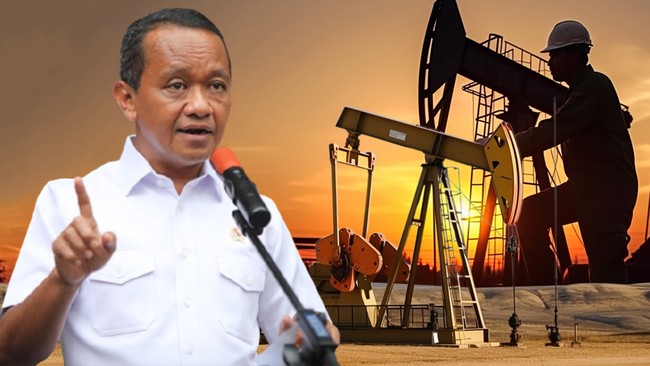
Energy and Mineral Resources Minister Bahlil Lahadalia has reassured the public that Indonesia’s fuel oil imports remain secure despite turbulent global crude supplies following the Israel-Gaza-Iran conflict in the Middle East.
Bahlil emphasised that Indonesia’s fuel imports do not originate from the Middle East but from neighbouring countries, specifically Malaysia and Singapore. “Our fuel imports are not sourced from the Middle East. We source them from Southeast Asia—specifically Malaysia and partially from Singapore. This has nothing to do with the Strait of Hormuz,” he stated in a podcast hosted by the Energy Ministry on 12 March 2026.
The minister explained that current domestic fuel stock capacity can meet Indonesia’s needs for up to 21 days, clarifying that this represents storage capacity rather than actual depletion timeline. He used a water tank analogy to explain the continuous replenishment process: as fuel is withdrawn daily, new supplies are constantly replenished according to capacity. “Our storage capacity does not exceed 25 days, and our current reserves represent approximately 23 days of capacity. However, this does not mean fuel will run out after 23 days. This merely describes our storage capacity. Each day, as fuel is withdrawn—for instance, 1 million kilolitres—new supplies arrive. Our production continues continuously,” he explained.
Bahlil urged the public and media to avoid spreading misinformation that could unnecessarily alarm citizens. “Do not foolishly think that in 21 days our fuel will be exhausted. That is not the meaning. Please provide good education to our people so we do not misunderstand. Let us use our intelligence to convey accurate information. We can use social media, but not in ways that harm our people. I am not lying; I am stating facts. Given our storage capacity of only 25 days, President Prabowo has ordered us to build minimum storage capacity for three months, which is the national standard,” he stated.
Indonesia’s Oil Demand and Import Requirements
Bahlil disclosed that Indonesia’s current oil production stands at approximately 605,000 barrels per day, whilst national consumption demand reaches 1.6 million barrels daily. Consequently, Indonesia must import approximately 1 million barrels of crude oil daily to meet domestic requirements.
Nevertheless, the ministry is implementing various measures to reduce import dependency, particularly for diesel fuel. Current national diesel demand reaches approximately 39 million kilolitres annually. However, with domestic refinery expansion—particularly since the Refinery Development Master Plan (RDMP) project in Balikpapan commenced operations in January 2026—and the mandatory B40 biodiesel policy, Indonesia no longer requires diesel imports. Accordingly, domestic diesel supply is now secure, produced entirely domestically, and no longer dependent on imports.
“With our domestic industrial capacity and the B40 biodiesel mandate we have implemented, which could be increased to B50 in the future, we no longer import diesel,” Bahlil stated.
Regarding petrol, Bahlil acknowledged that Indonesia continues significant imports. National petrol demand reaches approximately 40 million kilolitres annually. Prior to the RDMP Balikpapan project commencing operations, domestic petrol production reached only approximately 14.5 million kilolitres.
“With RDMP in Balikpapan now operational, production has increased by 5.5 million kilolitres, bringing domestic production to 20 million kilolitres. We therefore import 20 million kilolitres of finished petrol product,” he explained.
Regarding crude oil imports, Bahlil stated that Indonesia sources crude from various countries including Angola and other African nations, the Middle East, the United States, Brazil, Australia, and numerous others.
“How much crude do we import from the Middle East? That total is 20 to 25 per cent. Of our total national requirements, Middle East crude represents 20 to 25 per cent,” he stated.
“Let me be clear: we do not import finished fuel products from the Middle East. We do not import petrol from the Middle East. What we import from the Middle East is crude oil. This is subsequently processed domestically and then distributed to our people. Now, with the Strait of Hormuz potentially closing, where will we source this 20-25 per cent of crude oil?” he posed.
“Our supply has been reduced. Some have questioned whether our vessels have been detained. That is true. But what is the government doing? That is why, long before this conflict occurred, under President Prabowo’s instruction, we have been exploring opportunities to source crude from other countries,” he said.
“Where are these opportunities? The United States, Angola, several African countries, Latin America, and Africa—with some operations through Pertamina. That is how we have redirected supplies. So even if the Strait of Hormuz closes, our 20-25 per cent crude oil source has already been diverted to alternative countries,” he concluded.