
Mining Is Not Just About Exports, But the Future of Local Communities
Mining has long been recognised as one of the pillars of the national economy, contributing to state and regional revenues and job creation. Yet behind mining activity there is a push for the benefits of natural resources to be felt by nearby communities in a sustainable manner.
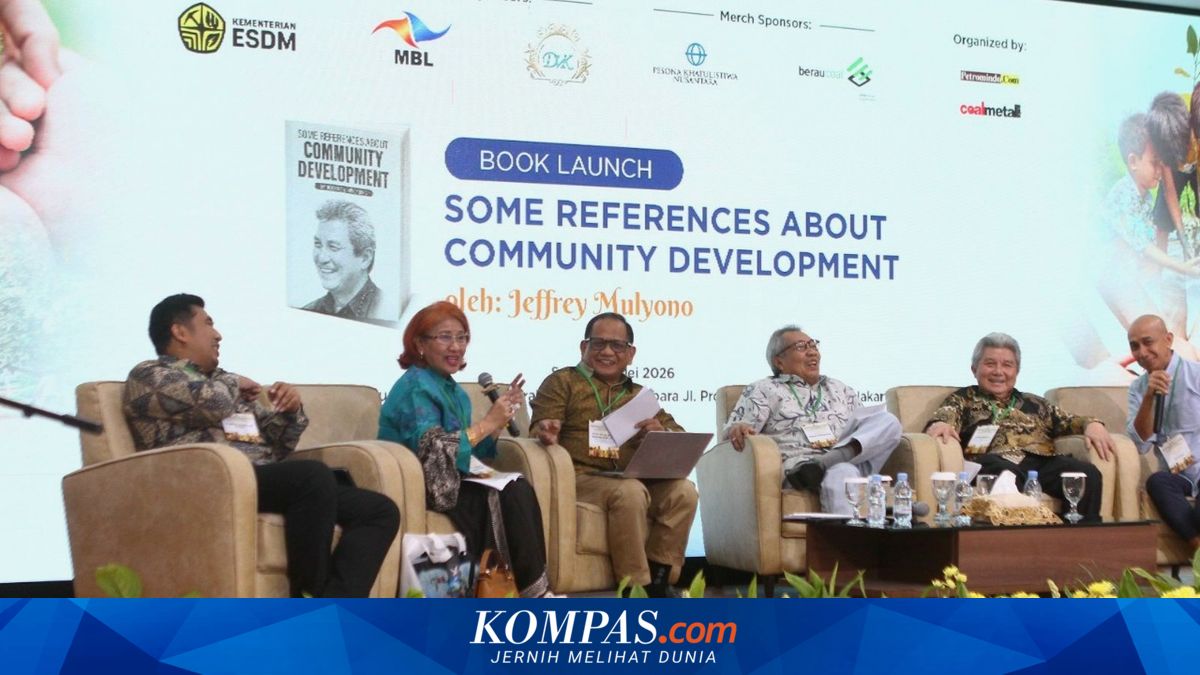
The idea was among those presented during the launch of the book Some References About Community Development, by Indonesian mining figure Jeffrey Mulyono, at the Meeting Hall of the Directorate General of Minerals and Coal, Ministry of Energy and Mineral Resources, on Tuesday 19 May 2026.
‘Through the Community Development programme, mining companies help surrounding communities to live more prosperous, independent and sustainable lives,’ said Jeffrey Mulyono, Director of DVK Resources Pte. Ltd and Commissioner of PT Manoor Bulatn Lestari, in a statement on Friday 22 May 2026.
According to Jeffrey, communities near mining sites have a right to benefit from the natural resources contained in the area. Therefore, the Development and Empowerment of the Community Programme (PPM), or Community Development, is regarded as a vital part of mining industry activity.
The book reflects Jeffrey’s concern for the welfare of local communities around mines, as well as a number of reference Community Development programmes that have been implemented across several mining companies.
The four main pillars prioritised in the programme are health and nutrition, education and knowledge, social contribution, and culture and environment.
On the other hand, Jeffrey reminded that natural resources such as coal, nickel and bauxite are non-renewable resources. When reserves run out, mining operations will end in a given area.
Therefore, he said, mining companies should participate in the development and empowerment of communities so that people can live independently and sustainably without continuing to depend on the presence of mining companies.
Jeffrey emphasised that job creation in the mining sector is not merely about being a company employee. He said that what matters more is creating communities with economic independence and the ability to break free from dependence on mining companies.
To achieve this target, the PPM programmes are considered to require involvement from all stakeholders in the mining sector, from government, mining companies, communities, to academics.
The book launch series continued with a panel discussion moderated by Hendra Sinadia, Chair of APINDO’s Mining Sector Committee. The discussion featured Jeffrey Mulyono, Fadhila Achmadi Rosyid, lecturer at Bandung Institute of Technology; Abrar Saleng, lecturer at Hasanuddin University Faculty of Law; social activist and CSR Sarwat Fardaniyah; and mining expert Simon Sembiring.
IMA believes that government plans to strengthen the control of exports of mining commodities through the creation of a single national specialised body should be studied comprehensively, considering the balance between governance strengthening, revenue optimisation and sustainability of the mining industry.
IMA states its support for stronger oversight and utilisation of natural resources to provide optimal benefits for the country and society. However, the policies enacted should also be assessed to ensure they continue to keep mining industry attractiveness.