
Mining Industry Pushes for Adaptive Policies to Face Global Dynamics
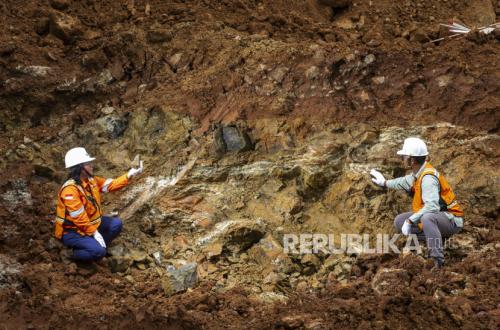
The Chairman of the Indonesian Mining Experts Association (Perhapi), Sudirman Widhy Hartono, is pushing the government to formulate more adaptive policies in facing global dynamics that could pressure the national mining industry. These pressures stem from a combination of production controls, changes to the Work Plan and Budget (RKAB) scheme, and a surge in energy costs.
The mining industry is currently facing multi-layered pressures. Rising oil prices due to global turmoil and plans to implement B50 are driving up production costs, amid reductions in mineral and coal production that are forcing companies to implement efficiencies.
“Many companies cannot operate at the start of the year due to delays in the RKAB approval process,” said Widhy during the Discussion on the Role of RKAB and Production Increases in Strategies to Address Global Challenges in Jakarta, quoted on Saturday (11/4/2026).
Perhapi has warned from the outset about potential obstacles from the return to an annual RKAB approval scheme. Field conditions show that the approval process is not yet running optimally, even though it is supported by a digital system.
Delays in approvals until March 2026 have left several companies unable to operate fully at the beginning of the year. This situation has triggered production disruptions and impacted companies’ business planning.
“Alhamdulillah, there is a relaxation allowing the use of 25 percent of ongoing activities,” Widhy stated.
Plans for production controls are prompting operational adjustments at several mining companies. Business players are starting to hold back on expansion and reorganise production activities as a precautionary measure. This condition is beginning to affect the workforce, with several companies reducing employees as part of their efficiency strategies.
Pressure is also coming from the energy side. The implementation of B50 is seen as potentially increasing operational costs, especially in remote mining areas with logistical and fuel storage challenges. Experience with B20 to B40 usage has shown a decline in equipment performance and increased maintenance costs. These risks need to be considered before the policy is rolled out more widely.
Pamapersada’s Business Development Director, Ade Candra, views global geopolitical turmoil as also affecting mining contractor operations. Rising commodity prices provide room for revenue, but cost pressures are also increasing.
“We need fuel to run mining equipment. We also need components that still largely depend on foreign supplies,” said Ade.
Dependence on foreign supplies makes the industry vulnerable to supply chain disruptions. Production adjustments by mining companies directly impact service contractors. Since the beginning of the year, several companies have started adjusting their workforce numbers in line with changes in fieldwork volumes.
Coal prices have recorded an increase of around 25 percent. However, at the same time, global fuel prices have surged much higher. In the January to March period, fuel cost increases even reached 155 percent. This condition amplifies the pressure on companies’ operational costs.
“This situation, combined with production adjustments, will certainly have a significant impact on customers in the end,” said Ade.
Industry players assess that policy synchronisation is needed to avoid creating multi-layered pressures on the mining sector. Regulatory certainty and careful calculations are key to maintaining the industry’s sustainability amid global dynamics.