
Mining Entrepreneurs Speak Out on Current Industry Conditions
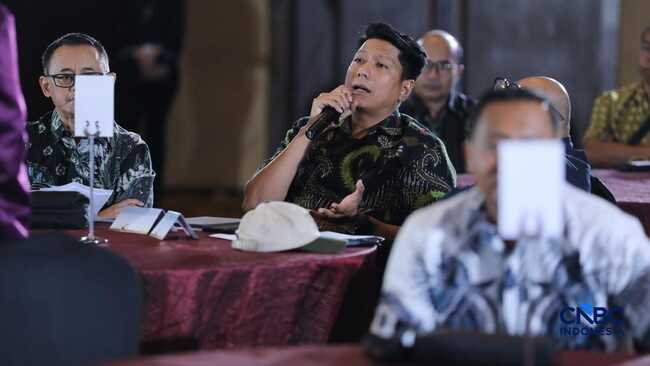
Jakarta, CNBC Indonesia — A number of business operators have said that the mining industry is currently under heavy pressure, particularly following the production-cut policy in the Rencana Kerja dan Anggaran Biaya (RKAB) 2026. Ezra Sibarani, Vice Chairman of the Indonesian Mining Association (IMA), said the sector has recently faced a highly challenging situation, notably regarding the production-cut policy for nickel and coal commodities. ‘There are many and complex issues. But the biggest at present concerns the production quotas in the coal and nickel RKAB,’ he said during the Mining Forum CNBC Indonesia, ‘What’s Up with Indonesia’s Mining Industry?’, on Friday (6 March 2026). He further revealed that several companies were quite surprised by the policy because the criteria for setting production quotas were not clear, while each company faced different conditions. ‘For example, at what level would be preserved? If cut by 50%, it would surely be unprofitable; we also have commitments with buyers. We understand the government has particular considerations, but we hope for flexibility,’ he said. At the same venue, APBI Executive Director Gita Mahyarani said that mining companies are currently facing a difficult situation, with one month now in which miners have to contend with uncertainty around production quotas. According to Gita, each company has different circumstances in facing this situation. But what is clear is that the production-quota cuts in the coal sector will have a long-lasting impact. ‘Why the cut figures seem so arbitrary? They deserve clarity on the profit-margin cut; without it, every company cannot survive, there is a multiplier effect from contractors, shipowners, and most importantly the workforce itself,’ she said. Meanwhile, Irwandy Arif, Chairman of the Indonesian Mining Institute (IMI), revealed that the mining industry, both in Indonesia and globally, is currently under significant pressure, spanning global to domestic levels. Global pressures include cooperation with the United States on the management of critical minerals, as well as the obligation to supply nickel to European countries with very strict environmental and social standards. Domestically, challenges include policies that frequently change and rising operating costs amid the Iran–Israel conflict involving the United States. ‘This is pressure, so our mining industry is currently caught between short-term pressures and global conditions,’ he added. Previously, Energy and Mineral Resources Minister (ESDM) Bahlil gave a response to various parties’ requests, especially to review the nickel and coal production-quota cuts in RKAB 2026. According to Bahlil, the decision is final. The production cuts are intended to keep supply and demand balanced so that mining commodity prices stay stable in global markets. ‘We have already decided. The team has, I said, about supply and demand. What if we produce more with prices falling?’ Bahlil said after the Indonesia Economic Outlook event at the Danantara Building, Jakarta, quoted on Wednesday (18 February 2026). He then warned that the nation’s natural resources must not be sold off cheaply. After all, mining management must be measured and sustainable. ‘Let not our national wealth be sold cheaply. Mining management must be sustainable. There are our descendants who must continue the nation as well,’ said Bahlil.