
Mineral Exports to the US Still Require Downstream Processing in Indonesia
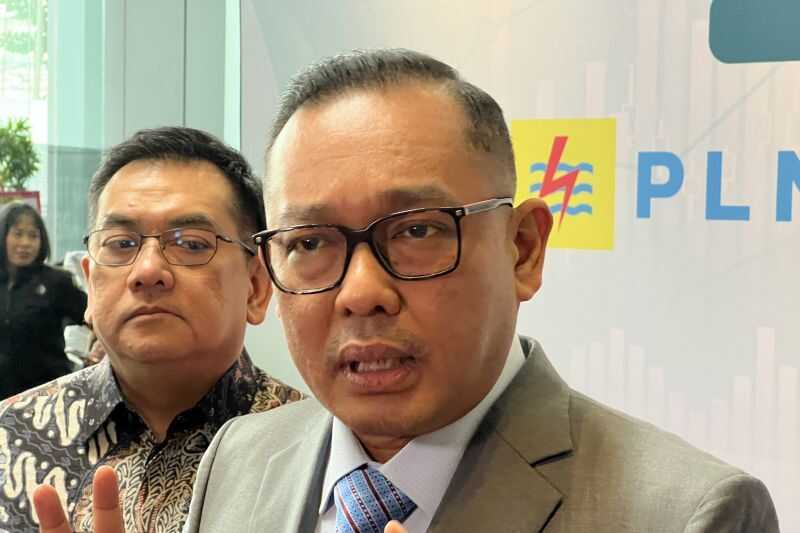
Deputy Minister of Investment and Downstream Industries/Deputy Head of the Investment Coordinating Board (BKPM), Todotua Pasaribu. Photo: Special documentation.
Mineral Exports to the US Still Require Downstream Processing in Indonesia
Eko Nordiansyah • February 26, 2026 19:23
Jakarta: Deputy Minister (Wamen) of Investment and Downstream Industries/Deputy Head of the Investment Coordinating Board (BKPM) Todotua Pasaribu affirmed that US access to Indonesia’s critical minerals within the framework of a trade agreement still requires investment and downstream processing within the country.
“Basically, the US request to grant American businesses access to our mineral sectors, including rare earths, is not actually a problem,” he said when met after the Socialization of PP 28/2025 in Jakarta, as reported by Antara on Thursday, February 26, 2026.
He emphasized that Indonesia remains committed to the rule prohibiting the export of raw materials without processing. Therefore, every investor entering the mineral sector is required to invest in processing facilities within the country.
“As long as they comply with the rule that if they want to enter, they must invest in processing. Because our country, by law, does not allow our raw materials to be exported. There is a process, downstream processing, investment, and then they can enter,” said Todotua.
With this scheme, the government ensures that the cooperation established is equal and mutually beneficial.
“It’s just a normal business-to-business relationship,” he said.
(Illustration. Photo: Freepik)
Encouraging Downstream Processing Through Investment
Furthermore, Todotua explained that the government has set annual investment targets and is encouraging priority sectors based on downstream processing, with a total investment value of IDR 13,000 trillion over the next five years.
“We already have a big plan for investment. There are annual investment targets that we must achieve. There are priority sectors that we are encouraging, especially in relation to the downstream concept,” he said.
He believes that downstream processing provides significant growth while ensuring that natural resources are processed domestically, thereby creating added value and strengthening the national industrial ecosystem.
According to him, trade and investment negotiations are not only conducted with the US but also with Europe and other partner countries. However, the fundamental principle remains the same, namely that access is granted as long as there is a commitment to investment and processing in Indonesia.
“We are ready, they ask for access, okay, we will allow it. As long as they invest in downstream processing, we will grant access. It’s equal trade,” he emphasized.
The government has also prepared a downstream processing roadmap for 28 strategic commodities that represent investment opportunities for global partners.
“This is not only about America, but also about Europe, Japan, China, Korea, and others,” said Todotua.
The Minister of Energy and Mineral Resources (ESDM), Bahlil Lahadalia, affirmed that strategic mineral commodities still require downstream processing, even though there is a trade agreement for these strategic mining commodities with the United States.
According to Bahlil, in a statement quoted in Jakarta on Saturday (February 21), amid geopolitical dynamics and increasing global demand for critical minerals, Indonesia has reaffirmed its bargaining position on the global stage.
The bilateral meeting between the President of the Republic of Indonesia, Prabowo Subianto, and the President of the United States, Donald Trump, in Washington, DC, USA, on Thursday (February 19, 2026) local time, became an important moment in strengthening the partnership between the two countries through the Agreement on Reciprocal Trade (ART).