
MIND ID Uses Documentary Film to Explain Mineral Downstreaming to the Public
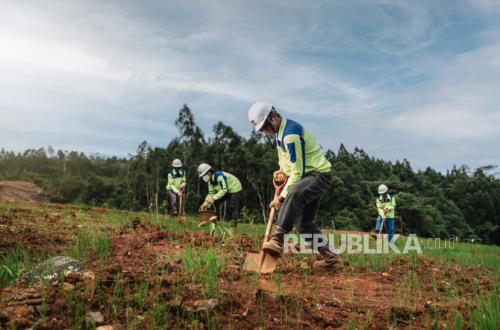
Indonesia’s Mining Industry Holding MIND ID is using the documentary film The MINDJourney to explain mineral downstreaming to the public. This step is taken amid persistent stigmas against the mining industry, which is often viewed solely through the lens of environmental impacts and landscape changes.
The film, which premiered at the MIND ID Group Silaturahmi event on Wednesday (1 April 2026), records the journey of mineral management from the pre-mining stage, mining operations, to post-mining activities. The documentary also showcases how the downstreaming process is built to enhance the value of minerals domestically.
MIND ID’s President Director Maroef Sjamsoeddin stated that the film was prepared to illustrate how holding members operate within a single industrial ecosystem while providing a more comprehensive view of the mining practices conducted.
“Through this film, we want to present a medium that can show how all MIND ID holding members work under the same umbrella,” Maroef said in Jakarta, as quoted on Thursday (2 April 2026).
He explained that the documentary aims to broaden public understanding of mining practices that extend beyond mere exploration or production, encompassing the entire mining management cycle. In the film, MIND ID presents the process from planning, operations, to post-mining management.
The choice of film as a medium also demonstrates the company’s efforts to bring industry issues closer to society. The mining sector is often judged only by its surface-level visual impacts, whereas it involves a management chain, recovery processes, mineral processing, and economic effects reaching surrounding areas.
“Indeed, mining activities alter the surface, but if carried out according to proper principles, mine management can provide significant benefits to the environment and society,” Maroef clarified.
One of the main messages in the documentary is the importance of downstreaming. MIND ID highlights that many Indonesian mineral commodities are exported without maximal processing, resulting in greater economic value being enjoyed abroad.
This is illustrated through the processing chain of bauxite into alumina and then aluminium. From that chain, the value of raw bauxite ore, initially around $40 per tonne, can increase to about $400 per tonne for alumina, then rise to around $2,800 to $3,000 per tonne for aluminium.
This value addition is not limited to basic products. Aluminium that is further processed can enter various industrial needs, such as battery frames, electric vehicle bodies, and high-tech components with even greater economic value.
In this context, downstreaming is seen not merely as a mineral processing agenda but also as part of the national industrialisation strategy. The process is linked to strengthening industrial competitiveness, job creation, growth of MSMEs, and increased domestic economic contributions.
Maroef stated that integrated mineral resource management must be directed to provide broader benefits for national development. According to him, Indonesia’s mineral wealth is not enough to be simply extracted from the earth but must be processed to add value domestically.
“Indonesia’s mineral resource wealth must be managed optimally to provide the greatest possible benefits to society,” Maroef emphasised.
The film was produced by a team led by producer and director of The MINDJourney, Ari Sihasale. He said the documentary was compiled based on the team’s direct experiences during coverage in several operational areas of MIND ID Group mining members.