
MIND ID Supports National Energy Policy, Achieves Energy Self-Sufficiency
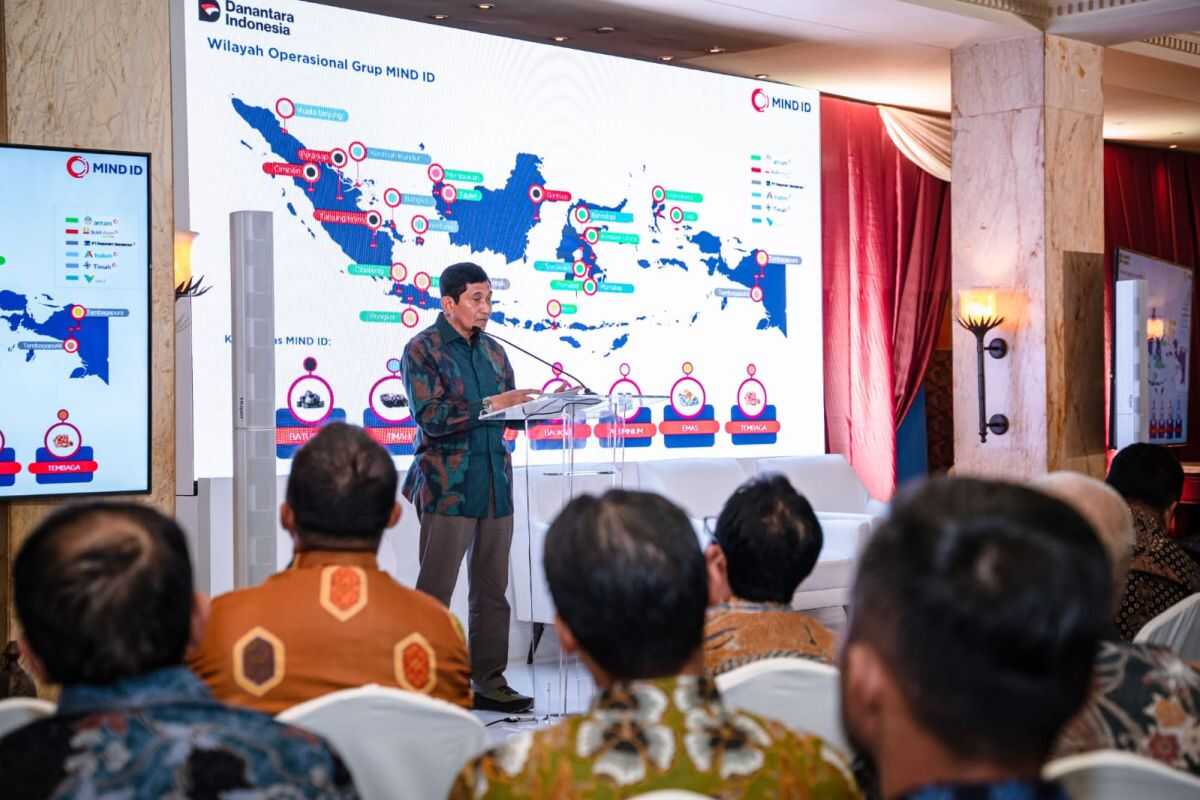
Jakarta — Indonesia’s Mining Industry Holding Company, MIND ID, has reaffirmed its commitment to supporting the implementation of the National Energy Policy (KEN) to achieve Indonesia’s energy self-sufficiency.
This commitment was demonstrated through the inaugural socialisation of Government Regulation (PP) No. 40 of 2025 on National Energy Policy, which was organised by the National Energy Council (Dewan Energi Nasional, DEN) in collaboration with MIND ID in Jakarta on Friday, 27 February 2026.
The event exemplified synergy and collaboration between the government as policy maker and MIND ID alongside all member companies as strategic implementers in supporting energy self-sufficiency, energy transition, and national decarbonisation.
The government has issued PP No. 40 of 2025 on National Energy Policy, replacing PP No. 79 of 2014. This regulation serves as the foundation for all stakeholders to achieve energy security, meet national energy needs, and accelerate decarbonisation and energy transition.
President Prabowo previously stated that energy independence is an important pillar in maintaining sustainable development. The government continues to encourage optimisation of national resources to ensure Indonesia does not depend on external parties. “Energy self-sufficiency is a must! There will be groups asking if it’s possible? It’s possible! We have already calculated it, but we have extraordinary advantages,” said the President.
Member of the National Energy Council, Satya Widya Yudha, stated that the policy is aligned with the national economic growth target of 8 per cent as directed by President Prabowo Subianto. According to him, energy self-sufficiency will be an important foundation in strengthening Indonesia’s industrialisation and competitiveness.
“This is a very important forum for us to collaborate. Implementation of this policy requires cooperation between stakeholders, including government, industry, and all stakeholders so that our national aspirations to achieve sufficient energy needs are realised,” he explained during the forum and socialisation of PP No. 40 of 2025 in Jakarta on Friday, 27 February 2026.
MIND ID Chief Executive, Maroef Sjamsoeddin, emphasised that MIND ID is ready to play a strategic role in supporting the implementation of KEN. Through integrated management of minerals and coal, along with the development of various strategic projects by all member companies, MIND ID consistently supports national energy independence, security, and energy transition.
“Through today’s socialisation activity, the MIND ID Group reaffirms its commitment to support the implementation of Government Regulation Number 40 of 2025 by following the direction of implementation of the National Energy General Plan,” said Maroef.
To support energy self-sufficiency, MIND ID subsidiary PT Bukit Asam Tbk has optimally managed coal resources and reserves to continue supporting long-term energy security. Bukit Asam manages approximately 2.88 billion tonnes of coal reserves and 5.72 billion tonnes of resources. The company is proactively increasing production capacity through the development of Coal Handling Facilities (CHF) and Train Loading Stations (TLS) 6–7, which will add transport capacity of up to 20 million tonnes per year, with production targeted to increase from 43 million tonnes to over 60 million tonnes per year.
In the downstream industrialisation agenda, MIND ID and all member companies support the establishment of an electric vehicle battery and energy storage ecosystem to realise a renewable energy industry ecosystem. Strategic minerals such as nickel, copper, bauxite, and tin have been produced in the form of raw materials ready for further processing by the manufacturing industry.
“We are not only focusing on optimising mineral and coal production, but also on increasing added value through downstream processing, strengthening domestic supply chains, energy efficiency, and developing a cleaner and more sustainable energy-based industrial ecosystem,” concluded Maroef.